Anurag Thakur Marks 12 Years of Garib Kalyan from Hamirpur
Synopsis
BJP MP Anurag Thakur marked the 12th anniversary of PM Modi's Garib Kalyan welfare portfolio from Hamirpur, Himachal Pradesh, sharing a video greeting on X and highlighting twelve years of direct-benefit welfare delivery to India's poor.
Key Takeaways
BJP MP Anurag Thakur posted a video from Hamirpur, Himachal Pradesh on June 8, 2026 , marking #12YearsOfGaribKalyan .
The post greeted PM Narendra Modi on behalf of Devbhoomi Himachal , using the phrase 'Devbhoomi Himachal se Modi ji ka abhinandan' .
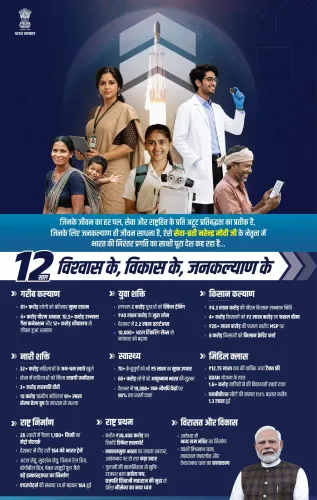
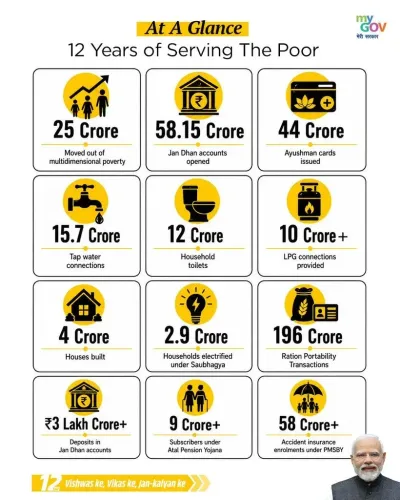
The Garib Kalyan portfolio includes schemes such as PM Jan Dhan Yojana (2014), Ujjwala Yojana (2016), PM-KISAN (2019), and PMGKAY .
These programmes use direct benefit transfers and digital delivery to reach poor and rural households across India.
The anniversary post is part of a broader BJP communication pattern linking local MPs to the national welfare agenda ahead of electoral cycles.
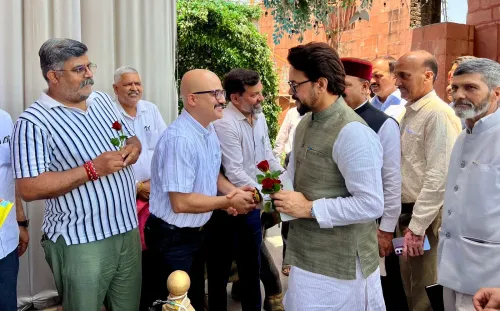
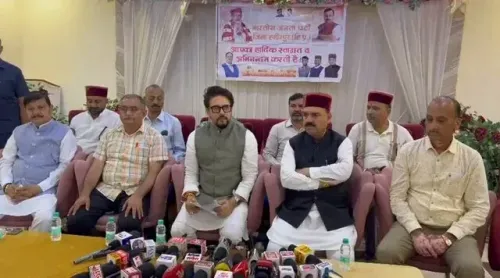
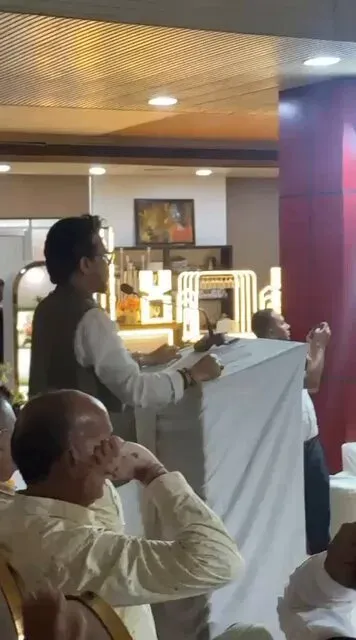
BJP MP Anurag Thakur on Monday, June 8, 2026, marked the 12th anniversary of the Garib Kalyan welfare portfolio with a greeting to Prime Minister Narendra Modi from Hamirpur, Himachal Pradesh, sharing a video message on X under the hashtag #12YearsOfGaribKalyan.
Context
Thakur's post, originating from Hamirpur — the parliamentary constituency he represents in Himachal Pradesh — reads: 'Devbhoomi Himachal se Modi ji ka abhinandan' ('Greetings to Modi ji from Devbhoomi Himachal'). The post is part of a coordinated BJP communication push marking twelve years of the central government's welfare agenda, which the party brands collectively as Garib Kalyan — welfare for the poor. Thakur, a former Union Minister of Information & Broadcasting and Youth Affairs & Sports, has been among the more visible BJP voices amplifying such milestones from his home state.
Policy Backdrop
The Garib Kalyan umbrella encompasses a series of flagship programmes launched since 2014. The Pradhan Mantri Jan Dhan Yojana, launched in 2014, aimed at bringing unbanked households into the formal financial system. The Pradhan Mantri Ujjwala Yojana, introduced in 2016, distributed LPG connections to women from below-poverty-line families, while the PM-KISAN income-support scheme for farmers was announced in the 2019 Union Budget.
The Pradhan Mantri Garib Kalyan Anna Yojana (PMGKAY) — perhaps the most widely recognised scheme under this banner — provided free foodgrains to poor families and was significantly expanded during the COVID-19 period. Together, these programmes rely on direct benefit transfers and digital delivery mechanisms to reach economically weaker sections across the country.
Stakeholders and Impact
The primary beneficiaries of the Garib Kalyan portfolio are poor and rural households, including farmers, women from below-poverty-line families, and previously unbanked citizens. In a state like Himachal Pradesh — hilly, sparsely populated, and with a significant rural demographic — direct-transfer and food-security schemes carry particular salience for the electorate.
Posts of this nature from BJP MPs in state constituencies form part of a recurring communication pattern that marks programme anniversaries and links local representation to national leadership. The approach is visible across both NDA-ruled and opposition-governed states, underscoring the party's strategy of keeping welfare delivery central to its political messaging.
What's Next
With Himachal Pradesh subject to periodic state-level reviews of scheme coverage, any parliamentary discussions on extensions or revisions to food-security and cash-transfer programmes will be closely watched by both beneficiaries and political observers. The 12-year milestone is also likely to be used as a platform to highlight outreach data and beneficiary counts ahead of future electoral cycles in the state.
Point of View
Tying local representation directly to the Prime Minister's brand. By anchoring the message in 'Devbhoomi Himachal' — a phrase that carries cultural and religious resonance in the hill state — the party signals both grassroots connect and national alignment. The twelve-year mark allows the party to present Garib Kalyan not as a crisis-era measure but as a sustained governance philosophy. With Himachal Pradesh remaining a competitive two-party state, such messaging is calibrated to keep welfare delivery at the centre of BJP's electoral identity there.
NationPress
21 Sept 2026
Frequently Asked Questions
What is Garib Kalyan and why is the 12-year anniversary significant?
'Garib Kalyan' refers to the BJP-led central government's portfolio of welfare schemes launched since 2014, including PM Jan Dhan Yojana, Ujjwala Yojana, PM-KISAN, and PMGKAY. The 12-year milestone in 2026 marks over a decade of direct-benefit and food-security programmes targeting India's poor.
What did Anurag Thakur post for the Garib Kalyan anniversary?
Anurag Thakur shared a video on X from Hamirpur, Himachal Pradesh, greeting PM Narendra Modi on the occasion with the message 'Devbhoomi Himachal se Modi ji ka abhinandan' — 'Greetings to Modi ji from Devbhoomi Himachal.'
What schemes are covered under the Pradhan Mantri Garib Kalyan umbrella?
Key schemes under the Garib Kalyan umbrella include the Pradhan Mantri Jan Dhan Yojana (financial inclusion, 2014), Pradhan Mantri Ujjwala Yojana (LPG for BPL women, 2016), PM-KISAN (farmer income support, 2019), and the Pradhan Mantri Garib Kalyan Anna Yojana (free foodgrains).
Who is Anurag Thakur and which constituency does he represent?
Anurag Thakur is a BJP Lok Sabha MP from Hamirpur in Himachal Pradesh and a former Union Minister who held the portfolios of Information & Broadcasting and Youth Affairs & Sports.
What is the Pradhan Mantri Garib Kalyan Anna Yojana?
The Pradhan Mantri Garib Kalyan Anna Yojana (PMGKAY) is a food security programme that provides free grains to poor families. It was significantly expanded during the COVID-19 pandemic as part of the broader Garib Kalyan welfare push.