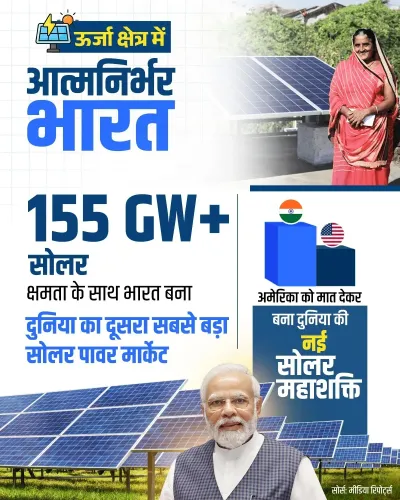
Anurag Thakur Marks I-Day With India's 80x Solar Leap

Synopsis
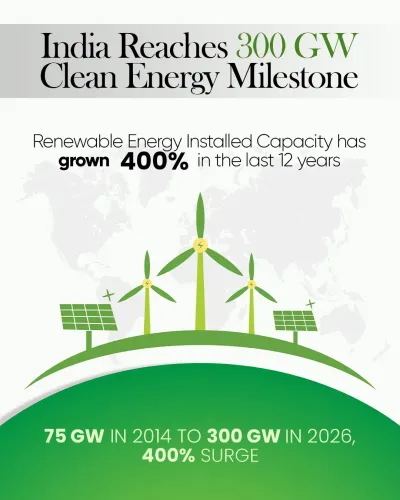
On Independence Day 2026, BJP MP Anurag Thakur highlighted India's solar energy expansion from 2 GW in 2014 to 160 GW today — an 80-fold rise underpinned by competitive auctions, central policy, and India's international climate commitments. The milestone signals India's ambition ahead of its 2030 non-fossil targets.
Key Takeaways
BJP MP Anurag Thakur posted on August 15, 2026 (Independence Day) citing India's solar capacity growth from 2 GW to 160 GW over twelve years.
India's solar scale-up is among the fastest globally, driven by competitive bidding, falling module prices, and central government policy since 2014.
The Jawaharlal Nehru National Solar Mission , launched in 2010, set the original framework; its 20 GW target was later revised to 100 GW and then subsumed into a 500 GW non-fossil goal.
India committed in 2022 to sourcing 50 percent of cumulative electric power capacity from non-fossil sources by 2030 in its updated NDCs.
India is the world's third-largest energy consumer , making solar expansion a strategic as well as environmental priority.
Programmes including PM-KUSUM and rooftop solar schemes have extended capacity additions beyond utility-scale parks to farms and households.
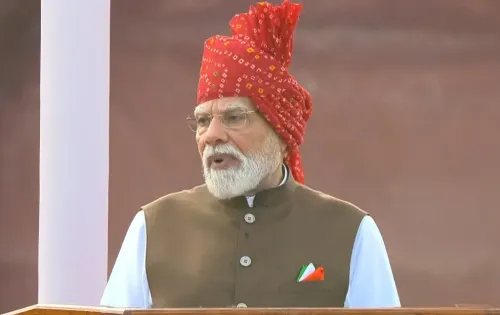
Twelve years ago, India's entire solar energy capacity fit inside a number most countries would call a rounding error — just 2 gigawatts. On Independence Day, Saturday, August 15, 2026, BJP MP Anurag Thakur — former Union Minister of Information and Broadcasting — put that journey in stark relief, citing an 80-fold expansion to 160 gigawatts as a defining marker of the decade since 2014.
Posting in Hindi with the hashtag #IndiaIndependenceDay, Thakur wrote: '12 वर्ष पहले देश में सोलर एनर्जी की कैपेसिटी सिर्फ 2 गीगावाट थी…आज वो बढ़कर 160 गीगावाट।' ('Twelve years ago, the country's solar energy capacity was just 2 gigawatts… today it has grown to 160 gigawatts.') The post carries no caveats. It is a victory lap — and the trajectory it describes is real, even if the precise 160 GW figure for 2026 is drawn from government projections that post-date available independent verification.
From 2 GW to a Global Benchmark
The baseline figure of roughly 2 GW in 2014 is well-documented. India's solar story at that point was largely aspirational — the Jawaharlal Nehru National Solar Mission, launched in 2010 under the National Action Plan on Climate Change, had set an initial target of 20 GW by 2022, a number that itself seemed ambitious at the time. That target was later revised sharply upward to 100 GW, and then folded into a broader 500 GW non-fossil capacity goal by 2030 that India committed to in its updated Nationally Determined Contributions submitted in 2022.
What followed was one of the fastest solar scale-ups recorded anywhere in the world. Competitive reverse-auction bidding drove module prices down, central and state policies de-risked private capital, and programmes such as PM-KUSUM — targeting agricultural solar pumps — and rooftop solar schemes pushed installations beyond utility-scale parks into farms and homes. The Ministry of New and Renewable Energy has tracked quarterly additions that, cumulatively, lifted India into the top tier of solar nations globally.
Why the Number Matters Beyond the Milestone
Solar capacity is not just an environmental headline. It is a geopolitical and economic signal. India is the world's third-largest energy consumer, and its ability to add renewable gigawatts at speed directly shapes its negotiating posture at COP climate summits and its leverage in global energy markets. Every gigawatt of domestic solar generation is a gigawatt that does not need to be imported as fossil fuel.
The 50 percent non-fossil power capacity target by 2030 — locked into India's international climate commitments — makes milestones like this politically significant well beyond Independence Day messaging. Renewable energy developers, solar equipment manufacturers, and state electricity boards are all watching the pace of additions as the 2030 deadline closes in.
India did not stumble into 160 gigawatts. It built it — policy layer by policy layer, auction by auction, panel by panel. The question now is whether the next twelve years can match the last.
Point of View
An economic competitiveness argument, and a rebuttal to critics who question India's climate seriousness. Anchoring the claim to a hard gigawatt number rather than a softer narrative gives it staying power in public discourse. As India approaches its 2030 non-fossil commitments, expect this milestone to be cited repeatedly in diplomatic and domestic political contexts alike.
NationPress
15 Aug 2026
Frequently Asked Questions
What is India's solar energy capacity in 2026 according to Anurag Thakur?
According to BJP MP Anurag Thakur's Independence Day post, India's solar energy capacity stands at 160 gigawatts in 2026, up from just 2 gigawatts twelve years ago.
What was India's solar capacity in 2014?
India's solar energy capacity was approximately 2 gigawatts in 2014, the baseline year Thakur referenced in his post.
What is India's renewable energy target for 2030?
India has committed to achieving 500 GW of non-fossil power capacity by 2030 and sourcing 50 percent of cumulative electric power from non-fossil sources, as stated in its 2022 Nationally Determined Contributions.
What is the Jawaharlal Nehru National Solar Mission?
The Jawaharlal Nehru National Solar Mission was launched in 2010 under India's National Action Plan on Climate Change to promote solar power; it initially targeted 20 GW by 2022, later revised to 100 GW.
What schemes has India used to expand solar energy?
India has used competitive reverse-auction bidding, the PM-KUSUM scheme for agricultural solar pumps, rooftop solar programmes, and central Ministry of New and Renewable Energy policy to drive rapid solar capacity additions.