Anurag Thakur: Modi's youth connect drove three PM terms
Synopsis
BJP MP Anurag Thakur has credited PM Narendra Modi's direct connect with young Indians as the driving force behind his three consecutive terms as Prime Minister, underscoring the BJP's consistent youth-first electoral strategy since 2014.
Key Takeaways
BJP MP Anurag Thakur posted on X attributing PM Modi 's three terms to his strong connect with youth voters.
Narendra Modi has served as Prime Minister since May 2014 , with successive terms beginning in May 2019 and June 2024 .
The BJP has consistently deployed youth-oriented schemes — including Skill India and Startup India — as part of its electoral strategy.
Thakur, as former Minister of Youth Affairs and Sports and Information and Broadcasting , was central to building the party's digital outreach infrastructure.
The BJP's third-term performance on youth-focused policy will be a key benchmark in upcoming state elections.
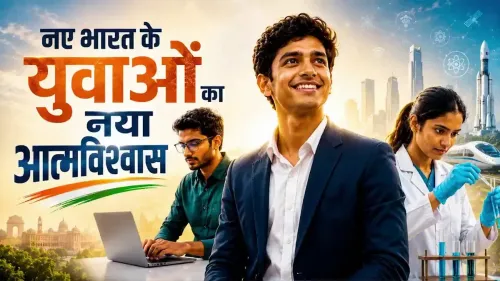
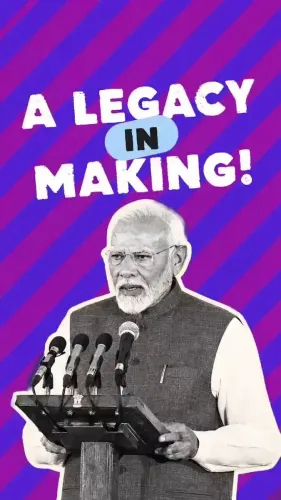
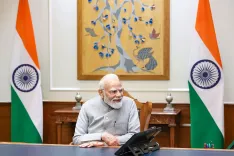
BJP MP Anurag Thakur has pointed to Prime Minister Narendra Modi's direct bond with India's youth as the engine behind one of independent India's most remarkable electoral streaks — three consecutive terms at the helm of the world's most populous democracy.
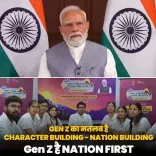
Posting on X, Thakur wrote: 'मोदी जी युवाओं से सीधा जुड़े हुए हैं, और इसलिए युवा उनकी बात सुनते भी हैं।' ('Modi ji is directly connected with the youth, and that is why the youth listen to him.') He added that it is on the strength of this popularity that Modi has become Prime Minister for a third time.
A hat-trick built on a youth mandate
Narendra Modi first took oath as Prime Minister in May 2014, when the BJP-led National Democratic Alliance swept to a decisive majority. A second term followed in May 2019, again on the back of a BJP-led majority. The third term began in June 2024, cementing Modi's place as one of the few leaders in post-independence India to win three successive national mandates. Thakur's framing is deliberate: the BJP has consistently positioned youth outreach — through digital campaigns, skill-development schemes, and direct social-media engagement — as a structural advantage over rivals. Modi's personal presence on platforms like X, YouTube, and NaMo App has made him unusually accessible to first-time and young voters, a cohort that has grown substantially with each election cycle.The BJP's youth-first playbook since 2014
Since its first term, the BJP government has anchored several flagship initiatives around young Indians — from Skill India and Startup India to PM YUVA mentorship programmes. The party's digital outreach machine, widely regarded as the most sophisticated in Indian politics, has kept Modi at the centre of conversations on platforms where younger voters spend the most time. Thakur himself, as former Union Minister of Information and Broadcasting and Youth Affairs and Sports, was a key architect of that outreach infrastructure. His post reads less like a casual observation and more like a party thesis: popular legitimacy, earned through sustained youth engagement, is what keeps the BJP's national coalition intact across election cycles. Whether that connect translates into results in upcoming state assembly elections — and whether youth-focused schemes deliver measurable outcomes in the third term — will be the real test of the argument Thakur is making.Point of View
Built through a decade of deliberate digital and policy outreach. By linking youth connect directly to a third mandate, the BJP frames its dominance as a function of genuine mass appeal rather than coalition arithmetic. This narrative becomes more significant heading into state elections, where the party will need to demonstrate that Modi's youth dividend holds beyond the national stage. The argument also implicitly sets a performance benchmark: if youth-focused schemes underdeliver in the third term, the thesis becomes harder to sustain.
NationPress
28 Jul 2026
Frequently Asked Questions
Why does Anurag Thakur say Modi is popular among youth?
Thakur argues that PM Modi's direct, sustained engagement with young Indians — through digital platforms, social media, and youth-centric government schemes — has built genuine trust and made youth voters consistently back him at the ballot box.
How many times has Narendra Modi been elected Prime Minister?
Narendra Modi has been elected Prime Minister three times: first in May 2014 , then in May 2019 , and again in June 2024 , each time leading the BJP-led NDA to a national mandate.
What youth schemes has the Modi government launched?
The Modi government has launched several youth-focused initiatives including Skill India , Startup India , and PM YUVA mentorship programmes, all aimed at improving employment, entrepreneurship, and opportunities for young Indians.
Who is Anurag Thakur and what ministries did he handle?
Anurag Thakur is a BJP Lok Sabha MP from Hamirpur, Himachal Pradesh . He served as Union Minister of Information and Broadcasting and Youth Affairs and Sports in the Modi government.
What is the BJP's strategy to win youth votes in India?
The BJP's youth strategy combines digital outreach — leveraging platforms like X, YouTube, and the NaMo App — with flagship government schemes targeting skills, startups, and mentorship, keeping PM Modi personally visible and accessible to younger voters.