Arunachal rights body flags road gaps, flood risk in Chakma-Hajong areas of Changlang
Synopsis
Arunachal Pradesh's human rights body has told Chief Minister Pema Khandu that crumbling roads and annual Dihing River floods are pushing Chakma and Hajong settlers out of their designated zones — threatening the demographic balance that indigenous tribes have long sought to protect. The fix, the Commission says, is infrastructure, not eviction.
Key Takeaways
The APSHRC recommended urgent road and flood-control measures in Chakma and Hajong settlement areas of Changlang district on 22 June 2025 .
The 33-km Namsai-Diyun stretch takes over an hour to cover due to poor road conditions, hurting economic activity and security logistics.
Diyun Circle reportedly generates an annual areca nut trade of around ₹50 crore .
Recurring Dihing River floods erode farmland and historically pressure Chakma-Hajong communities to expand beyond notified settlement zones.
The Commission urged inclusion of key corridors under PMGSY and the proposed East-West Industrial Corridor , and sought NEC and central government support for flood control.
Recommendations are framed around protecting both humanitarian needs and the demographic interests of Arunachal Pradesh's indigenous tribes.
The Arunachal Pradesh State Human Rights Commission (APSHRC) has recommended urgent road infrastructure upgrades and flood-control measures in Chakma and Hajong settlement areas of Changlang district, according to officials on Monday, 22 June. The Commission stressed that such interventions are essential to ensure these migrant communities and their descendants remain within their designated settlement zones while protecting the demographic interests of the state's indigenous tribes.
Field Visit Findings
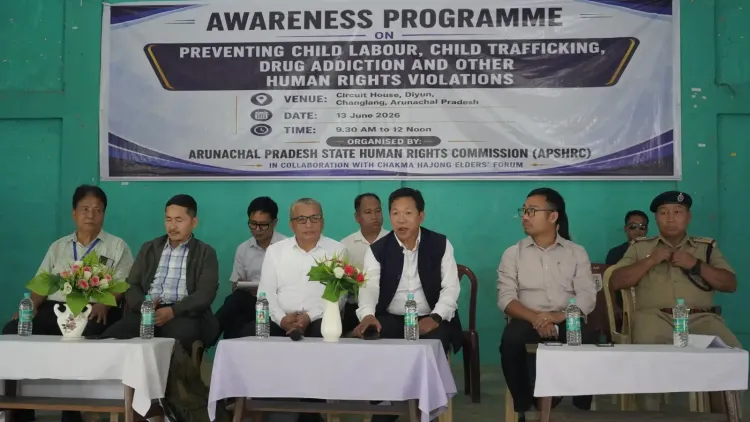
APSHRC acting Chairperson Bamang Tago communicated the Commission's concerns directly to Chief Minister Pema Khandu, citing observations from a field visit conducted on 12 and 13 June to Chakma and Hajong settlement areas in Diyun and Bordumsa circles of Changlang district. Two critical issues were flagged: severely inadequate road connectivity and recurring floods triggered by the Dihing River.
The approximately 33-km stretch between Namsai and Diyun currently takes more than an hour to cover due to poor road conditions, hampering economic activity, transportation, and regional connectivity. The Commission noted that the region carries growing economic significance, with claims that Diyun Circle alone generates an annual areca nut trade worth around ₹50 crore.
Strategic and Security Dimensions
Beyond economic concerns, the APSHRC underscored the strategic importance of better road access in the region. The headquarters of the 2nd Arunachal Pradesh India Reserve Battalion is located at Diyun, and improved roads would facilitate faster movement of security personnel during emergencies and law-and-order situations. The Commission argued that upgraded corridors would simultaneously serve developmental and national security interests.
Flood Displacement and Demographic Pressures
Recurring floods from the Dihing River annually erode agricultural land and damage crops in Chakma and Hajong settlement areas. According to the Commission, repeated flood-induced displacement has historically contributed to pressure for expansion beyond existing settlement zones — a long-standing concern for indigenous communities in Arunachal Pradesh. Effective flood-control measures, the APSHRC argued, would help contain such pressures and allow affected populations to remain within their notified areas.
Key Recommendations
The Commission urged the state government to expedite ongoing road projects on the Namsai-Diyun and Diyun-Miao corridors, ensure comprehensive coverage of settlement areas under the Pradhan Mantri Gram Sadak Yojana (PMGSY), and consider including these routes under the proposed East-West Industrial Corridor for development as double-lane roads. On flood control, the APSHRC recommended that the state government, if necessary, seek assistance from the North Eastern Council (NEC) and the Government of India to undertake comprehensive protective measures in Chakma and Hajong settlement areas.
The recommendations come amid continuing discussions on demographic protection, indigenous rights, and settlement regulation in Arunachal Pradesh — and reflect the Commission's call for a balanced approach that addresses both humanitarian needs and the cultural interests of the state's indigenous tribes.
Point of View
The Commission is attempting to recast a decades-old demographic dispute as a solvable governance problem. That is a pragmatic but fragile argument. If the infrastructure recommendations are not acted upon swiftly, the same flooding and isolation that have historically pushed settlers outward will continue — and no rights commission communication will contain the fallout. The harder question, which the report sidesteps, is why these settlement areas remain so severely underdeveloped more than five decades after the communities were relocated there.
NationPress
21 Sept 2026
Frequently Asked Questions
What has the APSHRC recommended for Chakma and Hajong settlement areas?
The Arunachal Pradesh State Human Rights Commission has recommended urgent road infrastructure upgrades on the Namsai-Diyun and Diyun-Miao corridors, coverage under PMGSY, inclusion in the East-West Industrial Corridor, and comprehensive Dihing River flood-control measures. The Commission made these recommendations in a communication to Chief Minister Pema Khandu following a field visit on 12 and 13 June.
Why are roads in Chakma-Hajong areas a concern?
The approximately 33-km stretch between Namsai and Diyun takes more than an hour to cover due to severely poor road conditions, hampering economic activity, regional connectivity, and the movement of security personnel stationed at the 2nd Arunachal Pradesh India Reserve Battalion headquarters in Diyun.
How do Dihing River floods affect Chakma and Hajong communities?
Annual floods from the Dihing River erode agricultural land and damage crops in Chakma and Hajong settlement areas. According to the APSHRC, repeated flood-induced displacement has historically pressured these communities to expand beyond their designated settlement zones, fuelling long-standing concerns among Arunachal Pradesh's indigenous tribes.
Who are the Chakma and Hajong communities in Arunachal Pradesh?
The Chakmas and Hajongs are migrant communities settled in designated areas of Arunachal Pradesh, primarily in Changlang district. Their presence has been a subject of ongoing discussions around indigenous rights, demographic protection, and settlement regulation in the state.
What role could the NEC and the Centre play in flood control?
The APSHRC recommended that the Arunachal Pradesh government, if necessary, seek assistance from the North Eastern Council (NEC) and the Government of India to fund and implement comprehensive flood-control measures in Chakma and Hajong settlement areas of Changlang and Namsai districts.