Article 371K proposed for Karnataka's Western Ghats and coastal belt
Synopsis
A Karnataka planning commission member has proposed a new Article 371K in the Constitution to give the Western Ghats and coastal belt a special legal framework — pairing ecological protection with a 10-year, seven-component development programme. It is an ambitious attempt to resolve one of India's most contested environment-versus-livelihood standoffs, and it now sits before both the state and Union governments for a decision.
Key Takeaways
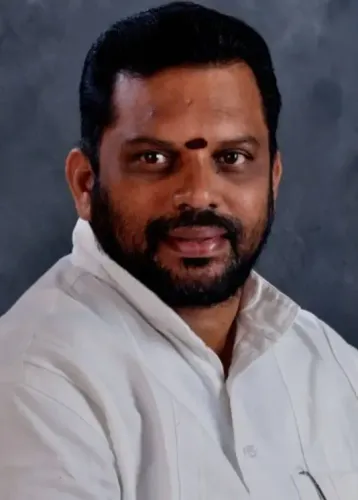
Mohanadass Hegde of the Karnataka State Policy and Planning Commission submitted the proposal to the Karnataka and Union governments on 14 November .
The plan seeks a new Article 371K in the Constitution to provide a special framework for the Western Ghats and adjoining coastal regions — requiring a constitutional amendment.
The Karnataka Western Ghats and Coastal Regions Programme 2027–2037 identifies seven major policy and project components , including a Karnataka-specific review of ESA and CRZ implementation.
Two flagship initiatives — WGEISAM (ecological investment) and WG-AGIDAM (green industry) — form the conservation and economic core of the programme.
A GIS-based Regional Development Atlas and a Western Ghats Regional Development and Ecological Board are among the institutional mechanisms proposed.
Implementation is planned across four phases from 2027 to 2037 , starting with baseline studies and legal examination.
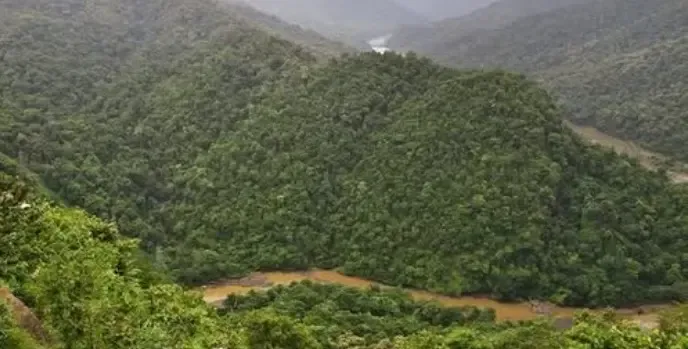
A sweeping 10-year development and conservation programme has been proposed for Karnataka's Western Ghats and its adjoining coastal regions, seeking a dedicated constitutional provision — a new Article 371K — to provide a special framework for ecological protection, regional development, and livelihood security. The proposal, submitted to both the Karnataka government and the Union government on Saturday, 14 November, lays out an integrated blueprint covering environmental governance, infrastructure, disaster resilience, and economic transformation through 2027 to 2037.
What the Proposal Contains
The document — formally titled the Karnataka Western Ghats and Coastal Regions Programme 2027–2037 — was submitted by S. Mohanadass Hegde, a member of the Karnataka State Policy and Planning Commission. It identifies seven major policy and project components, anchored by a call for scientific and legal examination of geographical boundaries, settlement patterns, agricultural and plantation lands, traditional occupations, and essential infrastructure, while retaining environmental safeguards and ensuring public consultation.
Central to the proposal is the pursuit of a new Article 371K in the Constitution, which would require the prescribed constitutional amendment process. The provision, if enacted, would create a special framework for community participation, conservation of natural resources, and livelihood security specific to the Western Ghats and coastal belt — a region that critics and ecologists argue has long been caught between development pressures and fragile biodiversity.
Ecological Investment and Green Economy Initiatives
Two flagship initiatives form the ecological and economic core of the programme. The first, the Western Ghats Ecological Investment and Sustainable Asset Management initiative (WGEISAM), would focus on forest and biodiversity conservation, watershed protection, river and stream restoration, soil and water conservation, habitat restoration, and scientific ecological monitoring.
The second, the Western Ghats Green Industry and Development Initiative (WG-AGIDAM), would promote environmentally suitable green industries, clean technologies, agro-processing, horticulture and plantation value addition, sustainable fisheries, responsible tourism, entrepreneurship, and local employment. The proposal explicitly states that economic activities under this initiative would be confined to legally permitted and environmentally suitable locations, subject to applicable laws and clearances.
Governance Architecture and Implementation Plan
The proposal recommends examining the feasibility of a Western Ghats Regional Development and Ecological Board to coordinate conservation, regional planning, and interdepartmental cooperation — without duplicating existing statutory institutions. A GIS-based Regional Development Atlas has also been proposed to map forests, protected areas, Ecologically Sensitive Areas (ESA), Coastal Regulation Zone (CRZ) regions, rivers, watersheds, coastal settlements, agricultural lands, livelihood zones, and disaster-prone locations.
The Planning Department has been proposed as the nodal department, with the Karnataka State Policy and Planning Commission providing policy coordination and strategic support, subject to government approval. A Regional Development and Economic Transformation Mission would coordinate implementation at the state, district, taluk, and village levels through district-wise action plans and measurable development targets.
Four-Phase Rollout from 2027 to 2037
Implementation is envisaged across four phases between 2027 and 2037, beginning with baseline studies, mapping, and legal examination, followed by phased implementation, expansion, and a final evaluation stage. The proposal also calls for the constitution of a multidisciplinary expert committee to examine its constitutional, legal, ecological, developmental, institutional, and financial dimensions.
This comes amid long-running debates over the Kasturirangan Committee report on Western Ghats ESA demarcation, which has faced sustained opposition from farming and plantation communities across Karnataka, Kerala, and Goa. The new proposal attempts to thread that needle by pairing ecological protection with a regional development policy covering agriculture, horticulture, fisheries, tribal development, healthcare, renewable energy, and disaster resilience. Whether the Centre and state governments take the constitutional route forward remains to be seen.
Point of View
And extending the logic to an ecological region would be a first. The real tension lies in the ESA and CRZ review component: any relaxation of those boundaries, however 'scientific', will face fierce scrutiny from conservation groups and Supreme Court oversight. What the proposal gets right is the framing — linking ecological protection to livelihood security rather than opposing them — but the constitutional route is a long, contentious road, and without early buy-in from the Centre, it risks stalling at the proposal stage like several earlier Western Ghats frameworks.
NationPress
14 Nov 2026
Frequently Asked Questions
What is the proposed Article 371K for Karnataka's Western Ghats?
Article 371K is a proposed new constitutional provision that would create a special legal framework for Karnataka's Western Ghats and adjoining coastal regions, covering ecological protection, community participation, conservation of natural resources, and livelihood security. It would require a constitutional amendment and has been submitted for consideration to both the Karnataka and Union governments.
Who submitted the Karnataka Western Ghats and Coastal Regions Programme?
S. Mohanadass Hegde , a member of the Karnataka State Policy and Planning Commission , submitted the proposal on 14 November . It has been addressed to both the state and Union governments for examination and action.
What are the seven major components of the 2027–2037 programme?
The proposal identifies seven major policy and project components, including a Karnataka-specific review of Ecologically Sensitive Area (ESA) and Coastal Regulation Zone (CRZ) implementation, a regional development policy, a Regional Development and Economic Transformation Mission, a proposed Western Ghats Regional Development and Ecological Board, the WGEISAM ecological investment initiative, the WG-AGIDAM green industry initiative, and a GIS-based Regional Development Atlas.
How would the programme be implemented and over what timeline?
The programme is proposed to run across four phases between 2027 and 2037, starting with baseline studies, mapping, and legal examination, followed by implementation, expansion, and final evaluation. The Planning Department has been proposed as the nodal department, with the Karnataka State Policy and Planning Commission providing strategic coordination.
Why is a new constitutional article being sought for the Western Ghats?
The proposal argues that the Western Ghats and coastal belt face a unique combination of ecological fragility, regional inequality, infrastructure gaps, and livelihood pressures that existing frameworks have not adequately addressed. A dedicated constitutional provision, modelled on existing Article 371 special status provisions for other regions, is seen as a way to give the area a durable, integrated legal framework rather than relying on piecemeal policies.