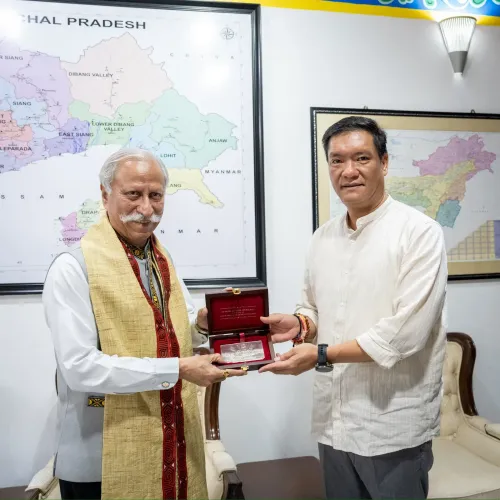
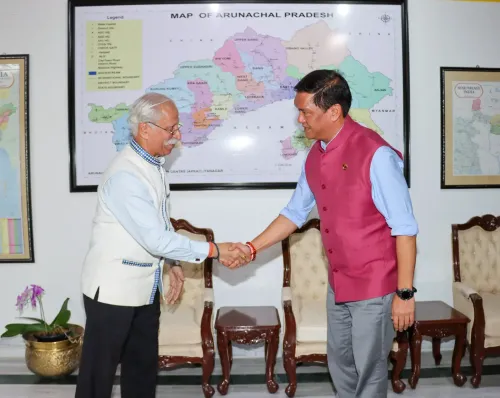
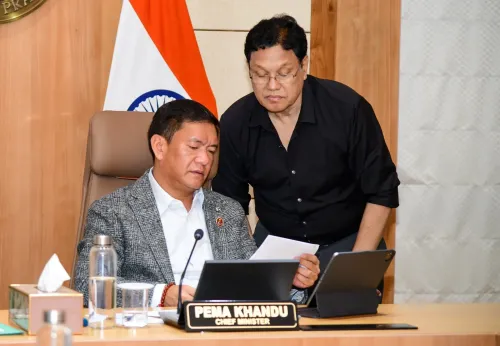
Arunachal Governor, CM Pema Khandu Review Development, Disaster Prep
Synopsis
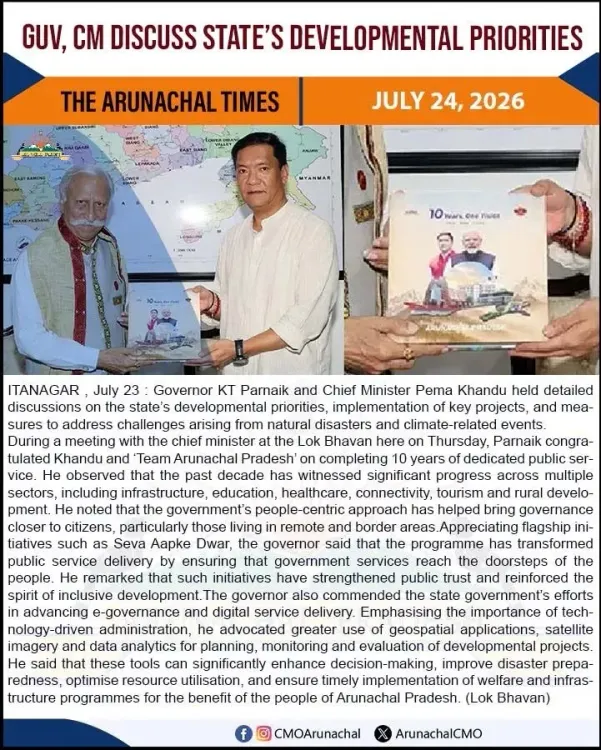
Governor KT Parnaik and Chief Minister Pema Khandu held a joint review of Arunachal Pradesh's development priorities, key projects and disaster preparedness on 25 July 2026, reaffirming their commitment to people-centric governance in the strategically vital northeastern state.
Key Takeaways
Governor KT Parnaik and Chief Minister Pema Khandu held a high-level review meeting on 25 July 2026 in Arunachal Pradesh .
The agenda covered the state's development priorities, key projects, and disaster preparedness .
Both constitutional heads reaffirmed their commitment to people-centric governance .
Arunachal Pradesh borders China and Myanmar , making strategic infrastructure and disaster resilience critical governance concerns.
CM Pema Khandu has led the state since 2016 , with infrastructure and connectivity as administration priorities.
The meeting aligns with the constitutional framework for Governor-CM coordination, especially significant in border and disaster-prone states.
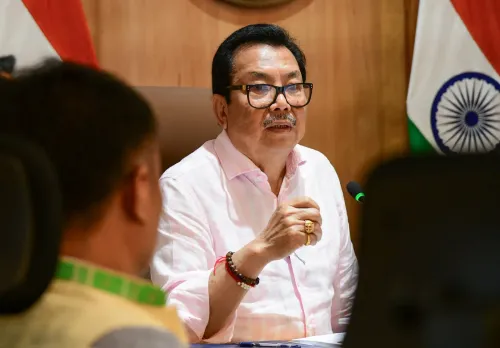
The Chief Minister's Office of Arunachal Pradesh announced on Friday, 25 July 2026, that Governor KT Parnaik and Chief Minister Pema Khandu held a high-level review meeting covering the state's development priorities, key projects, and disaster preparedness, reaffirming their shared commitment to people-centric governance.
Context
The meeting between Governor KT Parnaik and Chief Minister Pema Khandu reflects a constitutional practice common to Indian states, where the Governor — as the central government's representative — periodically confers with the elected Chief Minister to take stock of administrative progress. In a strategically sensitive border state like Arunachal Pradesh, such reviews carry added weight given the state's proximity to China and Myanmar and its vulnerability to natural disasters.
The CMO's post described the discussions as covering 'development priorities, key projects and disaster preparedness,' signalling a broad agenda that spans both long-term infrastructure goals and immediate resilience planning.
Policy Backdrop
Arunachal Pradesh has been a focal point of India's Northeast development push, with sustained attention to road connectivity, border infrastructure, and disaster management frameworks. Chief Minister Pema Khandu, who has led the state since 2016, has consistently prioritised infrastructure and connectivity as pillars of his administration's agenda.
Governor KT Parnaik, appointed in 2023, brings constitutional oversight to the state's governance architecture. Joint reviews between the Governor and Chief Minister are a recognised mechanism to align the state administration's priorities with the broader national interest, particularly in frontier states where strategic and developmental imperatives intersect.
The state's terrain — marked by high-altitude zones, seismic activity, and heavy monsoon rainfall — makes disaster preparedness a recurring and critical agenda item. Successive administrations have worked to strengthen early warning systems, evacuation protocols, and emergency response capacity across Arunachal Pradesh's difficult geography.
Stakeholders and Impact
The immediate beneficiaries of such high-level reviews are Arunachal Pradesh's residents, particularly communities in remote and border areas who depend on state-driven infrastructure and timely disaster response. Border communities face compounded vulnerabilities — geographic isolation, limited connectivity, and exposure to floods and landslides — making coordinated governance reviews directly consequential for their safety and welfare.
The reaffirmation of 'people-centric governance' by both the Governor and the Chief Minister signals a shared emphasis on translating policy intent into ground-level delivery, a challenge that remains acute in one of India's least densely connected states.
What's Next
Follow-up actions from the review are expected to shape the state's project execution calendar and disaster management preparedness ahead of the ongoing monsoon season. Key indicators to watch include movement on identified infrastructure projects, any updates to the state's disaster response framework, and resource allocation decisions that may follow from the meeting's deliberations.
As Arunachal Pradesh continues to occupy a central place in India's Northeast connectivity and strategic infrastructure agenda, such Governor-CM consultations are likely to become more frequent, with their outcomes feeding into both state budgetary priorities and central government coordination mechanisms.
Point of View
Such meetings signal active coordination between the elected government and the Centre's representative at a time when Northeast infrastructure is a national priority. The explicit mention of disaster preparedness alongside development projects reflects the dual pressure on Arunachal Pradesh's administration: accelerating growth while managing acute natural hazard risk during the monsoon season. Chief Minister Pema Khandu's decade-long tenure has given him deep institutional familiarity with these challenges, and the Governor's engagement suggests alignment rather than friction between Raj Bhavan and the state cabinet. The reaffirmation of 'people-centric governance' is a politically deliberate framing that positions both constitutional offices as responsive to citizen needs in a state where remoteness often widens the gap between policy intent and delivery.
NationPress
24 Jul 2026
Frequently Asked Questions
Why did Arunachal Pradesh Governor and CM meet in July 2026?
Governor KT Parnaik and Chief Minister Pema Khandu met to review the state's development priorities, key ongoing projects and disaster preparedness, reaffirming their commitment to people-centric governance.
Who is the Governor of Arunachal Pradesh?
KT Parnaik is the Governor of Arunachal Pradesh, appointed in 2023 to provide constitutional oversight of the state's administration.
Who is the Chief Minister of Arunachal Pradesh?
Pema Khandu is the Chief Minister of Arunachal Pradesh, serving since 2016 with a focus on infrastructure, connectivity and development in the Northeast.
Why is disaster preparedness important for Arunachal Pradesh?
Arunachal Pradesh is highly vulnerable to floods, landslides and seismic activity due to its mountainous terrain and heavy monsoon rainfall, making disaster preparedness a recurring priority for the state government.
What is the significance of Governor-CM review meetings in Indian states?
Such meetings are a constitutional practice where the Governor, as the central government's representative, coordinates with the elected Chief Minister on administrative priorities — particularly important in sensitive border states like Arunachal Pradesh.