CM Pema Khandu Hosts Arunachal's First Official Coffee Workshop
Synopsis
Arunachal Pradesh Chief Minister Pema Khandu convened the state's first official Coffee Workshop on October 3, 2026, uniting growers from across the state and signalling a push to develop coffee as a formal agricultural and entrepreneurial sector in the frontier state.
Key Takeaways
Arunachal Pradesh held its first-ever official Coffee Workshop on October 3, 2026 , bringing together coffee growers from across the state.
Chief Minister Pema Khandu described the event as an important milestone in the state's agricultural and entrepreneurial journey.
The workshop marks a shift from scattered informal cultivation to an organised, policy-backed approach to coffee development.
Arunachal Pradesh's high-altitude, diverse microclimates offer potential for specialty coffee production in India's largely untapped northeast.
The event signals growing state government intent to formalise and scale the coffee sector, potentially through future policy interventions or grower support programmes.
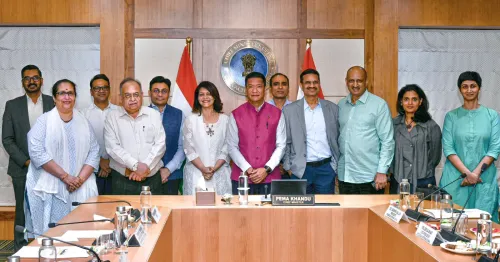
A quiet agricultural revolution may be brewing in the hills of Arunachal Pradesh. For the first time in the state's history, coffee growers from across the frontier state gathered for an official Coffee Workshop — a milestone that Arunachal Pradesh Chief Minister Pema Khandu described on Saturday, October 3, 2026, as an important new chapter in the state's agricultural and entrepreneurial journey.
A First Gathering for Arunachal's Coffee Growers
The workshop brought together coffee cultivators from multiple corners of the state under one roof for the first time in an official capacity. That alone signals a shift — from scattered, informal cultivation to an organised, policy-backed effort to map and develop the sector. CM Khandu framed the event not as a routine government programme but as the opening of something larger: a potential pillar of Arunachal's agricultural economy.
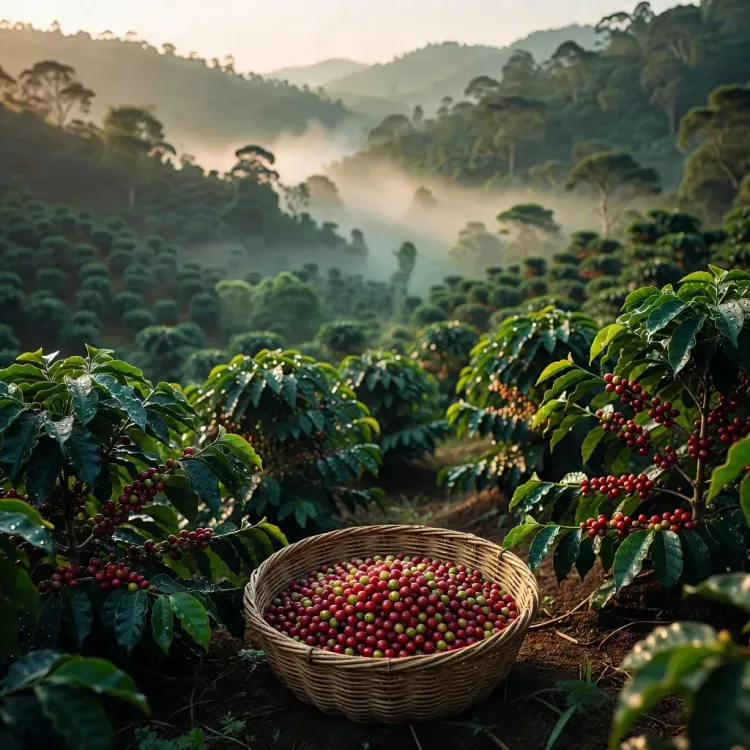
Arunachal Pradesh's terrain — stretching across the eastern Himalayas, with altitudes ranging from lowland plains to high-altitude forests — offers microclimates that can support specialty coffee cultivation. The state sits in India's northeast, a region where coffee remains far less explored than the established belts of Karnataka, Kerala, and Tamil Nadu. That gap is precisely the opportunity the workshop appears designed to address.
Northeast India's Untapped Coffee Belt
India is among the world's top coffee producers, but the northeast's contribution to that story has been minimal — a function of infrastructure gaps, limited market linkages, and the absence of organised grower networks. A state-convened workshop changes the dynamic by signalling institutional intent. It creates a common platform where farmers can learn about cultivation best practices, post-harvest processing, grading, and market access.
For Arunachal's farmers — many of whom rely on traditional crops and face the volatility of seasonal agriculture — coffee offers an intriguing proposition: a crop with strong domestic and global demand, premium pricing potential for well-processed beans, and year-round income if properly managed. The entrepreneurial framing in CM Khandu's post is deliberate; it positions coffee not just as a farm product but as a small-business opportunity tied to a growing café culture and export market.
What the Workshop Signals for State Policy
A first-of-its-kind official workshop rarely happens in a vacuum. It typically follows early-stage government surveys, pilot plantations, or demand from growers who have already begun cultivating on their own. The fact that enough growers exist across the state to warrant a multi-district gathering suggests coffee cultivation in Arunachal Pradesh has already crossed an informal threshold — and that the state government is now ready to formalise and accelerate it.
Whether this workshop leads to a dedicated coffee development mission, subsidised seedling distribution, or a grower cooperative network remains to be announced. But the symbolism of the first convening is real — and in agriculture, organised beginnings have a way of compounding fast.
Point of View
The optics are also politically useful: championing agri-entrepreneurship in a state where economic opportunity remains the defining voter concern. If the workshop yields a structured coffee development programme, it could become a template for other niche high-value crops across the northeast. The critical test will be whether this inaugural gathering translates into sustained institutional support — seedlings, processing infrastructure, and market linkages — or remains a symbolic first step.
NationPress
3 Oct 2026
Frequently Asked Questions
What happened at Arunachal Pradesh's Coffee Workshop in 2026?
On October 3, 2026, Arunachal Pradesh held its first-ever official Coffee Workshop, bringing together coffee growers from across the state in what Chief Minister Pema Khandu called an important milestone in the state's agricultural and entrepreneurial journey.
Does Arunachal Pradesh grow coffee?
Yes, coffee cultivation exists in Arunachal Pradesh, leveraging the state's diverse high-altitude microclimates across the eastern Himalayas, though it remains far less developed than India's established coffee belts in Karnataka, Kerala, and Tamil Nadu.
Why is coffee farming important for Arunachal Pradesh?
Coffee offers Arunachal Pradesh's farmers an opportunity to diversify beyond traditional subsistence crops into a high-value, globally demanded commodity with premium pricing potential, aligning with broader goals of agricultural modernisation and entrepreneurship in the northeast.
What is Pema Khandu's role in Arunachal Pradesh?
Pema Khandu is the Chief Minister of Arunachal Pradesh and a senior BJP leader who has served as the state's chief minister since 2016.
Is northeast India a coffee-producing region?
Northeast India has significant but largely untapped potential for coffee cultivation. Unlike the well-established coffee regions of south India, the northeast — including Arunachal Pradesh — is only beginning to formally develop its coffee sector.