Assam Budget 2026-27: Bihu, Majuli heritage in UNESCO bid pipeline
Synopsis
Assam's 2026-27 Budget goes well beyond fiscal arithmetic — it lays out the state's most ambitious cultural heritage agenda yet, with UNESCO nominations for Bihu, Majuli, and the Ahom capital of Rangpur, a new Satra Commission, and films on Lachit Barphukan. Coming on the heels of the Charaideo Moidams UNESCO win, this is Assam betting that cultural soft power is its fastest route to global recognition.
Key Takeaways
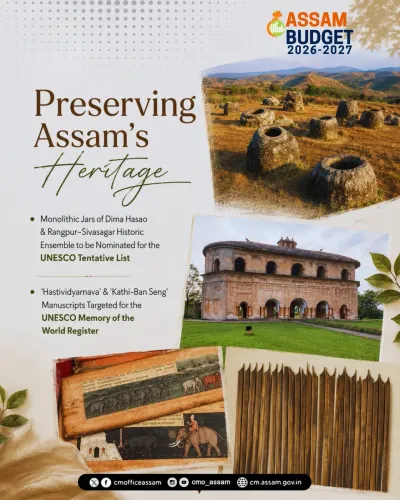
Assam's 2026-27 Budget proposes phased UNESCO nominations for Bihu , Majuli Vaishnavite heritage , and the Ahom capital of Rangpur in Sivasagar .
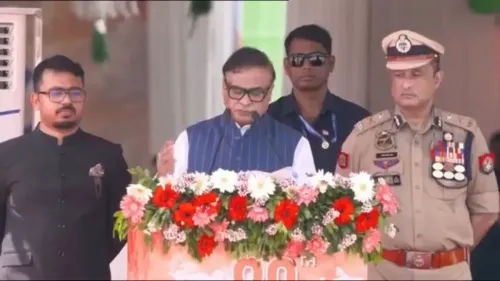
Finance Minister Jayanta Malla Baruah presented the budget in the Assam Legislative Assembly , citing the Charaideo Moidams UNESCO inscription as the precedent.
Conservation work at Rang Ghar will be expedited; restoration of Kareng Ghar and visitor infrastructure will also be undertaken.
The Assam Satra Commission will be constituted to provide a formal governance framework for the state's monastic network.
Madhupur Satra , associated with Srimanta Sankardeva , will receive dedicated funding for heritage conservation and pilgrim facilities.
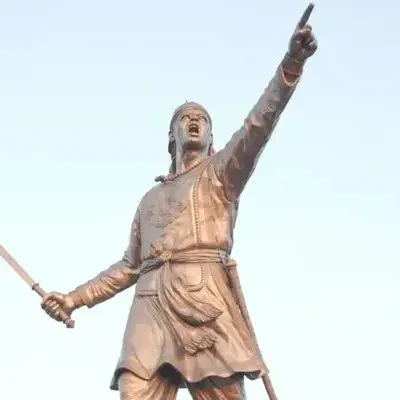
State funding announced for feature films on Lachit Barphukan and Swahid Kushal Konwar , and for the Bhupen Hazarika birth centenary concluding ceremony in New Delhi .
The Assam government on 11 July 2026 unveiled a multi-phase roadmap to secure UNESCO recognition for the state's most significant cultural assets — including Bihu, the Vaishnavite heritage of Majuli, and the Ahom capital of Rangpur in Sivasagar — as part of the 2026-27 State Budget presented in the Assam Legislative Assembly. The push signals Assam's most coordinated heritage diplomacy effort in recent memory.
Key Announcements in the Budget
Presenting the budget, Finance Minister Jayanta Malla Baruah said nominations would be pursued across UNESCO's cultural, natural, and intangible heritage categories in a phased manner. The initiative, he said, aims to preserve Assam's civilisational legacy while raising its profile on the global cultural map. The state government also proposed organising a grand Bihu celebration in New Delhi to showcase Assam's cultural identity before a national audience.
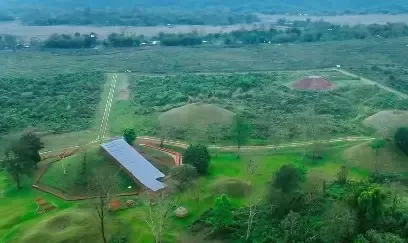
The budget drew a direct line from the recent success of Charaideo Moidams — inscribed as a UNESCO World Heritage Site — describing it as proof that Assam's heritage can command international recognition. Officials said the Moidams inscription has strengthened the state's confidence in pursuing further nominations.
Ahom Monuments to Get Conservation Push
On the ground, the budget committed to expediting work on the Rang Ghar Conservation Project, one of the oldest surviving amphitheatres in Asia. Restoration, preservation, and visitor infrastructure development at Kareng Ghar — a prominent palace complex from the Ahom era — will also be undertaken. Both monuments are located in Sivasagar, the historic heartland of the Ahom kingdom.
Vaishnavite Heritage and Satra Commission
The budget placed notable emphasis on Assam's Vaishnavite monastic tradition. Comprehensive development of Madhupur Satra — the sacred site associated with the final years of 15th-century saint-reformer Srimanta Sankardeva — will receive dedicated financial support, covering heritage conservation, pilgrim facilities, and cultural infrastructure expansion.
To institutionalise the protection of the state's satra (monastic) network, the government announced the constitution and empowerment of the Assam Satra Commission. The move is expected to give the hundreds of satras across the state a formal governance and funding framework for the first time.
Films, Centenary, and Cultural Tourism
The budget also proposed financial assistance for producing commercial feature films on Ahom military commander Lachit Barphukan and freedom fighter Swahid Kushal Konwar, aiming to bring Assam's historical figures to mainstream national audiences. The concluding ceremony of the birth centenary celebrations of Bharat Ratna Bhupen Hazarika is also proposed to be hosted in New Delhi.
Together, these initiatives form part of a broader state strategy to position Assam as a leading destination for cultural and heritage tourism, with UNESCO inscriptions seen as the most powerful lever for international visibility. Whether the nominations translate into formal inscriptions will depend on the Centre's coordination and UNESCO's evaluation timelines — a process that typically spans several years.
Point of View
And the government is right to capitalise on it. But UNESCO nominations are long, document-heavy processes that require sustained Centre-state coordination — something that has historically stalled Indian bids. The creation of the Satra Commission is the more immediately consequential move: Assam has hundreds of satras that have operated without formal institutional support for decades, and a funded commission could do more for living heritage than any UNESCO plaque. The real test will be whether these budget lines survive implementation, or whether they join a long list of cultural pledges that faded after the speech.
NationPress
10 Oct 2026
Frequently Asked Questions
Which Assam heritage sites are being nominated for UNESCO recognition?
The Assam government has announced plans to pursue UNESCO nominations for Bihu (intangible heritage), the Vaishnavite cultural tradition of Majuli, and the Ahom capital of Rangpur in Sivasagar. The nominations will be taken up in phases across UNESCO's cultural, natural, and intangible heritage categories.
What is the Charaideo Moidams and why is it relevant?
Charaideo Moidams are the royal burial mounds of the Ahom dynasty, recently inscribed as a UNESCO World Heritage Site. The Assam government cited this inscription as a milestone that validates its strategy of pursuing international recognition for the state's heritage assets.
What is the Assam Satra Commission announced in the budget?
The Assam Satra Commission is a new body proposed in the 2026-27 budget to institutionalise the governance and funding of the state's satra (Vaishnavite monastic) network. It is intended to give Assam's hundreds of satras a formal framework for preservation and financial support for the first time.
What conservation projects for Ahom monuments were announced?
The budget proposed expediting the Rang Ghar Conservation Project and undertaking restoration, preservation, and visitor infrastructure development at Kareng Ghar, both prominent Ahom-era monuments located in Sivasagar district.
What cultural events and films did the Assam budget propose?
The budget proposed financial assistance for commercial feature films on Ahom military commander Lachit Barphukan and freedom fighter Swahid Kushal Konwar. It also proposed hosting a grand Bihu celebration in New Delhi and the concluding ceremony of Bharat Ratna Bhupen Hazarika's birth centenary in New Delhi.