Assam Budget 2026 Allocates ₹4,635 Cr for Healthcare

Synopsis
The Chief Minister's Office of Assam announced a ₹4,635 crore healthcare allocation in the Assam Budget 2026, with flagship schemes Asom Swastha Utkarsha Abhijan and Sustha Asom Abhijan 2030 set to drive expanded, tech-enabled access to quality care across the state under CM Dr. Himanta Biswa Sarma.
Key Takeaways
₹4,635 crore has been allocated to healthcare in the Assam Budget 2026 .
Key delivery schemes include Asom Swastha Utkarsha Abhijan and Sustha Asom Abhijan 2030 .
Tech-enabled healthcare services are a central pillar of the state's health strategy.
The allocation continues a trend of rising health spending in Assam since 2021 .
The initiative complements the national Ayushman Bharat PM-JAY scheme and the Digital Health Mission .
Rural residents and health workers across Assam's 35-million-plus population are the primary target beneficiaries.
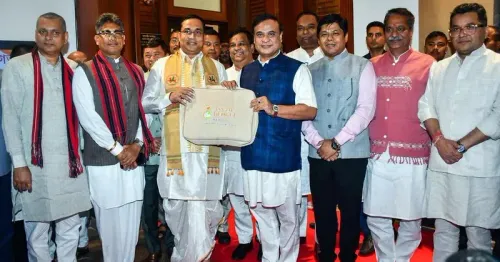
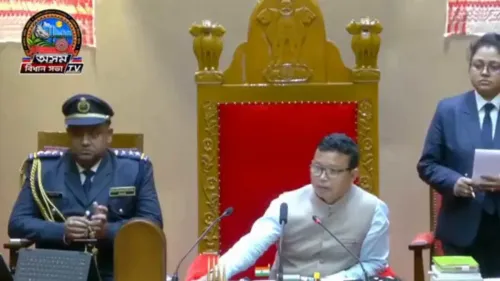
The Chief Minister's Office of Assam announced on Friday, 17 July 2026, that the Assam Budget 2026 has earmarked ₹4,635 crore for healthcare, signalling a significant push to build a stronger and more accessible health ecosystem across the state under Chief Minister Dr. Himanta Biswa Sarma.
Context
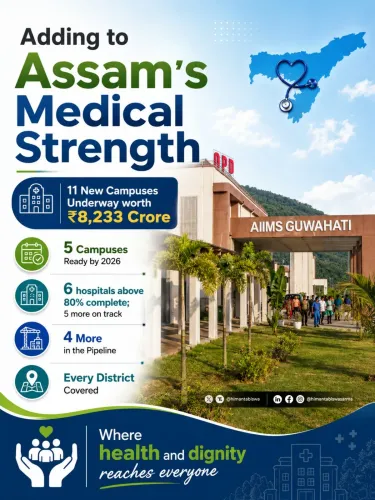
The official post from the Chief Minister's Office stated that the allocation 'sets the course for a stronger and more accessible healthcare ecosystem in Assam.' Key initiatives named include Asom Swastha Utkarsha Abhijan, Sustha Asom Abhijan 2030, and a suite of tech-enabled healthcare services. Together, these programmes are positioned as the delivery vehicles for the budgeted funds, aimed at enhancing access to quality care across the state's diverse geographies.
Policy Backdrop
Assam, a northeastern state with over 35 million residents, has seen successive budgets raise health spending as a share of total outlay since the current government took office in May 2021. Dr. Himanta Biswa Sarma, who served as the state's health and education minister before becoming Chief Minister, has consistently prioritised health infrastructure expansion. The state is also a participant in the national Ayushman Bharat Pradhan Mantri Jan Arogya Yojana, launched in 2018, which provides health coverage to low-income families and complements state-level initiatives.
The emphasis on technology-enabled services aligns with the broader national Digital Health Mission, rolled out from 2020 onward, which seeks to integrate digital tools into primary and secondary care delivery. Northeastern states have been working to close persistent gaps in doctor-population ratios and hospital bed availability, and Assam's rising health allocations mirror this regional trend.
Stakeholders and Impact
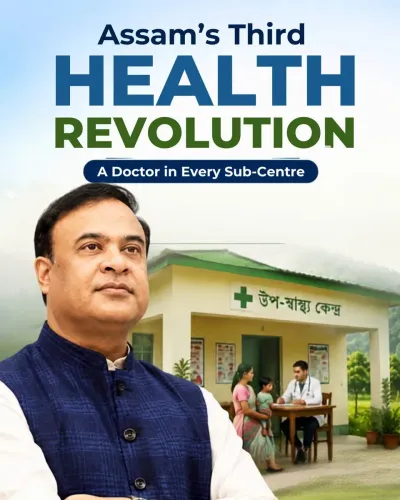
The primary beneficiaries of the ₹4,635 crore allocation are Assam's residents, particularly those in rural and semi-urban areas where access to quality healthcare has historically been limited. Rural health workers — including community health officers and auxiliary nurse midwives — stand to benefit from infrastructure upgrades and technology tools that can reduce the burden of manual record-keeping and improve patient referrals. The Sustha Asom Abhijan 2030 initiative, with its year-tagged target, suggests a medium-term planning horizon that could anchor multi-year facility upgrades and workforce deployment.
Urban residents and those in Guwahati and other district headquarters may see faster rollout of tech-enabled services such as tele-consultation and digital health records, while remote districts in Barak Valley and the hill areas could see the most transformative impact if physical infrastructure investments are executed as planned.
What's Next
Detailed budget documents and scheme-specific guidelines are expected to be released in the months following the assembly session, which will clarify fund disbursement timelines and district-level targets. Monitoring bodies and civil society groups will watch closely for district-level facility upgrades and the pace of tech-integration in primary health centres. The Sustha Asom Abhijan 2030 target year provides a concrete benchmark against which progress can be measured, and periodic state health reports will be the key accountability mechanism in the years ahead.
Point of View
635 crore healthcare allocation in the Assam Budget 2026 is the most visible signal yet that the Sarma government intends to make health infrastructure a defining legacy of its tenure. By anchoring two named schemes — including one with a 2030 horizon — the administration is betting on medium-term continuity over short-cycle optics. The technology emphasis is politically shrewd: it appeals to urban aspirations while, if implemented well, offering real efficiency gains in underserved rural areas. The real test will be execution fidelity at the district level, where previous northeastern health schemes have historically stalled.
NationPress
17 Jul 2026
Frequently Asked Questions
What is the healthcare allocation in Assam Budget 2026?
The Assam Budget 2026 has allocated ₹4,635 crore for healthcare, as announced by the Chief Minister's Office of Assam on 17 July 2026 .
What is Sustha Asom Abhijan 2030?
Sustha Asom Abhijan 2030 is a state health initiative named by the Chief Minister's Office of Assam as one of the key programmes to be funded under the Assam Budget 2026 healthcare allocation, with a target year of 2030 .
What is Asom Swastha Utkarsha Abhijan?
Asom Swastha Utkarsha Abhijan is another flagship health scheme cited by the Chief Minister's Office of Assam as part of the state's plan to enhance access to quality healthcare under the ₹4,635 crore budget allocation.
How has Assam's health budget changed under Himanta Biswa Sarma?
Since Dr. Himanta Biswa Sarma became Chief Minister in May 2021 , successive Assam budgets have raised health spending as a share of total outlay, with the 2026 allocation of ₹4,635 crore representing the latest step in that upward trajectory.
How does Assam's health budget connect to national schemes?
Assam participates in the national Ayushman Bharat Pradhan Mantri Jan Arogya Yojana and aligns with the Digital Health Mission ; the state's own schemes are designed to complement these central programmes and address gaps specific to the northeastern region.