Assam CM Office: Karbi Anglong Platinum Jubilee Enters Guinness Records

Synopsis
The Chief Minister's Office of Assam announced that 15,000 artistes performed the traditional Nimso Kerung dance at the Platinum Jubilee of Karbi Anglong District Day, securing a place in the Guinness World Records and celebrating 75 years of the district's formation.
Key Takeaways
15,000 artistes performed the traditional Nimso Kerung dance at the Platinum Jubilee of Karbi Anglong District Day , creating a new Guinness World Record .
The event was announced by the Chief Minister's Office of Assam on 18 November 2026 .
Karbi Anglong District was established in 1951 , making this its 75th anniversary .
The Nimso Kerung is a traditional group dance of the Karbi community , performed during festivals and community events.
Formal Guinness World Records certificate issuance remains pending official verification.
The event is part of a broader Northeast India pattern of using mass cultural performances to assert tribal identity and gain international visibility.
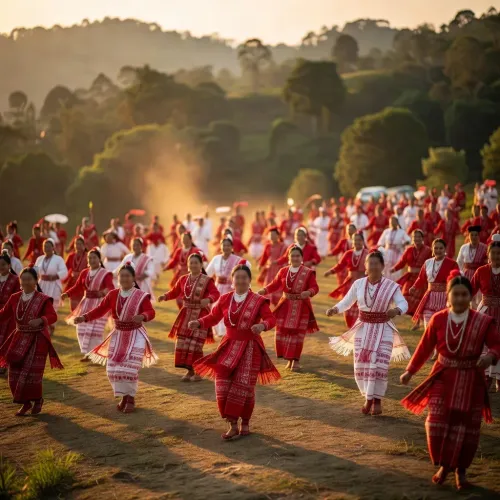
Fifteen thousand voices, one dance, one record. The Chief Minister's Office of Assam announced on Wednesday, 18 November 2026 that the grand Platinum Jubilee celebrations of Karbi Anglong District Day have etched themselves into the Guinness World Records — with 15,000 artistes performing the traditional Nimso Kerung dance in a single, sweeping mass presentation.
15,000 artistes, one Karbi heartbeat
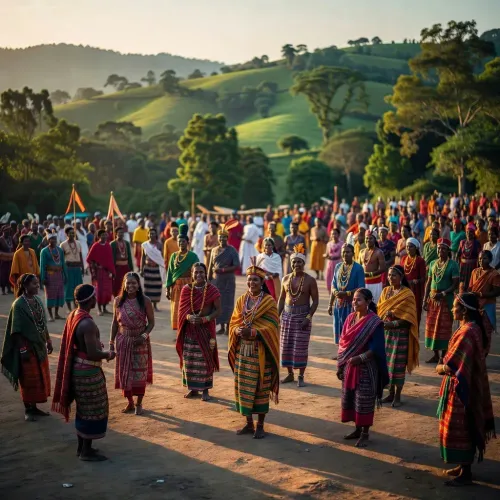
The Nimso Kerung is not merely a dance — it is a living archive. Performed by the Karbi community of Assam's Northeast hill district, the form is traditionally staged during festivals and community rites, its rhythms carrying generations of tribal memory. At the Platinum Jubilee event, that memory was amplified on a scale the community has never before attempted: more than fifteen thousand performers moving in unison, transforming a district anniversary into a world-record moment.
The Chief Minister's Office described the gathering as 'a spectacular presentation of the rich cultural heritage of the Karbi community,' with the record claim now formally lodged with Guinness World Records. Official certification and certificate issuance are the next milestone the community and state government will be watching for.
Karbi Anglong at 75: a district's long arc
Karbi Anglong District was established in 1951, making this year's celebration its 75th — Platinum Jubilee — anniversary. The district is Assam's largest by area and home to the Karbi people, one of the state's most prominent scheduled tribes, whose distinct language, oral traditions, and ceremonial arts have long set them apart in the region's cultural mosaic.
Annual District Day observances have historically been modest administrative commemorations. The decision to anchor the Platinum Jubilee around a mass Nimso Kerung performance signals a deliberate escalation — using international record machinery to give a local tribal tradition a global footprint.
Northeast's record-breaking playbook for tribal visibility
Assam and its neighbouring states have increasingly turned to large-scale ethnic festivals to assert tribal identities and secure international visibility. Mass-participation cultural events — combining heritage display with sheer numbers — serve a dual purpose: they build community cohesion domestically while generating headlines that travel beyond state borders. The Nimso Kerung world record attempt fits squarely into that pattern, using the Guinness platform as both a cultural megaphone and a preservation tool for an indigenous art form that might otherwise remain known only within the hills of Karbi Anglong.
For the state government, the optics are equally powerful. Backing a record-setting tribal celebration at a 75-year district milestone is a clear signal of investment in Assam's indigenous communities — one that dovetails with broader national conversations about documenting and protecting the country's tribal heritage.
The certificate has yet to be formally handed over, but the moment has already landed. Seventy-five years after Karbi Anglong took shape on the administrative map of India, its people danced their way into the global record books.
Point of View
Assam's administration effectively transforms a routine administrative milestone into a statement of tribal visibility. This strategy serves both a soft-power function — projecting the richness of Scheduled Tribe heritage to national and international audiences — and a political one, reinforcing the ruling dispensation's outreach credentials with Assam's tribal electorate. The pending formal certification by Guinness will determine how durable the headline-making impact proves to be.
NationPress
18 Nov 2026
Frequently Asked Questions
What is the Nimso Kerung dance?
The Nimso Kerung is a traditional group dance of the Karbi people of Assam, performed during festivals and community ceremonies, and is considered a key expression of Karbi cultural identity.
Why did Karbi Anglong celebrate its Platinum Jubilee in 2026?
Karbi Anglong District was established in 1951, making 2026 its 75th anniversary — the Platinum Jubilee — which was marked with grand cultural celebrations including a Guinness World Record attempt.
How many artistes performed the Nimso Kerung dance at the Guinness record event?
According to the Chief Minister's Office of Assam, 15,000 artistes participated in the mass Nimso Kerung performance at the Platinum Jubilee celebrations of Karbi Anglong District Day.
Has the Guinness World Record been officially confirmed?
The Guinness World Record entry has been claimed for the Nimso Kerung performance, but formal certification and certificate issuance by Guinness World Records are still pending official verification.
Where is Karbi Anglong District located?
Karbi Anglong is a district in Assam, Northeast India, and is the state's largest district by area. It is primarily inhabited by the Karbi tribal community.