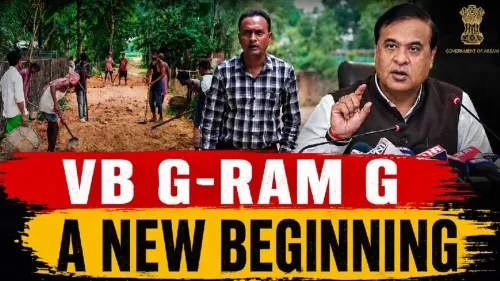
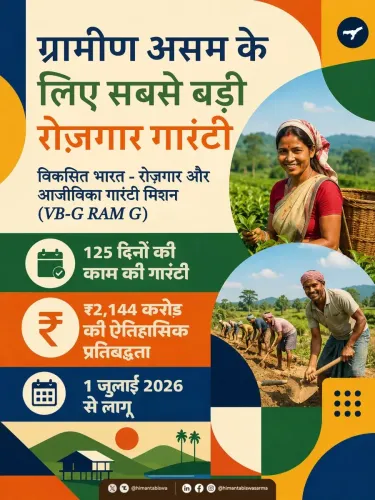
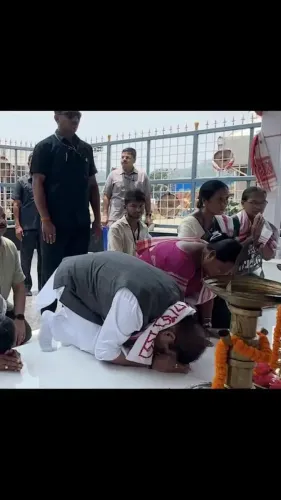
Assam CM Sarma Launches VB-G RAM-G Rural Jobs Scheme
Synopsis
Assam has launched the VB-G RAM-G scheme to boost rural employment, Chief Minister Himanta Biswa Sarma announced on 3 July 2026. The initiative targets rural households and village panchayats, adding a state-level layer to existing national rural employment programmes in the northeastern state.
Key Takeaways
The Chief Minister's Office of Assam announced the launch of the VB-G RAM-G scheme on 3 July 2026 .
CM Himanta Biswa Sarma stated the scheme is designed to boost rural employment opportunities across Assam .
Primary beneficiaries are rural households and village panchayats in the state.
The scheme follows Assam's established pattern of supplementing the national MGNREGA framework with state-specific programmes.
Detailed operational guidelines, funding patterns, and district-wise rollout timelines are yet to be released.
Assam's rural belts, including the Brahmaputra valley and hill districts, face persistent seasonal unemployment and migration pressures the scheme aims to address.
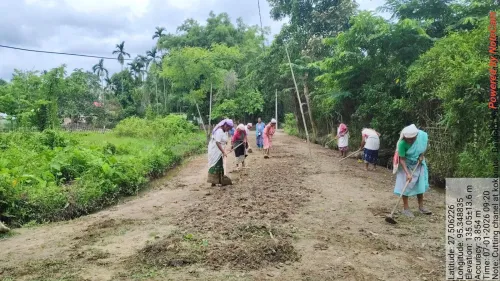
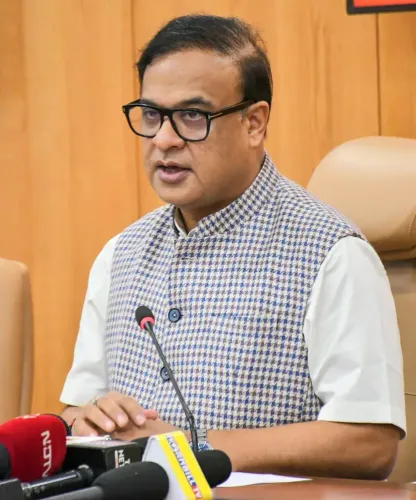
The Chief Minister's Office of Assam announced on Friday, 3 July 2026 that the state has rolled out the VB-G RAM-G scheme, a new state-level initiative aimed at generating employment in rural areas, with Chief Minister Himanta Biswa Sarma stating the programme will boost rural jobs across Assam.
Context
CM Sarma has described the scheme as a direct intervention to expand livelihood opportunities for rural households in the state. The announcement positions the initiative as a significant addition to Assam's existing portfolio of employment-linked programmes targeting villages and panchayats.
The scheme comes at a time when Assam — a northeastern state with a large rural population — continues to grapple with seasonal unemployment and migration pressures, particularly in the Brahmaputra valley and the hill districts.
Policy Backdrop
Assam has supplemented the national Mahatma Gandhi National Rural Employment Guarantee Act (MGNREGA) — operational in the state since 2006 — with successive state-specific add-ons designed to address gaps left by the central programme. The VB-G RAM-G scheme follows this pattern of layering state resources over the central rural employment framework.
Successive governments in Assam have introduced such programmes to reduce dependence on seasonal agricultural labour and curb out-migration from rural belts. The Sarma administration, in power since May 2021, has prioritised local job creation as a stated policy goal across multiple sectors.
Stakeholders and Impact
The primary beneficiaries of the VB-G RAM-G scheme are expected to be rural households and village panchayats, which typically serve as implementing agencies for such programmes on the ground. If the scheme follows the model of earlier state initiatives, panchayat bodies will play a central role in identifying beneficiaries and executing works.
For communities in Assam's interior and hill regions — where formal employment is scarce and agricultural income is irregular — state-backed rural employment schemes represent a critical income buffer, especially during lean agricultural seasons.
What's Next
Detailed operational guidelines, the funding pattern, and district-wise rollout timelines are expected to be released through subsequent government orders. Observers will watch for clarity on the precise scope and scale of the scheme, including the number of households targeted and the nature of works to be undertaken.
The scheme's effectiveness will ultimately depend on the speed of implementation at the panchayat level and the adequacy of funds allocated — factors that have historically determined the reach of similar rural employment programmes in Assam. How the state integrates this initiative with existing MGNREGA infrastructure will be a key question in the weeks ahead.
Point of View
The administration is signalling responsiveness to ground-level economic anxieties ahead of potential electoral cycles. The scheme also fits a broader northeastern India pattern where state governments seek visibility on welfare delivery by creating identifiable local programmes alongside central ones. Its long-term impact will hinge on implementation quality at the panchayat tier, where capacity and accountability have historically been uneven.
NationPress
3 Jul 2026
Frequently Asked Questions
What is the VB-G RAM-G scheme in Assam?
The VB-G RAM-G scheme is a state government initiative launched by Assam on 3 July 2026 to generate rural employment opportunities, announced by Chief Minister Himanta Biswa Sarma . Full details of the acronym's expansion and precise implementation timelines are yet to be officially confirmed.
Who will benefit from the VB-G RAM-G scheme?
The scheme is aimed at rural households and village panchayats across Assam , particularly in areas facing seasonal unemployment and out-migration such as the Brahmaputra valley and hill districts.
How is VB-G RAM-G different from MGNREGA?
The VB-G RAM-G scheme is a state-level initiative from the Assam government , designed to supplement the national MGNREGA programme, which has operated in the state since 2006 . Assam has a history of introducing state-specific add-ons to the central rural employment framework.
When was the VB-G RAM-G scheme launched in Assam?
The scheme was announced by the Chief Minister's Office of Assam on Friday, 3 July 2026 , with CM Himanta Biswa Sarma stating it will boost rural jobs in the state.
What are the next steps for the VB-G RAM-G scheme rollout?
Detailed operational guidelines, the funding pattern, and district-wise rollout timelines for the VB-G RAM-G scheme are expected to be released through subsequent Assam government orders in the coming weeks.