Assam Mines Dept eyes ₹4,512 cr royalty in 2026-27
Synopsis
The Chief Minister's Office of Assam announced that the Mines and Minerals Department collected ₹3,444 crore in royalty during 2025-26 and has targeted ₹4,512 crore for 2026-27, marking a roughly 31 per cent jump and reflecting the state's push to grow non-tax revenue from its mineral wealth.
Key Takeaways
The Mines and Minerals Department, Assam collected ₹3,444 crore in royalty revenue in 2025-26 .
The department has set a target of ₹4,512 crore in mineral royalty revenue for 2026-27 .
The projected year-on-year increase is approximately 31 per cent .
The figures were disclosed as part of #AssamBudget2026 highlights shared by the Chief Minister's Office of Assam on 10 July 2026 .
Assam holds significant reserves of coal, limestone, crude oil, and natural gas that underpin royalty income.
Full budget details, including any mining policy amendments, are expected when the budget document is tabled in the state assembly.
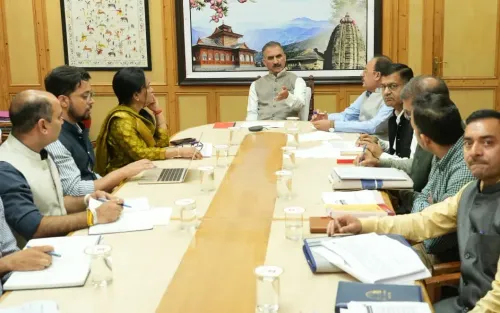
The Chief Minister's Office of Assam, on 10 July 2026, shared key highlights from the Assam Budget 2026, revealing that the state's Mines and Minerals Department collected ₹3,444 crore in royalty revenue during 2025-26 and has set an ambitious target of ₹4,512 crore for the upcoming financial year 2026-27.
Context
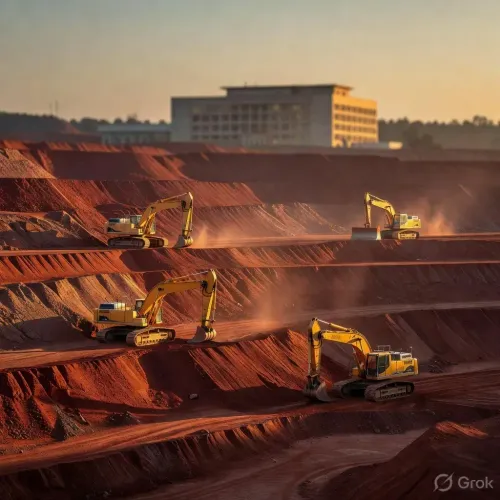
The disclosure came as part of a series of budget highlights circulated under the hashtag #AssamBudget2026. The royalty figures pertain to mineral extraction activities across Assam, a northeastern state endowed with significant reserves of coal, limestone, crude oil, and natural gas. The Mines and Minerals Department is the nodal agency responsible for granting mineral concessions and collecting dues under the Mines and Minerals (Development and Regulation) Act.
The jump from ₹3,444 crore to a target of ₹4,512 crore represents a projected increase of roughly 31 per cent year-on-year, signalling the state government's intent to substantially expand its non-tax revenue base from the minerals sector.
Policy Backdrop
Indian states collect royalties on major minerals under the Mines and Minerals (Development and Regulation) Act, 1957, with rates periodically revised through central government notifications. Assam sits within a broader group of mineral-bearing states — including coal- and petroleum-producing counterparts — that have increasingly looked to royalty receipts to reduce dependence on transfers from the Union government.
State governments in such regions have typically backed higher revenue targets with administrative interventions: digitisation of mineral lease records, real-time production monitoring, and stricter enforcement drives against illegal extraction. Whether Assam has announced specific accompanying measures as part of Budget 2026 will become clearer once the full budget document is tabled in the state assembly.
Stakeholders and Impact
The primary stakeholders in this fiscal equation are the Assam state finance department, mining lease holders, and local communities in mineral-rich districts. A higher royalty collection strengthens the state exchequer, potentially freeing resources for social and infrastructure spending. For mining lease holders, steeper targets can translate into intensified compliance scrutiny and faster resolution of pending lease renewals.
Illegal miners and middlemen operating in the sector could face heightened enforcement pressure as the department works to meet its ₹4,512 crore goal. The broader economy of Assam's mining belts — spanning employment and ancillary industries — is also sensitive to how aggressively extraction quotas and lease conditions are administered in the coming year.
What's Next
The complete Assam Budget 2026 document, once tabled in the state assembly, is expected to provide granular details on royalty rate structures, any new mining policy amendments, and the administrative roadmap for achieving the ₹4,512 crore target. Analysts and industry bodies will watch for notifications on revised royalty rates for specific minerals, which require central government approval but can be pushed through state-level advocacy.
If Assam sustains its royalty growth trajectory, it could emerge as a model for other northeastern states seeking to monetise natural resource endowments more effectively — a development with implications for the region's overall fiscal autonomy.
Point of View
512 crore royalty target for 2026-27 is a meaningful fiscal signal: Assam is doubling down on its natural resource base as a lever for revenue self-sufficiency, a strategy gaining traction across mineral-rich Indian states facing fiscal pressure. A 31 per cent jump in a single year is an aggressive ask, and its credibility will hinge on whether the budget is accompanied by concrete enforcement and digitisation measures. The announcement also fits a broader political narrative of the state government demonstrating economic momentum through headline budget numbers. Investors and lease holders will scrutinise the fine print for changes in royalty rates or concession conditions that could affect project economics.
NationPress
8 Oct 2026
Frequently Asked Questions
How much royalty did Assam's Mines Department collect in 2025-26?
The Mines and Minerals Department of Assam collected ₹3,444 crore in royalty revenue during the financial year 2025-26 , as announced in the Assam Budget 2026 highlights.
What is Assam's mineral royalty target for 2026-27?
Assam has set a mineral royalty revenue target of ₹4,512 crore for the financial year 2026-27 , representing a roughly 31 per cent increase over the previous year's collection.
What minerals does Assam earn royalty from?
Assam earns royalty primarily from coal, limestone, crude oil, and natural gas, all of which are found in significant quantities across the state and are regulated under the Mines and Minerals (Development and Regulation) Act, 1957 .
Who announced the Assam Budget 2026 mining figures?
The figures were shared by the Chief Minister's Office of Assam on 10 July 2026 as part of the official #AssamBudget2026 highlights series on social media.
How are mineral royalties collected in Indian states?
Indian states collect royalties on major minerals under the Mines and Minerals (Development and Regulation) Act, 1957 . Rates are periodically revised by the central government, and state departments like Assam's Mines and Minerals Department are responsible for granting concessions and enforcing collections.