Gujarat cooperative sugar model pays farmers ₹3,900–₹4,500/tonne, Assam minister takes notes
Synopsis
Gujarat's cooperative sugar mills are paying farmers up to ₹950 more per metric tonne than the Centre's mandated FRP — and Assam has taken notice. The state's 70-year-old cooperative model, now integrated with ethanol and green energy, is becoming a national reference point for how agrarian states can move beyond welfare handouts to structural farmer income gains.
Key Takeaways
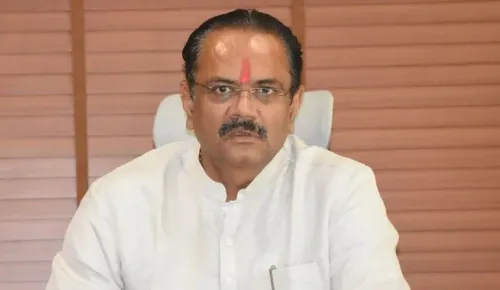
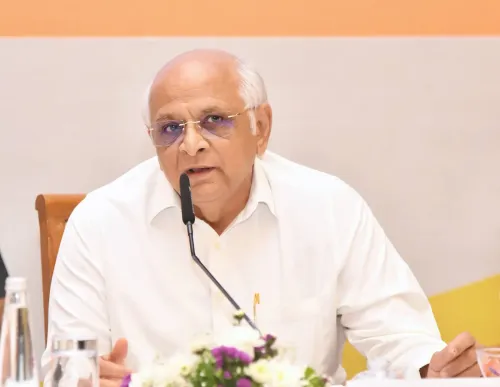
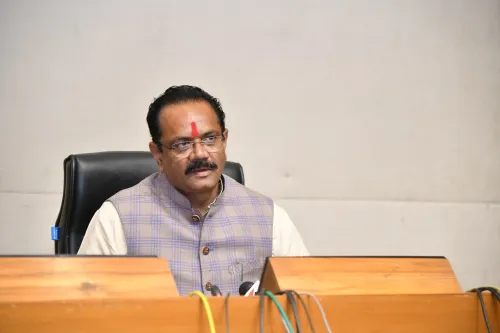
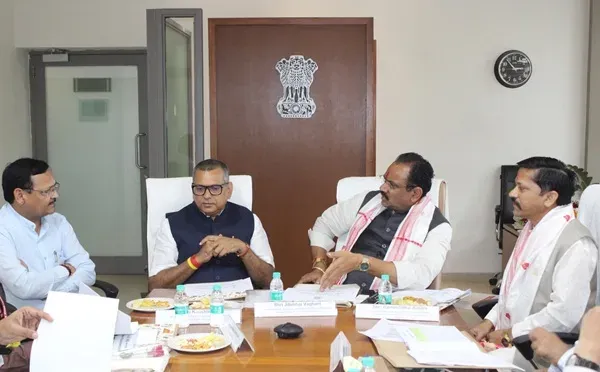
Assam Cooperation Minister Kaushik Rai met Gujarat Cooperation Minister Jitu Vaghani in Gandhinagar on Tuesday, 25 August to study Gujarat's cooperative sugar model.
Gujarat's cooperative societies pay sugarcane farmers ₹3,900–₹4,500 per metric tonne , against the Centre's FRP of ₹3,550 per metric tonne .
In 2025–26 , Gujarat crushed 72.06 lakh metric tonnes of sugarcane and paid farmers ₹3,070 crore .
The state has 17 sugar factories with a crushing capacity of 73,800 tonnes per day and ethanol capacity of 390 kilolitres per day .
More than two lakh farmer families across 1.25 lakh hectares are directly linked to sugarcane cultivation in Gujarat.
Rai said Assam intends to draw on Gujarat's experience to strengthen its own cooperative sector.
Assam Cooperation Minister Kaushik Rai on Tuesday met Gujarat Cooperation Minister Jitu Vaghani in Gandhinagar to study the state's cooperative sugar sector, which pays sugarcane farmers between ₹3,900 and ₹4,500 per metric tonne — well above the Centre's Fair and Remunerative Price (FRP) of ₹3,550 per metric tonne. The visit is part of a broader Assam delegation tour aimed at drawing lessons from Gujarat's farmer-centric cooperative model.
Gujarat's Cooperative Sugar Sector at a Glance
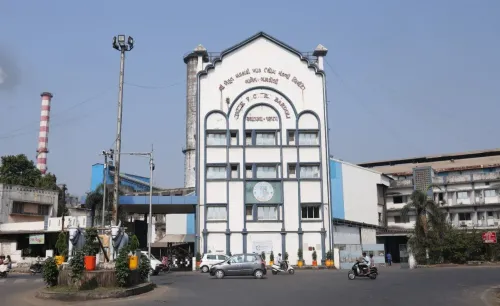
Gujarat currently operates 17 sugar factories, of which 12 are cooperative sugar societies, three are societies leased to Indian Potash Limited, and two are private factories. The cooperative sector holds a combined sugarcane crushing capacity of 73,800 tonnes per day and an ethanol production capacity of 390 kilolitres per day.
Sugarcane is cultivated across approximately 1.25 lakh hectares in the state, with more than two lakh farmer families directly dependent on the crop. In 2025–26, Gujarat crushed 72.06 lakh metric tonnes of sugarcane, produced 7.66 lakh metric tonnes of sugar, and disbursed ₹3,070 crore to sugarcane farmers, at an average recovery rate of 10.64 per cent.
Beyond Sugar: Ethanol, Green Energy, and Digitalisation
Vaghani told the visiting delegation that the cooperative sugar movement, which traces its origins to Bardoli in 1955, has evolved far beyond conventional sugar production. 'Sugar mills are being developed beyond conventional sugar production by integrating ethanol manufacturing, green energy and digitalisation to improve their profitability,' he said.
The State Sugar Commissioner made a detailed presentation covering production capacity, farmer payment mechanisms, and diversification initiatives. The Assam delegation was also briefed on special assistance programmes including the Sakar Yojana, bio-promotion measures, and capital subsidy schemes introduced to strengthen cooperative mills.
What Assam Hopes to Replicate
Rai expressed appreciation for Gujarat's transparent administration and above-FRP farmer payments, and said he intended to draw on Gujarat's experience to strengthen the cooperative sector back home in Assam. Ministers of State Ishwarsinh Patel and Ramesh Katara were also present at the meeting.
Notably, the gap between Gujarat's cooperative payout and the Centre's FRP — as much as ₹950 per metric tonne at the upper end — signals the financial headroom that a well-run cooperative model can generate for farmers, a benchmark that other states are increasingly looking to match.
Broader Context
Gujarat's push to integrate sugar mills with ethanol and power generation aligns with the Centre's national biofuel blending targets, giving cooperative mills a diversified revenue stream that cushions them against sugar price volatility. For Assam, which is working to expand its own cooperative infrastructure, the Gujarat template offers a roadmap that combines farmer welfare with commercial sustainability. The next steps will depend on how Assam adapts these learnings to its own agrarian and institutional context.
Point of View
Reducing dependence on volatile sugar prices. The more important question is whether Assam, with a very different agrarian base and cooperative infrastructure, can replicate outcomes rather than just structures. Study tours are a starting point, but institutional change in cooperative sectors is slow and politically contested. The real test will be whether Assam translates this visit into a concrete policy framework, or whether it remains an aspirational reference point.
NationPress
25 Aug 2026
Frequently Asked Questions
Why did the Assam minister visit Gujarat's cooperative sugar sector?
Assam Cooperation Minister Kaushik Rai visited Gandhinagar to study Gujarat's cooperative sugar model, which pays farmers above the Centre's Fair and Remunerative Price and has diversified into ethanol and green energy. He said he wants to replicate relevant aspects of the model to strengthen Assam's cooperative sector.
How much do Gujarat's cooperative sugar mills pay farmers compared to the Centre's FRP?
Gujarat's cooperative societies pay sugarcane farmers between ₹3,900 and ₹4,500 per metric tonne, compared to the Centre's FRP of ₹3,550 per metric tonne — a premium of up to ₹950 per metric tonne.
What is the scale of Gujarat's cooperative sugar sector?
Gujarat has 17 operational sugar factories, including 12 cooperative sugar societies, with a combined crushing capacity of 73,800 tonnes per day and ethanol production capacity of 390 kilolitres per day. More than two lakh farmer families are directly associated with sugarcane cultivation across 1.25 lakh hectares.
What is the Sakar Yojana mentioned in the Gujarat cooperative sugar briefing?
The Sakar Yojana is a special assistance scheme introduced by the Gujarat government to strengthen cooperative sugar mills, mentioned alongside bio-promotion measures and capital subsidy schemes. Specific details of the scheme's outlay were not disclosed in the briefing.
When did Gujarat's cooperative sugar movement begin?
Gujarat's cooperative sugar movement began in Bardoli in 1955, according to Gujarat Cooperation Minister Jitu Vaghani, and has since grown into a significant part of the state's rural economy, now integrated with ethanol manufacturing and green energy.