Assam UCC Bill 2026: Monogamy mandatory, marriages and divorces must be registered

Synopsis
Assam has tabled a sweeping Uniform Civil Code Bill that mandates monogamy, standardises marriage ages, and requires registration of marriages, divorces, and live-in relationships — while carving out Scheduled Tribes. If passed, it would make Assam one of India's first states to enact a full UCC, intensifying the national debate over civil law reform.
Key Takeaways
Assam Minister Arup Bora tabled the UCC, Assam, 2026 Bill in the state Assembly on 25 May 2026 .
Monogamy made mandatory; bigamy and polygamy punishable with up to 7 years imprisonment .
Marriage age standardised at 21 years (men) and 18 years (women) ; marriage memorandum to be filed within 60 days .
Scheduled Tribes are excluded from the Bill to protect their constitutional safeguards.
Live-in relationships must be registered within one month ; children from such unions deemed legitimate.
The Bill repeals the Assam Compulsory Registration of Muslim Marriages and Divorces Act, 2024 , with a savings clause for pre-UCC polygamous marriages.
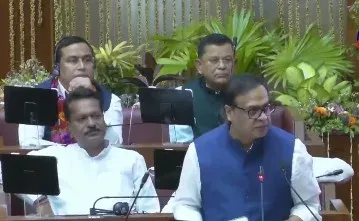
Assam Minister Arup Bora on Monday, 25 May 2026, tabled the Uniform Civil Code (UCC), Assam, 2026 Bill in the state Assembly in Guwahati, proposing a single civil legal framework to govern marriage, divorce, succession, and live-in relationships for all residents — while explicitly excluding Scheduled Tribes to safeguard their constitutional protections. The Bill, if enacted, would replace religion-based personal laws with a common code designed to advance gender justice and legal uniformity across communities.
Key Provisions on Marriage
Under the proposed legislation, monogamy has been made mandatory for all communities covered by the code. The legal minimum age of marriage has been standardised at 21 years for men and 18 years for women. Notably, the Bill preserves cultural and religious plurality by permitting marriages to be solemnised through existing customs and ceremonies — including Vedic Bibah, Ahom Chaklong, Saptapadi, Nikah, Holy Union, and Anand Karaj.
Registration of marriages has been made compulsory. Couples will be required to submit a marriage memorandum before the Sub-Registrar within 60 days of the ceremony. Failure to comply within the stipulated timeline will attract penalties.
Divorce, Custody and Succession
The Bill codifies uniform grounds for divorce — including cruelty, desertion, and mutual consent — applicable across all communities. Registration of divorces has also been made mandatory.
On child custody, the legislation provides that children below five years of age will ordinarily remain in the mother's custody. In matters of intestate succession, the Bill introduces a gender-equal inheritance structure, placing spouse, children, and parents within the same Class-1 category of heirs. Every adult of sound mind will also have the legal right to execute a written and witnessed Will.
Live-In Relationships and Penalties
The Bill introduces a regulatory framework for live-in relationships, making their registration mandatory within one month. Children born out of such relationships will be considered legitimate, and deserted partners will be entitled to seek financial maintenance through the courts.
On penalties, bigamy and polygamy may attract imprisonment of up to seven years under the Bharatiya Nyaya Sanhita. Fraudulent marriages entered into through coercion, force, or concealment can similarly invite imprisonment up to seven years along with fines. Submission of forged documents may also lead to imprisonment.
Repeal and Savings Clause
The proposed legislation repeals the Assam Compulsory Registration of Muslim Marriages and Divorces Act, 2024. However, a savings clause ensures that polygamous marriages solemnised before the enforcement of the UCC will remain legally protected. This comes amid a broader national debate over whether a uniform civil code should be adopted at the Centre level — Assam would become among the first states to formally legislate one, following Uttarakhand, which enacted its own UCC in 2024.
Point of View
And it tests how far a state can go in harmonising personal law without triggering constitutional challenges on minority rights. The Scheduled Tribes exemption is a pragmatic concession, but it also exposes the inherent tension in any 'uniform' code: uniformity selectively applied is, by definition, not uniform. The savings clause protecting pre-existing polygamous marriages further complicates the Bill's stated goal of gender justice. The real test will come in implementation — whether the Sub-Registrar network in Assam's districts and remote areas can actually enforce mandatory registration, or whether the law remains aspirational on paper.
NationPress
15 Sept 2026
Frequently Asked Questions
What is the Assam UCC Bill 2026?
The Uniform Civil Code (UCC), Assam, 2026 Bill is a proposed state law tabled on 25 May 2026 that seeks to replace religion-based personal laws with a single civil framework governing marriage, divorce, succession, and live-in relationships for all Assam residents, excluding Scheduled Tribes.
Who is excluded from the Assam UCC Bill?
Scheduled Tribes are explicitly excluded from the Bill to protect their constitutional safeguards. All other communities resident in Assam would fall under the proposed code.
What are the penalties for bigamy under the Assam UCC Bill?
Bigamy and polygamy can attract imprisonment of up to seven years under the Bharatiya Nyaya Sanhita. Fraudulent marriages through coercion, force, or concealment carry the same maximum sentence along with fines.
Are live-in relationships affected by the Assam UCC Bill?
Yes. The Bill makes registration of live-in relationships mandatory within one month. Children born from such relationships will be considered legitimate, and deserted partners can seek financial maintenance through the courts.
What happens to polygamous marriages that existed before the UCC comes into force?
A savings clause in the Bill ensures that polygamous marriages solemnised before the UCC's enforcement date will remain legally protected. New polygamous marriages, however, would be prohibited and punishable under the legislation.