Bar bodies back Himachal HC Chief Justice Sandhawalia for Supreme Court
Synopsis
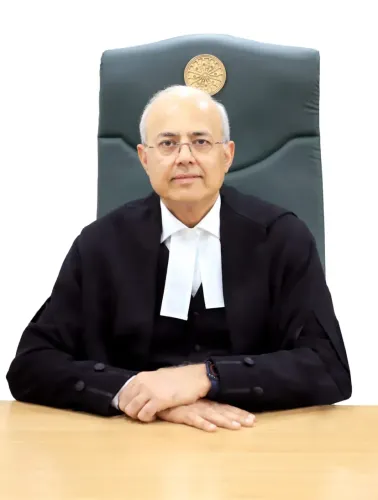
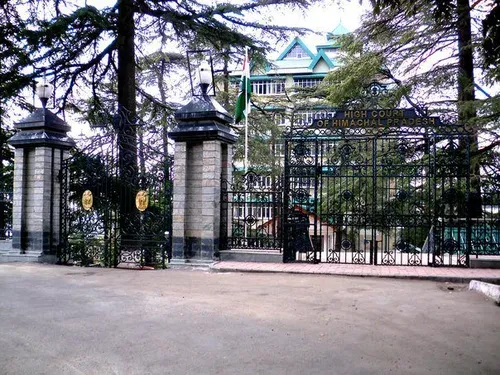
Bar bodies across three states have formally backed Himachal Pradesh High Court Chief Justice G.S. Sandhawalia for elevation to the Supreme Court — invoking merit, a distinguished judicial record, and the case for restoring Sikh representation at the apex court. The appeal now rests with the Supreme Court Collegium.
Key Takeaways
Lawyers have urged the Bar Council of Punjab and Haryana , Bar Council of Himachal Pradesh , and two high court bar associations to back Chief Justice G.S.
Sandhawalia's elevation to the Supreme Court .
The appeal calls on bar bodies to formally approach the Chief Justice of India , the Supreme Court Collegium , and the Union Ministry of Law and Justice .
Justice Sandhawalia enrolled as an advocate in August 1989 and was elevated to the Punjab and Haryana High Court on 30 September 2011 .
He served as Acting Chief Justice of the Punjab and Haryana High Court from February to July 2024 .
Advocates argue his appointment would restore Sikh representation in the Supreme Court after a significant gap, while emphasising merit as the primary criterion.
Members of the legal fraternity across Punjab, Haryana, and Himachal Pradesh have formally called for the elevation of Himachal Pradesh High Court Chief Justice G.S. Sandhawalia to the Supreme Court of India, describing him as a jurist of exceptional merit, integrity, and constitutional commitment. The appeal, issued on 24 June, urges four prominent bar institutions to collectively place their endorsement before the Chief Justice of India, the Supreme Court Collegium, and the Union Ministry of Law and Justice.
The Appeal and Who Is Behind It
The statement calls upon the Bar Council of Punjab and Haryana, the Bar Council of Himachal Pradesh, the Punjab and Haryana High Court Bar Association, and the Himachal Pradesh High Court Bar Association to formally back Chief Justice Sandhawalia's candidature. The advocates argued that his case rests on 'merit, proven competence, impeccable integrity and a distinguished record of service to the judicial institution' — explicitly distancing the appeal from considerations of seniority alone.
Justice Sandhawalia's Judicial Career
Justice G.S. Sandhawalia enrolled as an advocate in August 1989, building a broad practice spanning civil, criminal, constitutional, service, and land acquisition matters. He was elevated as an Additional Judge of the Punjab and Haryana High Court on 30 September 2011 and confirmed as a permanent judge on 24 January 2014. His parent institution — the Punjab and Haryana High Court — is one of the country's largest and most consequential benches.
The legal community also highlighted his stint as Acting Chief Justice of the Punjab and Haryana High Court between February and July 2024, during which he reportedly introduced measures to improve court administration, strengthen institutional discipline, streamline judicial functioning, and enhance case management.
Family Legacy and Institutional Standing
The statement drew attention to Chief Justice Sandhawalia's judicial lineage. His father, Justice Surjit Singh Sandhawalia, served as Chief Justice of the Punjab and Haryana High Court and subsequently as Chief Justice of the Patna High Court — a legacy the advocates cited as evidence of a family with deep roots in the higher judiciary. The signatories described him as one of the most distinguished judges produced by the Punjab and Haryana High Court in recent decades, known for intellectual depth, diligence, and fairness.
The Diversity Argument
Beyond merit, the advocates raised the question of representation, arguing that Chief Justice Sandhawalia's appointment would restore Sikh representation in the Supreme Court after what they described as a considerable gap. The statement was careful to frame merit as the overriding consideration, but contended that his elevation would simultaneously advance the objective of diversity within the higher judiciary — a principle that has gained increasing traction in collegium discussions in recent years.
What Happens Next
The appeal is directed at bar councils and bar associations, which carry persuasive — though not binding — weight in collegium deliberations. The Supreme Court Collegium, led by the Chief Justice of India, retains sole constitutional authority over judicial appointments to the apex court. No official response from the collegium or the government has been reported so far. Whether the bar institutions formally write to constitutional authorities remains to be seen.
Point of View
Which remain opaque and largely insulated from public advocacy. The invocation of Sikh representation alongside merit reflects a broader, unresolved tension in Indian judicial appointments — the collegium has no explicit diversity mandate, yet representation gaps in the apex court have become harder to ignore. Chief Justice Sandhawalia's credentials appear substantive, but the real question is whether organised bar pressure can meaningfully influence a collegium that has historically guarded its autonomy. The appeal is as much a signal about institutional frustration with the pace of appointments as it is about any single candidate.
NationPress
24 Jun 2026
Frequently Asked Questions
Who is Justice G.S. Sandhawalia?
Justice G.S. Sandhawalia is the current Chief Justice of the Himachal Pradesh High Court. He enrolled as an advocate in August 1989, was elevated as an Additional Judge of the Punjab and Haryana High Court on 30 September 2011, and was confirmed as a permanent judge on 24 January 2014. He also served as Acting Chief Justice of the Punjab and Haryana High Court between February and July 2024.
Why are bar associations calling for Justice Sandhawalia's elevation to the Supreme Court?
Advocates cite his merit, proven competence, impeccable integrity, and distinguished judicial record as the primary grounds. They also argue his appointment would restore Sikh representation in the Supreme Court after a considerable gap, while maintaining that merit remains the overriding consideration.
Which institutions have been asked to support the elevation?
The appeal calls on the Bar Council of Punjab and Haryana, the Bar Council of Himachal Pradesh, the Punjab and Haryana High Court Bar Association, and the Himachal Pradesh High Court Bar Association to formally place their views before the Chief Justice of India, the Supreme Court Collegium, and the Union Ministry of Law and Justice.
Who decides Supreme Court appointments in India?
The Supreme Court Collegium, led by the Chief Justice of India, holds sole constitutional authority over judicial appointments to the apex court. Bar association endorsements are persuasive but carry no binding weight in the process.
What is the significance of Justice Sandhawalia's family background?
His father, Justice Surjit Singh Sandhawalia, served as Chief Justice of both the Punjab and Haryana High Court and the Patna High Court. Advocates referenced this legacy to underscore the family's long and distinguished association with India's higher judiciary.