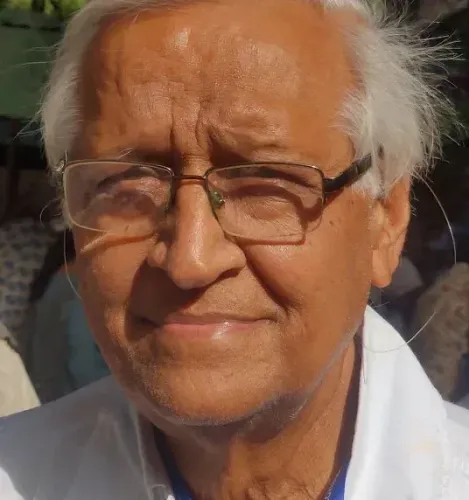
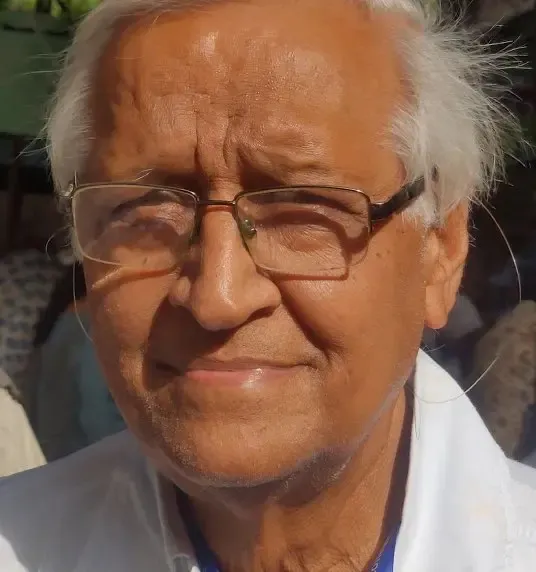
Padma Shri Sanjit 'Bunker' Roy, Barefoot College founder, dies at 81
Synopsis
Sanjit 'Bunker' Roy — a former national squash champion who gave up privilege after witnessing the 1967 Bihar famine — built Barefoot College into a global model of rural self-reliance, training grandmothers with no formal schooling to become solar engineers. His death at 81 closes a chapter in Indian civil society that proved community-led development, not expert-driven aid, can light up the world.
Key Takeaways
Sanjit 'Bunker' Roy , founder of Barefoot College in Tilonia, Rajasthan , died on 10 November 2026 at the age of 81 .
He co-founded the Social Work and Research Centre (SWRC) with wife Aruna Roy in 1972 , which grew into the internationally recognised Barefoot College.
His 'Solar Mamas' programme trained rural women, including elderly grandmothers with no formal education, as solar engineers, bringing electricity to thousands of villages in India and abroad.
Roy was awarded the Padma Shri in 2010 for his contributions to social work and rural development.
Former Rajasthan CM Ashok Gehlot and Congress MP Shashi Tharoor were among the first to pay public tribute.
Born on 30 June 1945 in Burnpur, West Bengal , Roy was India's national squash champion in 1965 before dedicating his life to rural communities after the 1967 Bihar famine .
Sanjit 'Bunker' Roy, the Padma Shri-decorated social activist and founder of the globally acclaimed Barefoot College in Tilonia, Rajasthan, passed away on Tuesday, 10 November 2026, at the age of 81. He breathed his last at approximately 6:15 am, leaving behind a transformative legacy in rural development, renewable energy, and women's empowerment that spans more than five decades.
A Life Rooted in Rural India
Born Sanjit Roy on 30 June 1945 in Burnpur, West Bengal, he came from a prominent Bengali family and received an elite education — first at The Doon School in Dehradun and later at St. Stephen's College in Delhi. He was also a gifted sportsman, becoming India's national squash champion in 1965 and representing the country internationally on three occasions.
The Bihar famine of 1967 proved to be the defining turning point of his life. Witnessing widespread hunger and suffering in rural areas moved him profoundly, and he chose to redirect his privileged trajectory toward the most disadvantaged communities in India. He never looked back.
Barefoot College: A Global Model
In 1972, Roy and his wife Aruna Roy — herself a prominent social activist and a leading figure in India's Right to Information (RTI) movement — co-founded the Social Work and Research Centre (SWRC) in Tilonia, Rajasthan, which later became internationally recognised as the Barefoot College.
Rooted in Mahatma Gandhi's philosophy of self-reliance, the institution operates on the principle that rural communities possess the knowledge and skills to address their own challenges without depending on outside specialists. Its programmes span solar energy, handpump repair, rainwater harvesting, and handicrafts — all built on locally available resources and community participation.
The 'Solar Mamas' Movement
Among Roy's most celebrated contributions was a pioneering programme that trained rural women — including elderly grandmothers with little or no formal education — to assemble, install, and repair solar panels and lighting systems. These women became widely known as 'Solar Mamas'.
The initiative brought electricity to remote communities across thousands of villages in India and eventually expanded to several other countries, enabling women globally to become solar engineers and contribute to their villages' development. It is widely regarded as one of the most replicable and impactful community-led renewable energy models in the world.
Recognition and Tributes
Roy was awarded the Padma Shri in 2010 for his exceptional contributions to social work. His efforts drew global attention to community-led development and the importance of recognising the knowledge and capabilities of ordinary rural people.
Former Rajasthan Chief Minister Ashok Gehlot expressed deep sorrow in a post on social media platform X, saying Roy had made an extraordinary contribution to rural self-reliance, education, and development by following Gandhian ideals. Gehlot noted he had known Roy for a long time and had recently visited Barefoot College in Tilonia to meet him and Aruna Roy.
Congress MP Shashi Tharoor also extended condolences, recalling Roy's lifelong commitment to making rural communities self-reliant and highlighting Barefoot College's global footprint in solar empowerment. Tharoor offered his sympathies to Aruna Roy and the family.
The Legacy He Leaves Behind
Sanjit 'Bunker' Roy's death marks the end of an extraordinary chapter in Indian civil society. His work — built not on government grants or corporate patronage but on the quiet agency of rural people — redefined what development could look like from the ground up. Barefoot College continues to operate in Tilonia, and the thousands of Solar Mamas trained across dozens of countries carry his vision forward. The institution he built from a Gandhian ideal in 1972 now stands as a testament to what one person's conviction, redirected at the right moment, can achieve.
Point of View
Given the tools, could engineer their own futures. The Solar Mamas programme achieved what decades of electrification policy could not in thousands of remote villages: durable, locally maintained energy access. India's development establishment, which still defaults to credentialed experts over community knowledge, has much left to learn from what Roy spent 50 years demonstrating in Tilonia.
NationPress
10 Nov 2026
Frequently Asked Questions
Who was Sanjit 'Bunker' Roy?
Sanjit 'Bunker' Roy was a Padma Shri-awarded Indian social activist and the founder of Barefoot College in Tilonia, Rajasthan. Born on 30 June 1945 in Burnpur, West Bengal, he co-founded the Social Work and Research Centre with his wife Aruna Roy in 1972, which became a globally recognised institution for rural development, renewable energy, and community empowerment.
What is Barefoot College and why is it significant?
Barefoot College is a rural development institution in Tilonia, Rajasthan, founded in 1972 on Gandhian principles of self-reliance. It trains rural people — including those with no formal education — in solar energy, handpump repair, rainwater harvesting, and other practical skills, and is best known for its 'Solar Mamas' programme, which has brought electricity to thousands of villages across India and multiple other countries.
What was the 'Solar Mamas' initiative launched by Bunker Roy?
The Solar Mamas programme trained rural women, including elderly grandmothers with little or no formal schooling, to assemble, install, and repair solar panels and lighting systems. It brought electricity to remote communities across thousands of villages in India and expanded internationally, enabling women from several countries to become solar engineers in their own communities.
What awards did Bunker Roy receive?
Bunker Roy was awarded the Padma Shri in 2010 for his exceptional contributions to social work and rural development. His work also earned widespread international recognition for demonstrating the viability of community-led development and renewable energy access.
Who has paid tribute to Bunker Roy after his death?
Former Rajasthan Chief Minister Ashok Gehlot posted condolences on X, calling Roy's contribution to rural self-reliance extraordinary and rooted in Gandhian ideals. Congress MP Shashi Tharoor also paid tribute, recalling Roy's lifelong commitment to rural self-reliance and extending sympathies to Aruna Roy and the family.