Bastar's Pride Echoes at Rashtrapati Bhavan
Synopsis
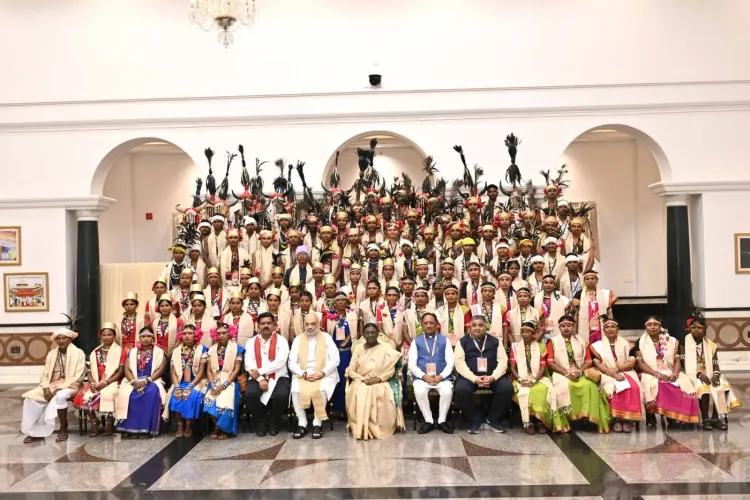
President Droupadi Murmu received a 209-member Chhattisgarh delegation at Rashtrapati Bhavan on July 30, 2026, in what Amit Shah called the first-ever grand display of Bastar tribal culture at the venue. CM Vishnu Deo Sai gifted the President a 300-year-old Jhitku-Mitki folk artwork and invited her to visit Bastar.
Key Takeaways
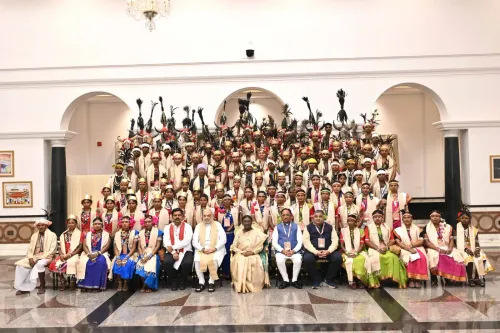
President Droupadi Murmu hosted winners of Bastar Pandum-2026 , Padma Shri awardees, Manjhi-Chalki leaders, and tribal representatives at Rashtrapati Bhavan on July 30, 2026 .
Union Home Minister Amit Shah called it the first-ever grand display of Bastar tribal culture and attire at Rashtrapati Bhavan.
A 209-member delegation led by Chief Minister Vishnu Deo Sai travelled from Chhattisgarh for the occasion.
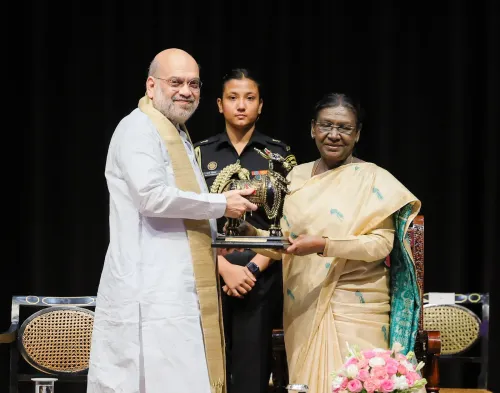
CM Sai gifted the President an artwork depicting 'Jhitku-Mitki' , a Bastar folk legend approximately 300 years old .
CM Sai extended a formal invitation to President Murmu to visit Bastar.
The event is part of the Sai government's broader strategy of promoting tribal cultural identity at the national level since December 2023 .
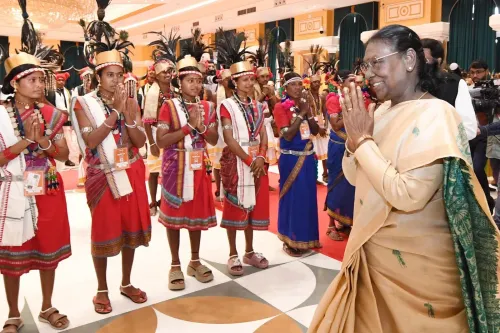
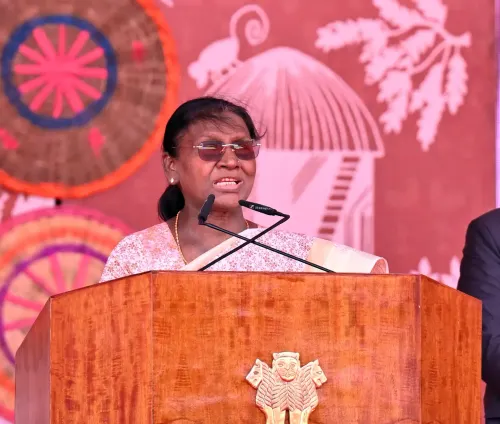
For the first time, the grand halls of Rashtrapati Bhavan resonated with the vibrant colours, costumes, and living traditions of Bastar — and it took a 209-member delegation from Chhattisgarh to make it happen. The Chief Minister's Office of Chhattisgarh announced on Thursday, July 30, 2026, that President Droupadi Murmu welcomed winners of the Bastar Pandum-2026 festival, Manjhi-Chalki community leaders, Padma Shri awardees, and tribal representatives in a warm reception at the nation's highest constitutional address.
A First for Bastar at India's Most Storied Address
Union Home and Cooperation Minister Amit Shah, who was present at the occasion, called the gathering historic. 'For the first time, such a grand display of Bastar's traditional tribal culture and attire has been witnessed at Rashtrapati Bhavan — it is a matter of pride and honour for the entire nation,' he said. The statement was not ceremonial filler. Rashtrapati Bhavan has hosted heads of state, Nobel laureates, and Olympic champions — but Bastar's folk traditions had never commanded that stage before.
The delegation arrived under the leadership of Chief Minister Vishnu Deo Sai, who has made tribal cultural outreach a signature of his administration since taking office in December 2023. The sheer scale — 209 members — signalled that this was a deliberate act of political and cultural assertion, not a courtesy visit.
The Gift of 'Jhitku-Mitki' and an Invitation to Bastar
CM Sai presented President Murmu with a piece of artwork depicting 'Jhitku-Mitki' — a beloved folk legend from Bastar said to be 300 years old. The story of Jhitku and Mitki is woven into the oral and artistic memory of Bastar's tribal communities, and gifting it to India's first tribal President carried unmistakable symbolic weight. CM Sai also formally invited President Murmu to visit Bastar — an invitation whose acceptance would itself become a landmark moment for the region.
President Murmu, who took office in July 2022 as the first person from a tribal community to serve as India's head of state, has consistently lent her platform to tribal heritage and rights. Her presence at this reception amplified its national resonance far beyond a standard state-government cultural event.
Bastar Pandum and the Politics of Cultural Recognition
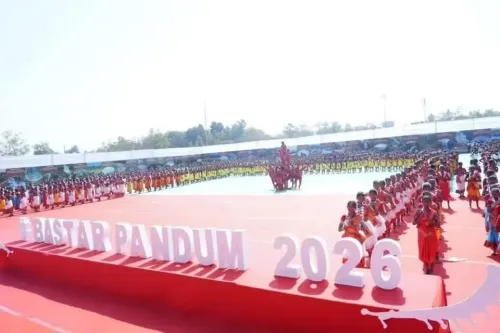
Bastar Pandum is a state-promoted festival celebrating the folk arts, music, dance, and crafts of the tribal communities of southern Chhattisgarh. The 2026 edition brought its winners directly to New Delhi's most powerful address — a journey that encapsulates the Sai government's broader strategy: use cultural diplomacy to build political goodwill with tribal constituencies while projecting Chhattisgarh's distinct identity on a national canvas.
The Manjhi-Chalki system — traditional village-level governance structures among Bastar's Gond and other tribal communities — was also represented in the delegation, underlining that this was not merely an arts showcase but a statement about the legitimacy and visibility of indigenous institutions.
Bastar's tribal belt, long associated in national headlines with Maoist conflict and security operations, rarely makes news for its culture. Thursday's reception at Rashtrapati Bhavan was, in that sense, a deliberate reframing — one that the state government, the Union Home Ministry, and the President's office all chose to be part of. The next question is simple: will President Murmu accept the invitation and travel to Bastar herself?
Point of View
The optics are near-perfect for the ruling dispensation. The real test of substance will be whether the invitation to Bastar translates into a presidential visit and any downstream policy or developmental commitments for the region.
NationPress
30 Jul 2026
Frequently Asked Questions
What is Bastar Pandum 2026?
Bastar Pandum is a state-promoted cultural festival in Chhattisgarh that celebrates the folk arts, music, dance, and crafts of the tribal communities of the Bastar region. The 2026 edition's winners were among those received at Rashtrapati Bhavan on July 30.
Why did the Chhattisgarh delegation visit Rashtrapati Bhavan?
Chief Minister Vishnu Deo Sai led a 209-member delegation to Rashtrapati Bhavan to present Bastar's tribal culture to President Droupadi Murmu, marking the first time such a display of Bastar's traditions was held at the venue.
What did CM Vishnu Deo Sai gift to President Droupadi Murmu?
CM Sai gifted President Murmu an artwork depicting 'Jhitku-Mitki,' a folk legend from Bastar said to be approximately 300 years old, and also invited her to visit Bastar.
What did Amit Shah say about the Bastar event at Rashtrapati Bhavan?
Union Home Minister Amit Shah stated that it was the first time such a grand display of Bastar's traditional tribal culture and attire had been witnessed at Rashtrapati Bhavan, calling it a matter of pride and honour for the entire nation.
Who is Droupadi Murmu and why is her presence significant?
Droupadi Murmu has served as President of India since July 2022 and is the first person from a tribal community to hold the office. Her hosting of Bastar's tribal representatives carries particular symbolic weight given her own tribal heritage.