CM Mohan Yadav Hails Lok Sabha Passage of Vande Mataram Protection Bill

Synopsis
The Lok Sabha passed the National Honour Insult Prevention (Amendment) Bill, 2026 on 30 July, extending statutory protection to Vande Mataram on par with the national anthem — coinciding with the national song's 150th anniversary. MP Chief Minister Dr. Mohan Yadav hailed the move as a historic affirmation of national values under PM Modi's leadership.
Key Takeaways
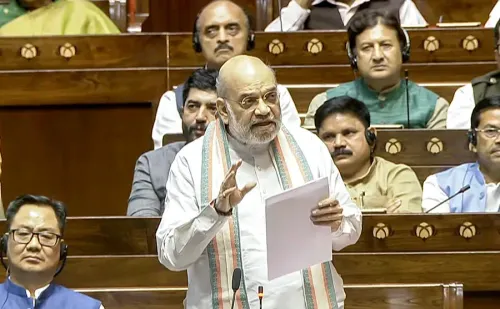
The Lok Sabha passed the Rashtriya Gaurav Apman Nivaran (Sanshodhan) Vidheyak, 2026 on 30 July 2026 .
Vande Mataram will receive statutory protection equivalent to that of the national anthem under the amended Prevention of Insults to National Honour Act, 1971 .
The bill's passage coincides with Vande Mataram's 150th anniversary .
MP Chief Minister Dr.
Mohan Yadav hailed the move as a historic affirmation of national values and credited PM Narendra Modi 's leadership.
The bill must still clear the Rajya Sabha before it becomes enforceable law.
One hundred and fifty years after Vande Mataram was first composed, India's Parliament moved to place the national song on equal legal footing with the national anthem. On Thursday, 30 July 2026, the Lok Sabha passed the Rashtriya Gaurav Apman Nivaran (Sanshodhan) Vidheyak, 2026 — the National Honour Insult Prevention (Amendment) Bill — extending statutory protection to Vande Mataram identical to that already enjoyed by Jana Gana Mana. Madhya Pradesh Chief Minister Dr. Mohan Yadav welcomed the development on X, calling it a historic affirmation of national pride.
What the Amendment Actually Changes
The existing Prevention of Insults to National Honour Act, 1971 criminalises insults to the national flag, the national anthem, and the Constitution. The amendment, as reported, grafts Vande Mataram into that same protective framework — meaning any deliberate public disrespect of the song would now carry the same legal consequences as insulting Jana Gana Mana. In his post, CM Yadav described the bill as a symbol of 'pratyek deshawaasi ke swabhimaan, matrubhoomi ke prati atoot shraddha aur rashtriya mulyon ke samman' — 'every citizen's self-respect, unbreakable devotion to the motherland, and honour of national values.'
Vande Mataram's 150-Year Journey to Legal Parity
Vande Mataram, composed by Bankim Chandra Chattopadhyay in the 1870s, served as a rallying cry through the independence movement and was accorded the status of national song after 1947 — distinct from, but alongside, the national anthem. Successive governments encouraged its performance in schools and official events, yet it lacked the explicit statutory shield the anthem carried. The amendment closes that long-standing gap at a symbolically charged moment: the song's 150th anniversary.
Modi Government's National-Symbol Legislative Pattern
The bill fits a broader pattern under Prime Minister Narendra Modi's administration of updating national-honour statutes rather than building entirely new legal frameworks. CM Yadav framed the passage explicitly within that arc, crediting Modi's 'Nation First' resolve — 'Rashtra Pratham ke sankalp ko nayi shakti pradaan karta hai' — for the legislation's momentum. The bill must still clear the Rajya Sabha before it becomes law; the upper house's proceedings and any enforcement rules the government notifies thereafter will be the next significant milestones to watch.
Point of View
The timing at the 150th anniversary of Vande Mataram is politically resonant, reinforcing a cultural-nationalist narrative ahead of any upcoming electoral cycles. The bill's fate in the Rajya Sabha will test whether the consensus around national symbols translates into smooth passage or becomes a flashpoint for opposition debate on the scope of 'insult' provisions. How enforcement rules are drafted will ultimately determine whether the amendment is a symbolic gesture or a practically consequential legal change.
NationPress
30 Jul 2026
Frequently Asked Questions
What is the Rashtriya Gaurav Apman Nivaran Amendment Bill 2026?
It is an amendment to the Prevention of Insults to National Honour Act, 1971, passed by the Lok Sabha on 30 July 2026, that extends the same legal protection given to the national anthem Jana Gana Mana to the national song Vande Mataram.
What legal protection does Vande Mataram now get?
Under the amendment, deliberate public disrespect or insult of Vande Mataram would carry the same legal consequences as insulting the national anthem or national flag under the 1971 Act.
Why is Vande Mataram in the news in 2026?
2026 marks the 150th anniversary of Vande Mataram's composition by Bankim Chandra Chattopadhyay, making the timing of the Parliament's amendment symbolically significant.
Has the Vande Mataram bill become law yet?
No. The bill passed the Lok Sabha on 30 July 2026 but must still be approved by the Rajya Sabha and receive Presidential assent before it becomes law.
What did Madhya Pradesh CM Mohan Yadav say about the Vande Mataram bill?
CM Dr. Mohan Yadav called it a historic decision and a symbol of every citizen's self-respect and devotion to the motherland, crediting PM Narendra Modi's 'Nation First' resolve for the legislation.