The End of the Red Corridor: A Nation Heals After Fifty Years

Synopsis
Discover the transformation of Bastar from a Maoist stronghold to a beacon of progress as PM Modi and HM Amit Shah unite welfare and security, closing a fifty-year chapter of insurgency and despair.
Key Takeaways
Integration of welfare and security is key to combating insurgency.
PM Modi's leadership has shifted the narrative from neglect to proactive governance.
Significant progress in infrastructure development in Maoist-affected regions.
Public accountability has been emphasized through public commitments.
The transformation aims to create a lasting peace in tribal regions.
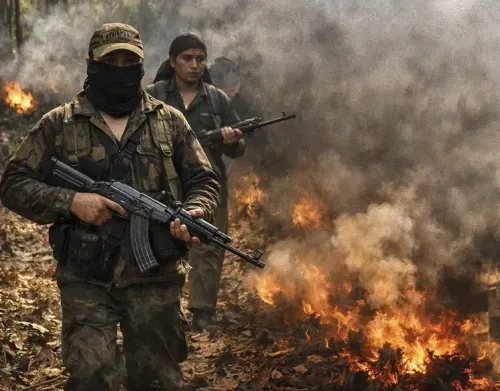
New Delhi, April 5 (NationPress) Envision the dense jungles of Bastar back in 2013. No roads, no mobile connectivity, no banking facilities, and virtually no schools. A parallel regime, equipped with its own courts, tax collectors, and executioners, instilled terror in these forests. Tribal families buried their loved ones in silence, wary that even their sorrow could raise suspicion. Security personnel traveled in convoys, as venturing alone could mean death.
India, recognized as the largest democracy globally, had essentially relinquished control of sovereign territory to a Maoist militia acting under the orders of a long-gone Chinese dictator. This state of affairs persisted for fifty-seven years, resulting in twenty thousand fatalities and twelve crore citizens trapped in an insurgency that prior administrations tacitly accepted as a fixture of the national landscape. However, when PM Narendra Modi took office, everything changed.
Sixty Years of Failure: The Legacy PM Modi Inherited
Naxalism wasn’t unassailable; it thrived because defeating it demanded a political resolve that previous governments lacked. The Congress party, which governed India for sixty of its seventy-five years post-Independence, utilized tribal grievances more as a narrative than as a problem requiring resolution. The aftermath was disastrous: 20,000 lives lost, with 5,000 security personnel among them, and 12 crore citizens living outside the constitutional framework. When PM Modi took over in 2014, he was not just facing an insurgency; he was confronting half a century of institutional treachery.
The Turning Point: PM Modi's Integration of Welfare and Security
PM Modi's remarkable contribution was a realization that seemed straightforward but had evaded all his predecessors: tribal welfare and national security are intertwined issues. Previous governments operated security measures in isolation from developmental efforts, often working at cross-purposes. PM Modi combined these into a singular, non-negotiable doctrine.
For the first time, the promise of the Constitution reached directly to people’s doorsteps—complete homes, gas cylinders, clean water, Jan Dhan accounts, and food security. The state didn’t merely deploy forces; it brought the Constitution to households, village by village. PM Modi recognized a long-ignored truth: an insurgency thrives in the void left by the state. Fill that void entirely, and the insurgency will falter. Twelve years of this clarity achieved what sixty years of managed ambivalence could not.
HM Amit Shah: The Visionary Who Set and Met the Deadline
Strategic vision demands an executor of exceptional quality, and in Home Minister Amit Shah, PM Modi found that ally. Amit Shah infused the Home Ministry with a blend of decisive command and strategic insight.
In August 2024, HM Shah made a bold declaration that India would be free from Naxalism by March 31, 2026—not merely a hope, but a firm, public commitment. A deadline set by a minister with a track record of accomplishment focuses resources, accelerates timelines, and sends a clear message to every wavering individual in the forests: the endgame has commenced. Come forward now.
A Parliamentary Address for the Ages
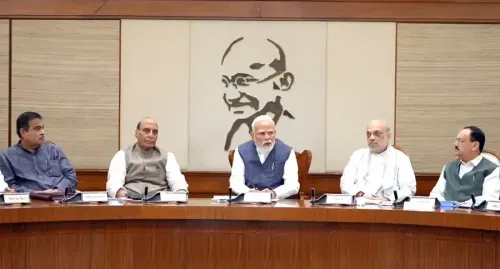
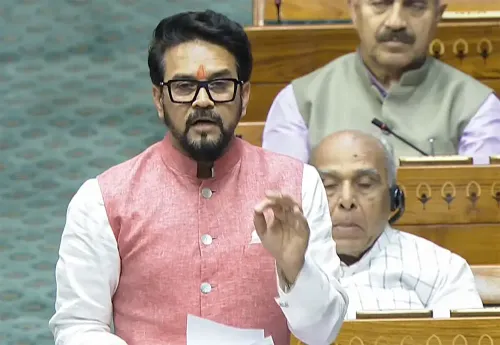
Home Minister Amit Shah's ninety-minute speech to Parliament on March 30 stands as one of the most authoritative ministerial presentations in recent memory. After reviewing over two thousand pro-Naxal articles in just six days, he cited operational dates, committee structures, and surrender statistics with legal precision. He honored the fallen respectfully, avoiding exploitation of their sacrifices. PM Modi characterized it as a speech laden with crucial facts, historical context, and a decade of governmental efforts. Such commendation from a Prime Minister spoke volumes.
Irrefutable Numbers
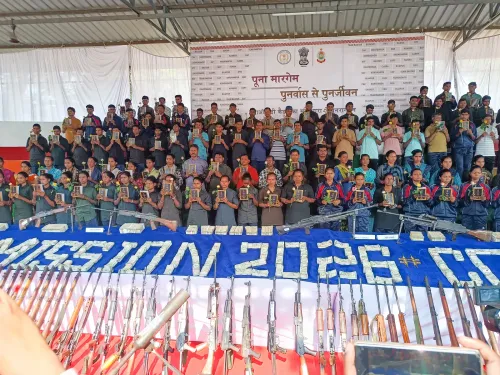
The statistics are undeniable. Within three years: 706 Naxalites neutralized, over 4,800 surrendered. In 2025 alone: 270 neutralized, 680 arrested, and 1,225 laid down their arms. The Maoist Politburo was dismantled: 12 top leaders eliminated, and the last fugitive engaged in active surrender discussions. The feared 27-member state committee from the most affected area has been completely eradicated. Over the decade, more than 8,000 cadres have abandoned the armed struggle.
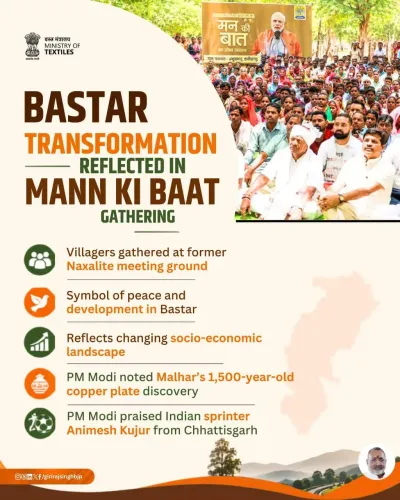
The record of development is equally clear. 14,902 kilometers of roads have been constructed through regions once inaccessible for decades. 8,640 mobile towers have been installed, ending the communication vacuum that insurgents exploited for control. 179 Eklavya Residential Schools are now operational, and 5,899 post offices with banking services have opened in LWE districts. These figures are not mere statistics; they represent the Constitution delivered extensively across the most neglected regions of India.
Compassion as a Strategy: Exposing the Propaganda
As this transformation unfolded on the ground, international platforms aligned with Maoist networks labeled security operations as genocide, depicting deceased armed commanders as martyrs of tribal India. HM Amit Shah countered this with a sharp observation: none of those two thousand articles lamented the widows of security personnel. Not one grieved for civilians killed in Maoist ambushes. Not one acknowledged the tribal families whose children were forcibly recruited.
This silence is structural, not accidental. The Naxals have never represented Adivasi India; they required unresolved Adivasi suffering to validate their existence. Every road built and school opened under PM Modi directly undermined that narrative. Selective empathy for armed insurgents, with none for their victims, is not humanitarianism; it is insurgent propaganda disguised as compassion.
Consolidating the Victory: A Sustained Effort Required
Rehabilitation of surrendered cadres must be approached with utmost seriousness. The remaining two affected districts must be completely integrated into the national mainstream. Development in Bastar must not decelerate once security headlines fade. The lesson learned over the past decade is clear: comprehensive and consistent governance is the most effective counter-insurgency strategy imaginable. This lesson must now evolve into permanent policy, not just operational memory.
A Constitutional Obligation Finally Fulfilled
The forests of Bastar now boast roads, schools, and mobile connectivity. Children in these areas will grow up viewing the Indian state as a protector rather than a predator. The Maoist Politburo has been dismantled, cadre by cadre, committee by committee. On March 31, 2026, HM Amit Shah addressed Parliament and concluded a chapter that sixty years of governance chose to leave open.
PM Narendra Modi envisioned that national security and the welfare of India's most neglected citizens represent one indivisible obligation. HM Amit Shah provided the operational framework, the public deadline, and the executive determination to realize it.
In twelve years, the courageous leadership and vision of PM Narendra Modi, complemented by the diligent execution of HM Amit Shah, have resolved a constitutional obligation that had accumulated over sixty years. This is not merely a political milestone; it is a civilizational achievement.
(The author is a senior advocate practicing in the Supreme Court of India)
Point of View
Emphasizing the integration of welfare and security as a cohesive strategy that addresses long-standing grievances while ensuring national stability.
NationPress
6 Oct 2026
Frequently Asked Questions
What led to the transformation in Bastar?
The transformation in Bastar was driven by PM Modi's insight that tribal welfare and national security are interconnected, leading to a unified approach that delivered both governance and development.
What achievements have been made in the fight against Naxalism?
Significant achievements include the neutralization of over 706 Naxalites, the surrender of more than 4,800 individuals, and the construction of over 14,900 kilometers of roads in previously inaccessible regions.
How has the Indian government addressed tribal grievances?
The Indian government has addressed tribal grievances through initiatives such as providing housing, clean water, and educational facilities, thereby restoring hope and trust in governance.
What is the significance of HM Amit Shah's public commitment?
HM Amit Shah's public commitment to making India Naxal-free by March 31, 2026, serves as a strategic deadline that galvanizes resources and sends a clear message to insurgents.
How does the current situation compare to the past?
The current situation shows remarkable improvement with established infrastructure and governance, contrasting sharply with the previous state of lawlessness and fear.