BC Khanduri, former Uttarakhand CM and Maj Gen, dies at 91 in Dehradun
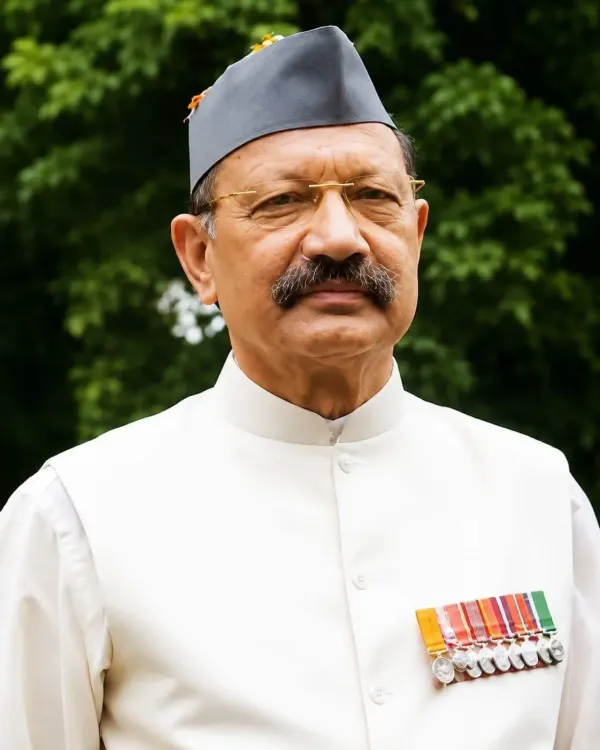
Synopsis
Maj Gen Bhuwan Chandra Khanduri — the soldier who built India's Golden Quadrilateral and then governed Uttarakhand with parade-ground discipline — died at 91 in Dehradun. His passing closes a chapter on a generation of leaders for whom public service was a continuation of military duty, not a departure from it.
Key Takeaways
Bhuwan Chandra Khanduri died on 19 May at Max Hospital, Dehradun , aged 91 , after a prolonged illness.
He served in the Indian Army's Corps of Engineers for 36 years (1954–1990) and was awarded the Ati Vishisht Seva Medal (AVSM) in 1982 .
He won the Garhwal Lok Sabha seat four times — in 1991, 1998, 1999, and 2004 — under the BJP banner.
As Union Road Transport Minister , he oversaw the Golden Quadrilateral highway project under PM Atal Bihari Vajpayee .
He served as Chief Minister of Uttarakhand twice: sworn in on 8 March 2007 and again on 11 September 2011 .
His daughter Ritu Bhushan Khanduri is the first woman Speaker of the Uttarakhand Legislative Assembly.
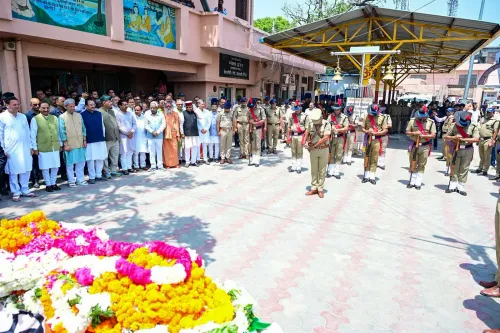
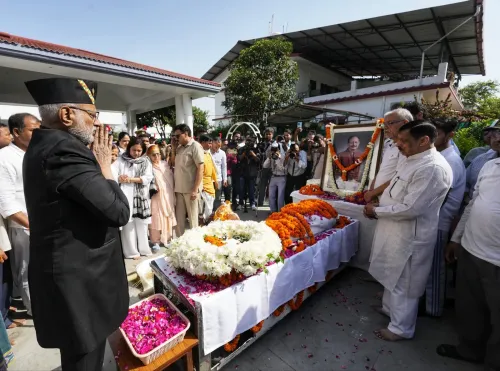
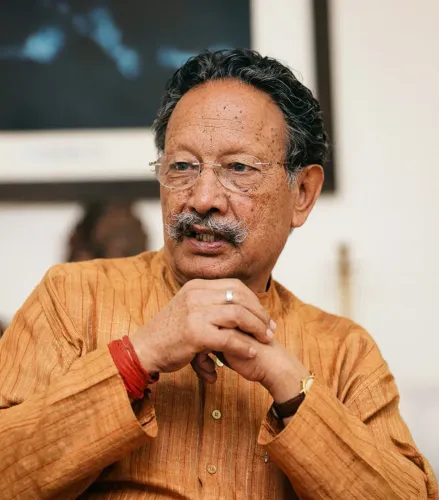
Former Uttarakhand Chief Minister and retired Major General Bhuwan Chandra Khanduri passed away on Tuesday, 19 May, at Max Hospital, Dehradun, following a prolonged illness. He was 91. His death has drawn tributes from across the political spectrum, mourned as the loss of one of independent India's rare soldier-statesmen.
A Life Rooted in Service
Born on 1 October 1934 in Dehradun, Khanduri was educated at the University of Allahabad, the College of Military Engineering, Pune, the Institution of Engineers, Delhi, and the Institute of Defence Management, Secunderabad. As a student, he was drawn to the atmosphere of India's independence movement and associated himself with the freedom struggle.
He served in the Corps of Engineers of the Indian Army for nearly 36 years, from 1954 to 1990. His military career included command as a Regimental Commander, active participation in the 1971 India-Pakistan War, and senior roles as Chief Engineer in the Army and Additional Military Secretary at Army Headquarters. In 1982, the President of India awarded him the Ati Vishisht Seva Medal (AVSM) for distinguished service.
Entry into Politics and Parliamentary Career
Khanduri entered active politics in the 1990s during the Ram Mandir movement, joining the Bharatiya Janata Party (BJP). In 1991, he was elected to the Lok Sabha from the Garhwal constituency — the first of four consecutive victories from the same seat, which he also won in 1998, 1999, and 2004.
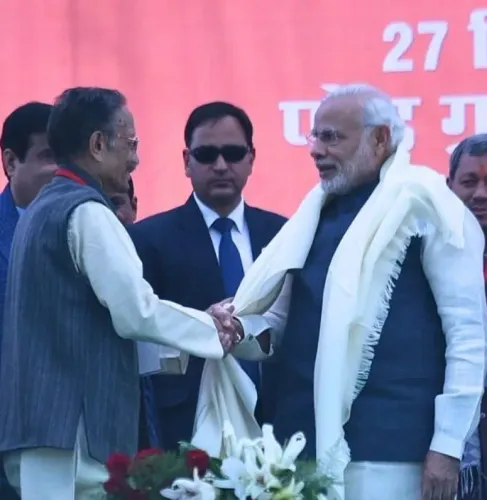
During the tenure of Prime Minister Atal Bihari Vajpayee, he served as Minister of State (Independent Charge) for Road Transport and Highways from 2000 to 2003, before being elevated to Cabinet Minister in 2003. His stewardship of the ministry coincided with the rollout of the National Highway Development Project, and the landmark Golden Quadrilateral — connecting India's four major metropolitan cities through a modern highway network — progressed significantly under his watch. His administrative efficiency and disciplined approach were widely credited for accelerating highway expansion across India.
Chief Minister of Uttarakhand: Two Terms, Two Departures
After the 2007 Uttarakhand Assembly elections, Khanduri led the BJP to victory and was sworn in as Chief Minister on 8 March 2007. He moved swiftly to impose a military-style discipline on the administration: reducing security cover for politicians and bureaucrats, cutting foreign travel allowances, and capping the Chief Minister's discretionary fund to projects approved by District Magistrates.
However, the BJP's loss of all five parliamentary seats in Uttarakhand in the 2009 Lok Sabha elections generated significant internal pressure, and Khanduri resigned from the Chief Ministership in June 2009. He returned for a second term, taking oath again on 11 September 2011, during which he announced plans to establish a strengthened Lokayukta institution to improve governance accountability. In the 2012 Assembly elections, the BJP failed to win a majority, and Khanduri personally lost from the Kotdwar Assembly constituency. He submitted his resignation to the Governor on 7 March 2012.
Legacy and Family
Khanduri's daughter, Ritu Bhushan Khanduri, currently serves as the Speaker of the Uttarakhand Legislative Assembly, having made history as the first woman to hold that office in the state.
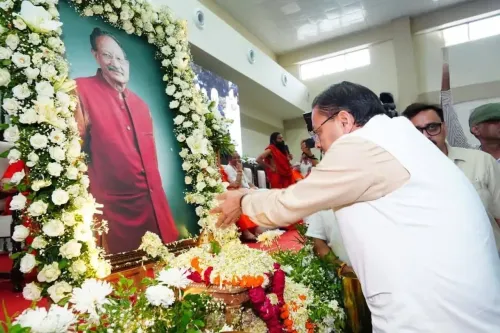
Tributes poured in from leaders across party lines following news of his passing, with many describing his death as an irreparable loss to Uttarakhand. He is remembered as a leader defined by honesty, simplicity, and an unwavering sense of public duty — qualities forged over nearly four decades in uniform and carried through two decades in public life. With his passing, Uttarakhand loses one of its most consequential founding-era political figures.
Point of View
And they made him inconvenient to his own party. That the BJP eased him out after the 2009 Lok Sabha rout, despite his clean record, says as much about the party's internal dynamics as it does about him. Uttarakhand's political culture has grown considerably more transactional since his tenure, and that contrast is precisely why his death feels like the end of something specific.
NationPress
17 Sept 2026
Frequently Asked Questions
Who was BC Khanduri?
Bhuwan Chandra Khanduri was a retired Major General of the Indian Army who later became a four-term Member of Parliament from Garhwal and served twice as Chief Minister of Uttarakhand under the BJP. He was also Union Minister for Road Transport and Highways under Prime Minister Atal Bihari Vajpayee and played a key role in the Golden Quadrilateral highway project.
When and where did BC Khanduri pass away?
BC Khanduri passed away on Tuesday, 19 May, at Max Hospital in Dehradun, following a prolonged illness. He was 91 years old.
What was BC Khanduri's contribution to India's infrastructure?
As Minister of State (Independent Charge) and later Cabinet Minister for Road Transport and Highways between 2000 and 2003, Khanduri oversaw implementation of the National Highway Development Project, including the Golden Quadrilateral — the network connecting India's four major metropolitan cities. His administrative discipline was widely credited for accelerating the project's progress.
How many times was BC Khanduri Chief Minister of Uttarakhand?
Khanduri served as Chief Minister of Uttarakhand twice. His first term began on 8 March 2007, ending with his resignation in June 2009. His second term began on 11 September 2011 and ended after the BJP's defeat in the 2012 Assembly elections, when he also personally lost from the Kotdwar constituency.
Who is BC Khanduri's daughter and what office does she hold?
His daughter, Ritu Bhushan Khanduri, currently serves as Speaker of the Uttarakhand Legislative Assembly. She made history as the first woman to hold that position in the state.