Bengal CM Adhikari pushes nationalist school programmes, syllabus changes from 2027
Synopsis
West Bengal CM Suvendu Adhikari has called for nationalism-themed debates, quizzes, and cultural programmes in state schools for at least three days a year, while announcing syllabus changes from next academic year — framing the move explicitly as a counter to 'divisive and anti-national forces' and launching a sharp attack on decades of Left and TMC governance.
Key Takeaways
West Bengal CM Suvendu Adhikari on 25 October 2026 called for nationalism-themed debates, quizzes, and impromptu speeches in state schools.
He proposed dedicating at least three days every year to such programmes at the primary school level.
Students are also to be given exposure to traditional instruments including tabla , harmonium , santoor , mridangam , and tambourine .
Adhikari announced syllabus changes in West Bengal schools starting the next academic year , though specifics were not disclosed.
He accused the Left Front ( 34 years ) and TMC ( 15 years ) of destroying the heritage and culture of West Bengal through neglect of cultural education.
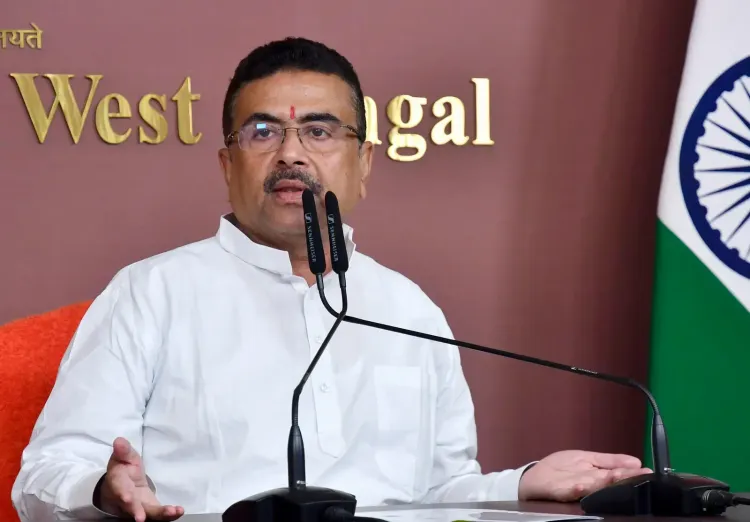
West Bengal Chief Minister Suvendu Adhikari on Sunday, 25 October 2026, called for the introduction of regular debates, quiz competitions, and impromptu speech events centred on 'nationalism' as a theme in state schools, arguing that such programmes are essential to prevent what he described as 'divisive and anti-national forces' from influencing young minds. The Chief Minister made the remarks while addressing media persons in Kolkata, and announced that the state's school syllabus will undergo several changes from the next academic year.
What Adhikari Proposed
Chief Minister Adhikari called for at minimum three days every year to be dedicated to such competitions at the primary school level. 'To combat the anti-national forces from influencing young minds, there is a necessity to imbibe nationalist feelings among the students from a very young age. In order to instill a sense of nationalism among students, opportunities for various cultural practices should be created from the primary levels in schools,' he said.
He also proposed that students be given exposure to traditional Indian musical instruments, including the tabla, harmonium, santoor, mridangam, and tambourine, to help them develop latent cultural talents.
Framing the Threat
Adhikari drew a pointed comparison between divisive forces and the Coronavirus, saying both try to weaken the country's democratic structure by targeting the most vulnerable — in this case, young students. 'That is why I am calling for organising such programs to combat such divisive and anti-national forces,' he said. The language signals a broader political framing of education reform as a counter-radicalisation tool — a theme that has gained traction in Bharatiya Janata Party (BJP)-aligned discourse nationally.
Attack on Previous Governments
The Chief Minister used the occasion to sharply criticise both the Left Front and the All India Trinamool Congress (TMC) for what he called a deliberate neglect of cultural education over the past five decades. 'The heritage and culture of West Bengal have been destroyed first during 34 years of Left rule and then during the 15 years of Trinamool Congress rule,' Adhikari said. He argued that restoring a nationalist spirit in classrooms is essential to reversing that damage — a remark that drew an implicit contrast with his own administration's stated priorities.
Syllabus Changes and What Comes Next
Beyond the cultural and nationalist programming, Adhikari confirmed that the state government plans broader changes to the school syllabus beginning the next academic year, though specific details of those changes were not disclosed at the time of his remarks. The announcement follows a pattern seen in several BJP-governed states where curriculum reform has been linked to cultural and civic education goals. Education stakeholders and teachers' unions in West Bengal are expected to respond as the policy details emerge. How the TMC opposition frames its counter-narrative will also be closely watched in the run-up to the next state electoral cycle.
Point of View
With the Left and TMC cast as the historic villains. The comparison of divisive forces to the Coronavirus is rhetorically charged and worth scrutinising: such language can shift the burden of the nationalist framing from aspiration to threat-response, which risks narrowing space for dissent in educational settings. Crucially, the syllabus changes announced for next academic year have no public detail yet — the real test of intent lies in what those changes actually contain. West Bengal's education politics have long been contested terrain; whether this initiative translates into a meaningful curriculum shift or remains campaign messaging ahead of the next assembly cycle is the question that deserves closer tracking.
NationPress
25 Oct 2026
Frequently Asked Questions
What did West Bengal CM Suvendu Adhikari propose for schools?
Chief Minister Suvendu Adhikari called for nationalism-themed debates, quiz competitions, and impromptu speech events to be held in West Bengal schools for at least three days every year, beginning at the primary level. He also proposed introducing students to traditional Indian musical instruments to nurture cultural talent.
Why did Adhikari say nationalist programmes in schools are necessary?
Adhikari argued that 'divisive and anti-national forces' — which he compared to the Coronavirus in how they target and weaken democratic structures — are actively trying to influence young minds. He said instilling nationalist feelings from an early age is the most effective counter-measure.
When will West Bengal's school syllabus changes take effect?
Adhikari announced that several changes to the school syllabus in West Bengal will be introduced from the next academic year. Specific details of those changes had not been disclosed at the time of his remarks.
Which previous governments did Adhikari blame for the state of cultural education?
The Chief Minister blamed both the Left Front, which governed West Bengal for 34 years, and the Trinamool Congress, which has been in power for 15 years, accusing both of neglecting and effectively destroying the state's heritage and cultural education.
What traditional instruments did Adhikari suggest introducing in schools?
Adhikari suggested giving school students exposure to traditional Indian musical instruments including the tabla, harmonium, santoor, mridangam, and tambourine, with the aim of helping them develop hidden cultural talents for the future.