Karnataka transfers 34 IPS officers; Bengaluru split into 5 Police Commissionerates
Synopsis
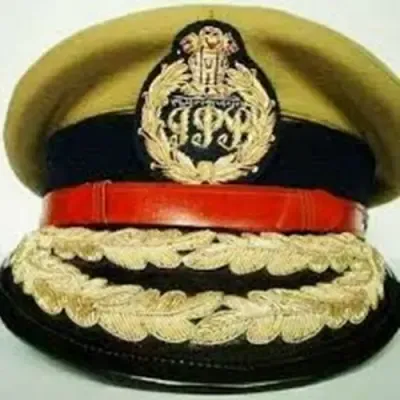
Bengaluru is no longer a single-commissioner city. In a sweeping reshuffle on 18 November, Karnataka transferred 34 senior IPS officers and carved the metropolis into five separate police commissionerates aligned with the Greater Bengaluru Authority — the most significant overhaul of the city's policing structure in years, with R. Hitendra now at the helm as chief commissioner.
Key Takeaways
The Karnataka government transferred 34 senior IPS officers on 18 November 2026 with immediate effect.
Bengaluru has been divided into five police commissionerates — Central, East, West, North, and South — aligned with the Greater Bengaluru Authority (GBA) .
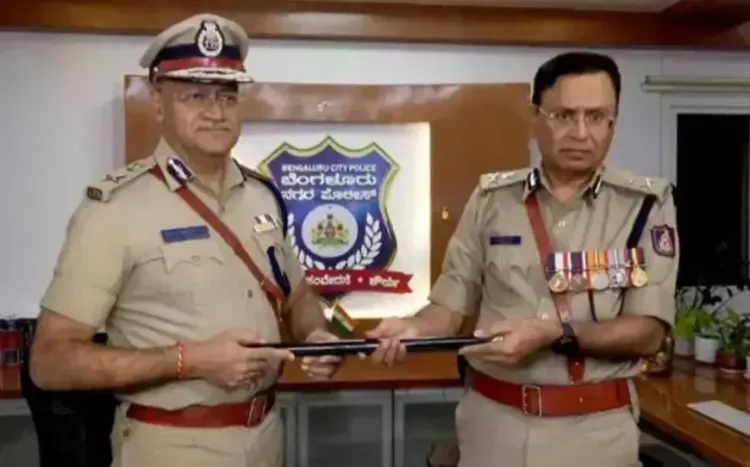
Hitendra , a 1996-batch IPS officer , has been appointed Bengaluru City Police Commissioner and head of the new system, replacing Seemanth Kumar Singh .
Seemanth Kumar Singh , who served for one-and-a-half years , has been transferred as ADGP, Fire and Emergency Services .
Nimbalkar has been named Bengaluru City (Traffic) Police Commissioner with additional charge of the upgraded Anti-Rowdy Squad .
Separate commissioners have been appointed for each of the five new commissionerates, with multiple DIG and DCP postings also reshuffled.
The Karnataka government on 18 November 2026 transferred 34 senior Indian Police Service (IPS) officers with immediate effect, simultaneously restructuring Bengaluru's police administration into five separate police commissionerates aligned with the Greater Bengaluru Authority (GBA) framework. The sweeping reshuffle marks the most significant overhaul of the city's policing architecture in recent memory.
Five Commissionerates, Five New Commissioners
The five newly carved commissionerates are Central Bengaluru City, East Bengaluru City, West Bengaluru City, North Bengaluru City, and South Bengaluru City. Each will be headed by an independently appointed police commissioner, replacing the earlier single-commissioner model that had governed the entire city.
The government has named Labhu Ram as commissioner for Central Bengaluru City, P.S. Harsha for East Bengaluru City, Vikash Kumar Vikash for West Bengaluru City, M.B. Boralingaiah for North Bengaluru City, and C. Vamshi Krishna for South Bengaluru City.
R. Hitendra Takes Charge as Chief Commissioner
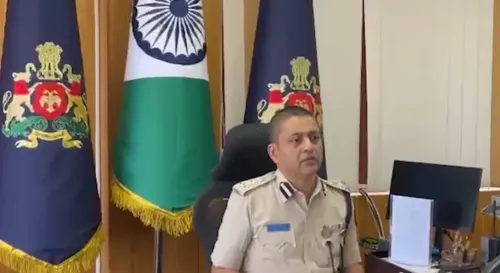
R. Hitendra, a 1996-batch IPS officer who was previously serving as Additional Director General of Police (ADGP), Law and Order, has been appointed Bengaluru City Police Commissioner and head of the new commissionerate system. He assumed charge within hours of the notification and later met Chief Minister D.K. Shivakumar, thanking him for the appointment.
Hitendra replaces Seemanth Kumar Singh, who has been moved as ADGP, Fire and Emergency Services. Speaking after handing over charge, Singh said he had served as commissioner for one-and-a-half years, calling every day a fresh challenge. 'I had tried to make Bengaluru a drug-free city during my tenure as Police Commissioner. It was challenging when I took charge as well. All police officers and personnel extended their cooperation. I thank all the staff,' he said. Singh also expressed pride in being 'the last Police Commissioner of undivided Bengaluru.'
Key Senior-Level Postings
Senior IPS officer Hemant M. Nimbalkar, who had been awaiting a posting, has been appointed Bengaluru City (Traffic) Police Commissioner and given additional charge as Commissioner of the upgraded Anti-Rowdy Squad, with crime-control oversight under the chief commissioner.
Bijay Kumar Singh has been appointed ADGP, Law and Order, filling the slot vacated by Hitendra. S. Murugan has been posted as ADGP, Lokayukta, while Manish Kharbikar has been appointed ADGP, Communications, Logistics and Modernisation, Bengaluru. N. Shashi Kumar has been transferred as Inspector General of Police (IGP), Western Range, Mangaluru, and Anupam Agarwal has been posted as IGP, Karnataka State Reserve Police (KSRP).
DIG and DCP-Level Transfers
At the DIG level, Sharanappa S.D. has been appointed DIG, Railways; Kuldeep Kumar R. Jain as DIG and Police Commissioner, Kalaburagi City; M. Puttamadaiah as DIG, Southern Range, Mysuru; M. Ashwini as DIG, Recruitment Division, Bengaluru; and J.K. Rashmi as DIG, Vigilance, Water Resources Department.
Among Deputy Commissioner of Police (DCP) postings, Anoop A. Shetty has been appointed DCP (Traffic), East Bengaluru City; Srihari Babu B.L. as DCP, Whitefield, East Bengaluru City; Geetha M.S. as DCP, East Bengaluru City; Ashok K.V. as DCP, Peenya, West Bengaluru City; and P.V. Sneha as DCP (Traffic), West Bengaluru City, among others. Several Superintendents of Police have also been transferred as part of the broader restructuring.
Why This Restructuring Matters
Bengaluru's rapid geographic and demographic expansion — accelerated by the creation of the Greater Bengaluru Authority — had long strained the capacity of a single commissionerate to manage policing across a sprawling metro of over 13 million people. Critics and urban governance experts had argued that the centralised model created response-time bottlenecks and diluted accountability. The five-commissionerate model mirrors approaches adopted in cities like Mumbai, which has historically operated multiple police zones. Notably, the restructuring brings Bengaluru's policing boundaries in line with the GBA's administrative divisions, suggesting a broader intent to align civic and law-enforcement jurisdictions. How quickly the five new units operationalise — and how resources are distributed across them — will determine whether the reform delivers on its promise.
Point of View
Something Indian metros have historically struggled to do. Chief Minister D.K. Shivakumar's fingerprints are visible in both the timing and the appointments — the reshuffle reinforces political control over a critical urban security apparatus ahead of a contested political cycle in Karnataka.
NationPress
18 Nov 2026
Frequently Asked Questions
Why has Bengaluru been divided into five police commissionerates?
The Karnataka government split Bengaluru into five police commissionerates — Central, East, West, North, and South — to decentralise policing across a rapidly expanding metropolis and align law-enforcement boundaries with the newly formed Greater Bengaluru Authority. The restructuring is intended to improve response times and administrative accountability.
Who is the new Bengaluru City Police Commissioner?
R. Hitendra, a 1996-batch IPS officer who was previously serving as ADGP, Law and Order, has been appointed Bengaluru City Police Commissioner and head of the new five-commissionerate system. He assumed charge on 18 November 2026, replacing Seemanth Kumar Singh.
What happened to outgoing commissioner Seemanth Kumar Singh?
Seemanth Kumar Singh has been transferred as ADGP, Fire and Emergency Services. He served as Bengaluru City Police Commissioner for one-and-a-half years and described himself as 'the last Police Commissioner of undivided Bengaluru' after handing over charge to R. Hitendra.
Who heads each of the five new Bengaluru police commissionerates?
Labhu Ram heads Central Bengaluru City, P.S. Harsha heads East Bengaluru City, Vikash Kumar Vikash heads West Bengaluru City, M.B. Boralingaiah heads North Bengaluru City, and C. Vamshi Krishna heads South Bengaluru City.
How many IPS officers were transferred in this Karnataka reshuffle?
A total of 34 senior IPS officers were transferred with immediate effect on 18 November 2026. The transfers span ADGP, IGP, DIG, and DCP levels and cover postings across Bengaluru and other parts of Karnataka including Mangaluru, Mysuru, and Kalaburagi.