Ethanol blending boosts Meerut farmers' income, says BJP's Bhandari
Synopsis
BJP spokesperson Pradeep Bhandari took the ethanol blending debate from parliament to the fields — visiting Meerut villages to present farmer testimonials as direct counter-evidence to Kejriwal's E20 criticism. His claim that corn farmers' income has nearly doubled and sugarcane dues are now cleared within 15 days puts concrete numbers at the centre of a fast-escalating political fight over India's energy-agriculture crossover.
Key Takeaways
BJP spokesperson Pradeep Bhandari visited Fafunda and Chandasara villages in Meerut, Uttar Pradesh on 2 August to assess EBP Programme impact.
Farmers reportedly told Bhandari that timely payments under the scheme have reduced their dependence on local moneylenders ( sahukars ).
Corn farmers are receiving ₹2,400 per quintal — with Bhandari claiming their income has nearly doubled .
Sugarcane farmers are now receiving ₹25,000 crore in full payments within 15 days , according to Bhandari.
Over 3–4 crore four-wheelers and 20 crore two-wheelers have run on ~15% ethanol-blended petrol for three years with no major damage cases reported, Bhandari claimed.
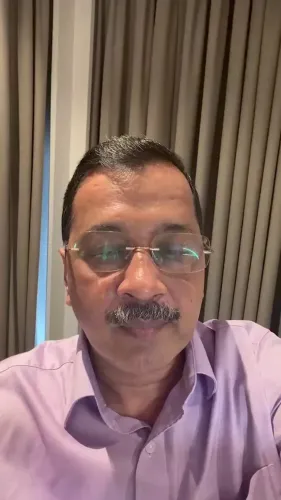
The visit came a day after AAP convener Arvind Kejriwal raised concerns about engine damage and farmer losses from ethanol blending.
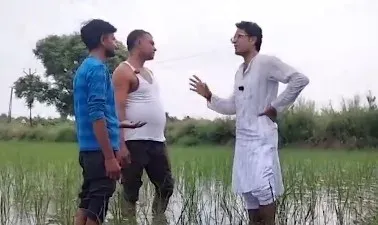
Bharatiya Janata Party (BJP) national spokesperson Pradeep Bhandari on Sunday, 2 August visited villages in Meerut district, Uttar Pradesh, to assess ground-level impact of the Centre's Ethanol Blended Petrol (EBP) Programme on sugarcane and rice farmers. His tour of Fafunda and Chandasara villages comes a day after Aam Aadmi Party (AAP) national convener Arvind Kejriwal raised concerns about the E20 initiative.
What Farmers Told Bhandari
Farmers in both villages told Bhandari that the ethanol blending initiative has brought tangible financial relief. According to Bhandari, they reported receiving timely payments for their sugarcane — a shift that has sharply reduced their dependence on local moneylenders, locally known as sahukars. Sugarcane procurement rates have also risen, farmers said, giving them greater financial security.
Several farmers also noted that the programme has created an additional market for their crop, giving sugarcane a new sales avenue beyond conventional channels. Bhandari described this as 'ground-level feedback' confirming the programme's benefit to farmers by 'boosting their incomes, reducing debt dependency, and strengthening their economic confidence.'
BJP's Rebuttal to Kejriwal's Criticism
Bhandari's field visit follows Kejriwal's remarks on Saturday, in which the AAP chief claimed that ethanol-blended petrol damages vehicle engines and that farmers would bear losses from the blending mandate. Bhandari pushed back sharply, posting a video on his official X handle.
'Arvind Kejriwal said that ethanol-blended petrol damages a car's engine, however the truth is that it leads to improvement in the car's acceleration,' Bhandari said in the post.
He further asserted that over 3 to 4 crore four-wheelers and more than 20 crore two-wheelers have been operating on approximately 15% ethanol-blended petroleum for the past three years, with no major vehicle damage cases reported so far, he claimed.
Crop-Wise Benefits: Corn, Rice, Sugarcane
Bhandari outlined specific gains for three farming communities. He said corn farmers now contribute around 40% of ethanol used in blended petrol and are receiving ₹2,400 per quintal — a rate he claimed has nearly doubled their income. On rice, he noted that India produces a surplus beyond domestic demand, and the excess is being channelled into ethanol blending, with farmers paid for the additional offtake.
For sugarcane farmers, Bhandari said the sector is now receiving its full payment of ₹25,000 crore, reportedly within 15 days — a marked improvement over earlier delayed payment cycles that pushed farmers into debt.
Political Undercurrent
Bhandari went further, asserting that opposition to ethanol-blended petroleum amounts to 'supporting foreign powers who don't support the country's middle class and farmers' — a charge that escalates the political stakes around what is primarily an energy and agricultural policy debate. The AAP has not yet formally responded to Bhandari's village visit or his specific crop-wise claims.
With the ethanol blending target set to rise under the government's E20 roadmap, the debate over its benefits and risks for both farmers and vehicle owners is likely to intensify in the months ahead.
Point of View
However politically motivated, touches a real concern — the E20 programme's vehicle compatibility and transition costs for lower-income two-wheeler owners remain under-examined in public discourse. The debate is useful, but both sides are selectively presenting evidence.
NationPress
16 Sept 2026
Frequently Asked Questions
What is the Ethanol Blended Petrol (EBP) Programme and how does it benefit farmers?
The EBP Programme, launched by the Centre, mandates blending ethanol derived from crops like sugarcane, corn, and rice into petrol. According to BJP spokesperson Pradeep Bhandari, it has created an additional market for these crops, improved procurement rates, and ensured timely payments — reducing farmers' dependence on moneylenders.
What did Arvind Kejriwal say about ethanol-blended petrol?
AAP national convener Arvind Kejriwal claimed on Saturday that ethanol-blended petrol damages vehicle engines and that farmers would bear losses from the blending mandate. Bhandari directly contested both claims, saying engine performance improves and farmers are the programme's biggest beneficiaries.
How much are corn farmers earning under the ethanol blending scheme?
BJP spokesperson Pradeep Bhandari claimed corn farmers are now receiving ₹2,400 per quintal under the ethanol blending programme, which he asserted has nearly doubled their income. Corn farmers reportedly contribute around 40% of the ethanol used in blended petrol.
Are vehicle engines damaged by ethanol-blended petrol?
Bhandari claimed that over 3–4 crore four-wheelers and more than 20 crore two-wheelers have been running on approximately 15% ethanol-blended petroleum for three years, with no major vehicle damage cases reported so far. He added that the blend improves acceleration rather than harming engines.
Why did Pradeep Bhandari visit Meerut villages on 2 August?
Bhandari visited Fafunda and Chandasara villages in Meerut district on 2 August to gather ground-level feedback from sugarcane and rice farmers on the EBP Programme. The visit came a day after Kejriwal's criticism of the E20 initiative, and Bhandari used farmer accounts to counter those claims.