Bhojshala Friday prayers held peacefully in Dhar under heavy security
Synopsis
Amid a live Supreme Court case and a private land ownership dispute, Dhar's district administration deployed up to 1,000 security personnel to facilitate Friday prayers at a plot adjoining the contested Bhojshala complex — a temporary arrangement that underscores how fragile the status quo around one of Madhya Pradesh's most sensitive heritage sites remains.
Key Takeaways
Friday prayers were held on 31 July at Khasra No.
612 , adjacent to the Bhojshala complex in Dhar, Madhya Pradesh .
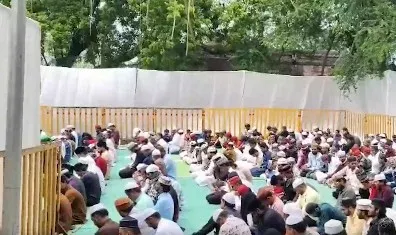
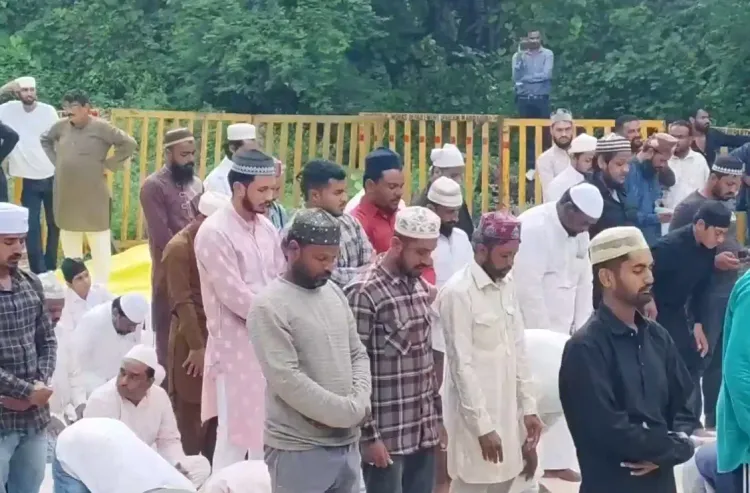
Between 150 and 200 members of the Muslim community offered Jumma prayers peacefully.
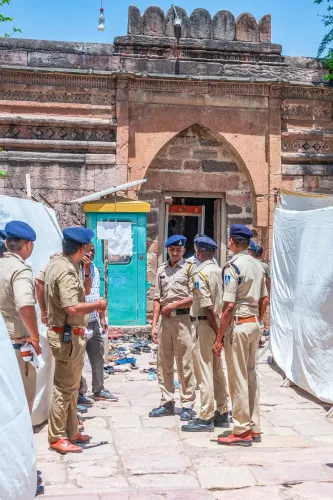
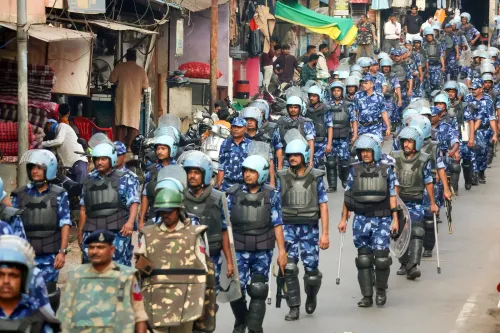
800 to 1,000 security personnel , including two STF companies , were deployed across sensitive areas of the city.
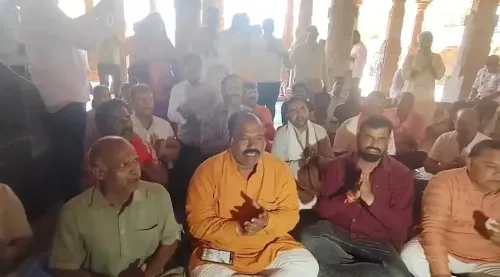
Local residents protested, claiming the land was privately owned and vowing to seek legal remedies.
SDM Rajkumar Haldar confirmed the arrangement is temporary and subject to the Supreme Court's final order.
No untoward incident was reported; the dispute remains sub judice.
Friday prayers were offered on 31 July on a parcel of land adjoining the Bhojshala complex in Dhar district, Madhya Pradesh, under heavy police deployment, even as a group of local residents protested the arrangement, claiming the land was privately owned. The district administration facilitated the prayers in compliance with directions from the Supreme Court of India.
How the administration prepared the site
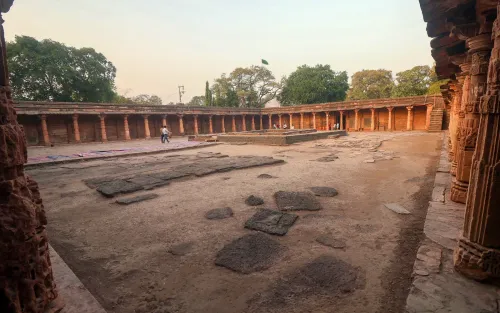
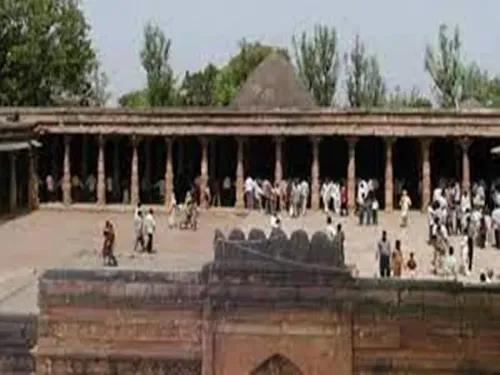
The land in question is identified as Khasra No. 612, adjacent to the boundary wall of the Bhojshala complex. Ahead of the prayers, district officials levelled the ground, spread tarpaulin sheets to shield worshippers from rain, and erected barricades around the designated area. An estimated 800 to 1,000 security personnel were deployed, including two companies of the Special Task Force (STF), to maintain order across sensitive parts of the city.
Residents object, officials intervene
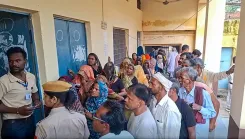
Before prayers began, a group of residents gathered at the site and objected to its use, asserting that the land had been in their families' possession and that they had been cultivating it for years. They indicated they would pursue legal remedies to protect their rights. Sub-Divisional Magistrate (SDM) Rajkumar Haldar reached the spot along with senior administrative officials and held discussions with the objectors. Officials said the protesters dispersed peacefully after being assured their concerns would be formally heard.
What the administration said
SDM Haldar confirmed that the arrangement was strictly temporary and contingent on the Supreme Court's final ruling. 'The Supreme Court's final order has not been issued yet; this was a temporary arrangement and will be subject to the final decision. We made necessary security arrangements and took all precautions,' he said.
Superintendent of Police Vijay Dabar said elaborate measures were in place to ensure the event passed off without incident. 'In accordance with the Supreme Court's decision, prayers were offered peacefully at the location. Security was strengthened across sensitive areas of the city,' Dabar said.
Prayers offered, no untoward incident reported
Around 150 to 200 members of the Muslim community gathered at the designated site and offered Jumma prayers peacefully. A community member present at the site thanked the administration for its arrangements. The administration monitored the situation throughout the day, and no untoward incident was reported.
What happens next
Officials stated that any further action regarding the site would be taken strictly in accordance with the Supreme Court's final order and after consultation with senior authorities. The Bhojshala dispute — which centres on competing claims between Hindu and Muslim communities over the medieval structure — remains sub judice, making each Friday prayer a closely watched event in the district.
Point of View
Rather than resolve, communally sensitive heritage disputes. Each Friday prayer held under STF cover is less a resolution than a managed standoff — and the private land ownership objection raised on 31 July adds a fresh legal variable that could complicate even a Supreme Court settlement. The administration's careful, court-directed choreography reflects how thin the margin for error is in Dhar, where a single procedural misstep could escalate quickly. The final order, when it comes, will need to address not just the religious access question but also the property rights dimension that residents have now formally flagged.
NationPress
15 Sept 2026
Frequently Asked Questions
What happened at Bhojshala in Dhar on 31 July?
Friday prayers were held on a plot of land adjacent to the Bhojshala complex in Dhar, Madhya Pradesh, on 31 July under heavy security. Around 150 to 200 members of the Muslim community offered Jumma prayers peacefully, in compliance with Supreme Court directions, while local residents protested claiming the land was privately owned.
Why were so many security personnel deployed at Bhojshala?
Between 800 and 1,000 security personnel, including two companies of the Special Task Force, were deployed because the Bhojshala complex is a historically sensitive site with competing Hindu and Muslim claims that are currently before the Supreme Court. Authorities sought to prevent any untoward incident during the Friday prayers.
What is the Bhojshala dispute about?
The Bhojshala complex in Dhar is a medieval structure that Hindus revere as a temple dedicated to Goddess Saraswati, while Muslims have historically used part of it as a mosque for Friday prayers. The dispute over religious access and ownership is currently being adjudicated by the Supreme Court of India, and no final order has been issued yet.
Why did residents object to the Friday prayers on 31 July?
A group of local residents claimed that the land identified as Khasra No. 612, where prayers were facilitated, was privately owned by their families, who had been cultivating it for years. They said they would pursue legal remedies and raised their objections before SDM Rajkumar Haldar, who assured them their concerns would be heard.
Is the current prayer arrangement at Bhojshala permanent?
No. SDM Rajkumar Haldar explicitly stated that the arrangement is temporary and will be subject to the Supreme Court's final order. Officials said any further action regarding the site will be taken only after the court's ruling and consultation with senior authorities.