Bhojshala dispute: SC earmarks adjacent plot for Friday namaz in Dhar
Synopsis
The Supreme Court stepped in to correct Madhya Pradesh's own interim arrangement — the state had placed the Friday namaz site 1.3 km from the Bhojshala complex, far from the court's 'adjacent or near' direction. The bench identified a dargah-land plot with independent road access as the lawful location, keeping the larger question of the site's religious character for full adjudication.
Key Takeaways
The Supreme Court on 30 July directed Madhya Pradesh to arrange Friday namaz at a plot adjacent to the Bhojshala complex in Dhar .
The bench — led by CJI Surya Kant — identified a dargah land parcel with an independent access road as the designated site.
Friday prayers are permitted between 1 pm and 3 pm ; parties may mutually agree on an alternative site.
The Muslim side alleged the district administration had allotted a site 1.3 km away by road, violating the court's earlier 'adjacent or near' direction.
The Madhya Pradesh High Court's 15 May judgment declared the complex a Hindu temple; the Muslim side's challenge remains pending before the Supreme Court.
The ASI cannot carry out structural alterations at the monument without prior Supreme Court permission.
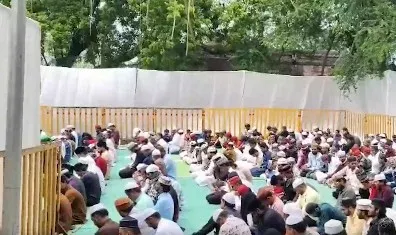
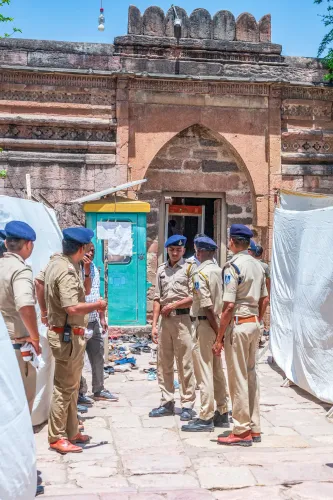
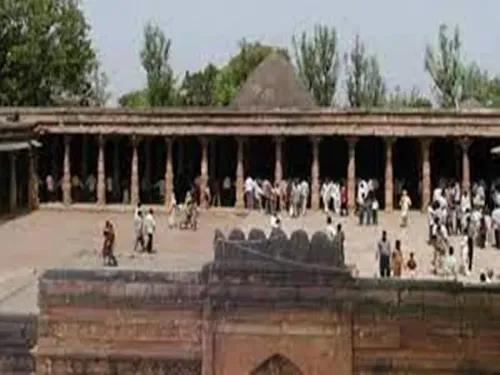
The Supreme Court on Thursday, 30 July directed the Madhya Pradesh government to arrange Friday namaz for the Muslim community at a plot adjacent to the disputed Bhojshala-Kamal Maula Mosque complex in Dhar, clarifying its earlier interim order after the state administration allocated a site reportedly over a kilometre away from the monument.
What the Court Directed
A bench comprising Chief Justice of India Surya Kant, Justice Joymalya Bagchi, and Justice V. Mohana identified a specific parcel — marked in yellow on a site plan placed before it — as the designated location for prayers. The bench permitted the Muslim community to offer namaz at the identified land between 1 pm and 3 pm on Fridays, directing state authorities to make all necessary arrangements.
The court also clarified that its order would not prevent the parties from mutually agreeing on any other alternative site. 'This order shall not preclude the parties to opt for another site by mutual consent,' the bench stated.
Why the Application Was Filed
The direction came on an application by the Muslim petitioners alleging non-compliance with the apex court's earlier order. Senior Advocate Huzefa Ahmadi, appearing for the Muslim side, submitted that the district Collector had allotted land nearly 1.3 km away by road from the disputed site — a location from which neither the mosque nor the dargah was visible.
Ahmadi argued that several adjacent parcels, including Waqf land, were available near the Bhojshala complex but had been rejected by the administration citing law and order concerns. He urged restoration of the earlier arrangement under which Friday namaz had been offered in the vicinity of the monument.
State Government's Stand
Appearing for the Madhya Pradesh government, Additional Solicitor General K.M. Nataraj submitted that the district administration's sole concern was maintaining law and order and that it did not wish to enter into competing claims over religious rights.
During the hearing, the bench examined the site plan and questioned the state as to why an adjacent plot with a separate access route could not be made available, given that independent ingress and egress for both communities appeared feasible.
Background of the Dispute
The dispute stems from the Madhya Pradesh High Court's judgment of 15 May, which declared the Bhojshala-Kamal Maula complex a Hindu temple and quashed an earlier administrative arrangement permitting Muslims to offer Friday prayers at the protected monument. The Muslim side has challenged that verdict before the Supreme Court, where the main proceedings on the religious character of the site remain pending.
Earlier this month, the Supreme Court had refused to stay the High Court ruling but, as an ad hoc arrangement pending adjudication, directed the state to provide a separate open space adjacent or near the protected monument for Friday namaz — explicitly stating the arrangement was without prejudice to the rights and contentions of either side. The bench had also directed that no structural alterations be carried out by the Archaeological Survey of India (ASI) at the monument without prior court permission.
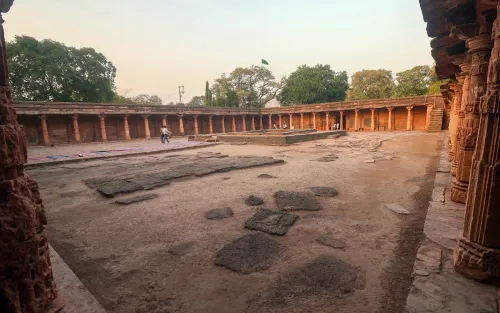
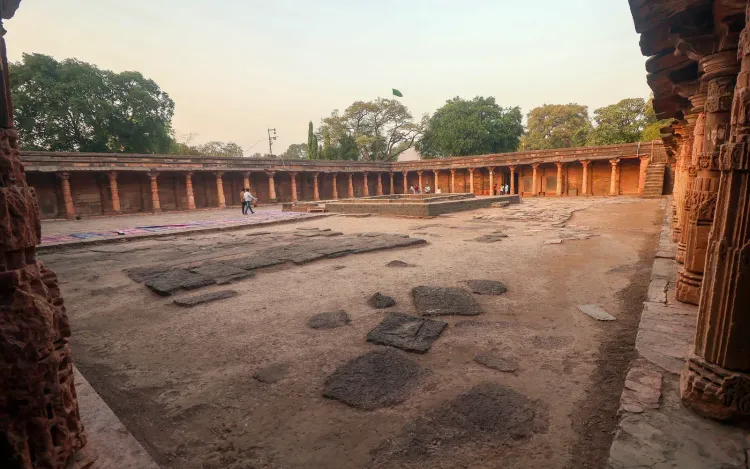
The Bhojshala complex, a protected monument under the ASI, has long been contested. Hindus claim it was established as a temple dedicated to Goddess Saraswati and a centre of Sanskrit learning, while the Muslim side maintains it includes the Kamal Maula Mosque and that Friday prayers had historically been offered there under the earlier administrative arrangement.
With the main proceedings still pending before the Supreme Court, Thursday's order represents a course correction on interim arrangements — and the next hearing will be closely watched by both communities.
Point of View
And state administrations implement them in ways that dilute their intent — here, placing the namaz site 1.3 km away while the order said 'adjacent or near.' The Supreme Court's course correction is significant, but the deeper question of whether a dargah-land plot with independent access can hold without fresh law-and-order flashpoints remains unanswered. The Madhya Pradesh government's framing — that it is only concerned with public order, not religious rights — is legally convenient but operationally thin; order and rights are inseparable in a site this contested. Until the main proceedings conclude, both communities will remain in a fragile interim equilibrium that any administrative misstep can unsettle.
NationPress
13 Sept 2026
Frequently Asked Questions
What did the Supreme Court order regarding the Bhojshala dispute on 30 July?
The Supreme Court directed the Madhya Pradesh government to arrange Friday namaz for the Muslim community at a dargah-land plot adjacent to the Bhojshala complex in Dhar, permitting prayers between 1 pm and 3 pm on Fridays. The bench identified the specific parcel on a site plan and clarified that parties could mutually agree on an alternative location.
Why did the Supreme Court intervene again in the Bhojshala namaz arrangement?
The Muslim petitioners filed an application alleging that the district administration had allotted a namaz site nearly 1.3 km away by road — far from the court's earlier direction to provide space 'adjacent or near' the Bhojshala complex. The Supreme Court found the administration's allotment inconsistent with its earlier order and identified a closer, suitable plot.
What is the Bhojshala-Kamal Maula Mosque dispute about?
The Bhojshala complex in Dhar, Madhya Pradesh, is an ASI-protected monument at the centre of a long-standing religious dispute. Hindus claim it is a temple dedicated to Goddess Saraswati and a Sanskrit learning centre, while the Muslim side holds that it includes the Kamal Maula Mosque where Friday prayers were historically offered.
What did the Madhya Pradesh High Court rule on the Bhojshala complex?
On 15 May, the Madhya Pradesh High Court declared the Bhojshala-Kamal Maula complex a Hindu temple and quashed the earlier administrative arrangement that had permitted Muslims to offer Friday namaz at the monument. The Muslim side has challenged that judgment before the Supreme Court, where the main proceedings are pending.
Can the ASI carry out construction or alterations at the Bhojshala complex?
No. The Supreme Court has directed that no structural alterations be carried out by the Archaeological Survey of India at the protected monument without prior permission from the court. This restriction remains in force while the main case is being adjudicated.