Bihar CM Office: State's Heritage to Get Global Recognition
Synopsis
The Chief Minister's Office of Bihar announced on 7 July 2026 that a new initiative will elevate the state's rich cultural and intellectual heritage to global recognition, building on Bihar's Buddhist Circuit tourism push and the revival of Nalanda University.
Key Takeaways
The Chief Minister's Office of Bihar posted on 7 July 2026 that a specific initiative will give Bihar's cultural and intellectual heritage new global recognition.
Bihar hosts major heritage sites including Bodh Gaya (UNESCO World Heritage Site) and the revived Nalanda University , established as an international institution in 2010 .
The state has run Buddhist Circuit tourism projects since 2008 , linking key heritage sites for domestic and international visitors.
Chief Minister Nitish Kumar has championed Bihar's heritage and tourism agenda since 2005 .
Bihar's strategy mirrors heritage-positioning efforts in Uttar Pradesh and Madhya Pradesh as part of India's broader soft-power approach.
The specific initiative referenced in the post was not named; details are expected to emerge through forthcoming official announcements.
The Chief Minister's Office of Bihar on Tuesday, 7 July 2026 posted on X, asserting that a particular initiative will give Bihar's rich cultural and intellectual heritage a new identity on the global stage. The post, in Hindi, stated: 'इससे बिहार की समृद्ध सांस्कृतिक एवं बौद्धिक विरासत को वैश्विक स्तर पर नई पहचान मिलेगी' — meaning, 'This will give Bihar's rich cultural and intellectual heritage a new recognition at the global level.'
Context
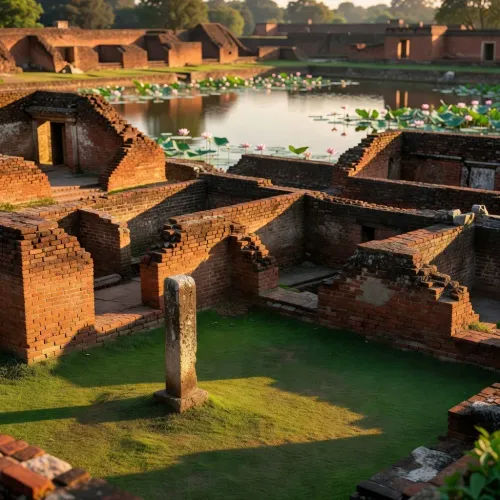
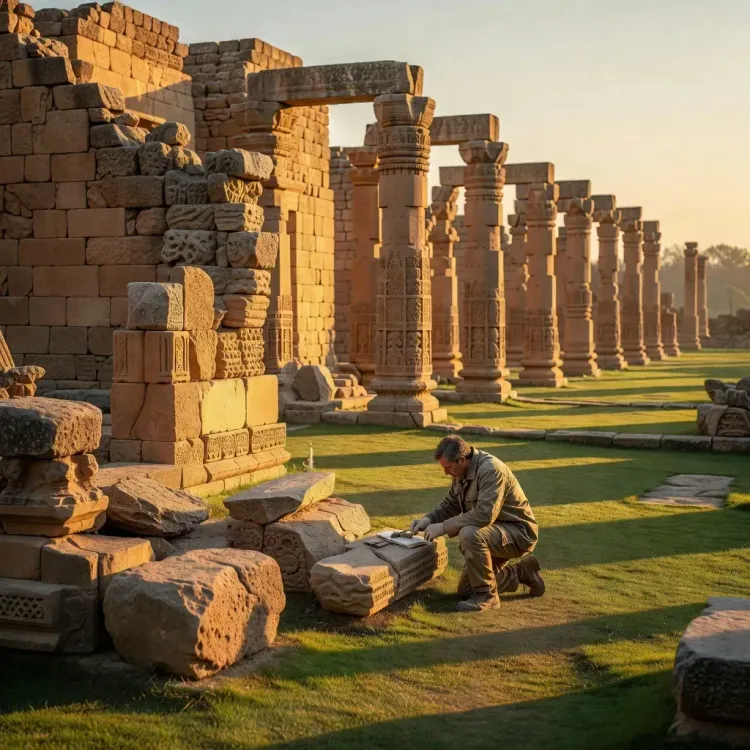
Bihar is home to some of India's most significant historical and cultural assets, spanning the Mauryan Empire, early Buddhism, and Jain traditions. Sites such as Bodh Gaya — a UNESCO World Heritage Site — and the ruins of the ancient Nalanda seat of learning place the state at the centre of India's civilisational narrative. The Chief Minister's Office did not specify the initiative being referenced, but the framing points to an effort aimed at elevating these assets to wider international visibility.
The post comes from the official handle of the office of Chief Minister Nitish Kumar, who has overseen Bihar's heritage and tourism push since 2005. The phrase 'इससे' — meaning 'from this' or 'through this' — implies the post is a reply or follow-up to a specific announcement, the details of which were not disclosed in the post itself.
Policy Backdrop
Bihar's engagement with its cultural legacy has a defined policy lineage. In 2010, the Government of India re-established Nalanda University as an international postgraduate institution, explicitly to revive the state's ancient knowledge traditions and project them on a global academic stage. The institution draws students and faculty from across Asia and beyond, anchoring Bihar's intellectual heritage in a living institution.
Since 2008, the Bihar government has also implemented Buddhist Circuit tourism projects, linking major heritage sites for domestic and international visitors. These efforts are part of a broader national strategy to position ancient Indian heritage — particularly Buddhist sites — as soft-power assets and drivers of inbound tourism.
Stakeholders and Impact
The primary beneficiaries of any such initiative would include the heritage tourism sector in Bihar, the academic and research community connected to institutions like Nalanda University, and the broader Buddhist pilgrim circuit that draws visitors from Sri Lanka, Japan, Thailand, South Korea, and other countries. Enhanced global recognition could translate into increased footfall at sites like Bodh Gaya, Rajgir, Vaishali, and Nalanda.
Bihar's approach mirrors similar heritage-positioning efforts in Uttar Pradesh and Madhya Pradesh, where state governments have leveraged ancient sites for both diplomatic and economic returns. A sharper global profile for Bihar's heritage could also support future UNESCO nominations and international academic partnerships.
What's Next
Observers will watch for the specific initiative the Chief Minister's Office was referencing — whether it involves a new memorandum of understanding with foreign governments or universities, a fresh UNESCO nomination, or an expansion of the Buddhist Circuit tourism programme. The Bihar state tourism budget allocations for the coming fiscal period will also be a key indicator of the government's commitment to this agenda.
If the initiative delivers on the promise of global recognition, it could strengthen Bihar's position as a hub for cultural diplomacy and heritage tourism within India's broader soft-power framework.
Point of View
And repeated official emphasis on global visibility suggests the government is positioning these sites within India's broader soft-power architecture. The timing and language — projecting outward rather than inward — align with a pattern seen across Indian states competing for UNESCO listings and international academic partnerships. Whether the unnamed initiative delivers structural change or remains aspirational will depend on the institutional and budgetary commitments that follow.
NationPress
8 Jul 2026
Frequently Asked Questions
What did the Bihar Chief Minister's Office say about Bihar's heritage?
The Chief Minister's Office of Bihar stated on 7 July 2026 that a specific initiative will give Bihar's rich cultural and intellectual heritage a new identity at the global level.
What are Bihar's major cultural and heritage sites?
Bihar's key heritage sites include Bodh Gaya , a UNESCO World Heritage Site marking the place of Buddha's enlightenment, the ruins of ancient Nalanda , and sites along the Buddhist Circuit such as Rajgir and Vaishali.
What is the Nalanda University revival about?
Nalanda University was re-established in 2010 by the Government of India as an international postgraduate institution to revive Bihar's ancient tradition as a global centre of learning.
What is the Buddhist Circuit tourism project in Bihar?
Since 2008 , the Bihar government has developed the Buddhist Circuit , a network of heritage sites linked for domestic and international pilgrims and tourists, supporting both cultural diplomacy and inbound tourism.
Who is the Chief Minister of Bihar?
Nitish Kumar is the Chief Minister of Bihar and has led the state's heritage, tourism, and development agenda since 2005 .