Bihar CM Samrat Choudhary Hails Northeast as India's Growth Engine
Synopsis
Bihar Chief Minister Samrat Choudhary on 20 June 2026 hailed Northeast India as the 'engine of New India,' invoking the Ashta Lakshmi framing and crediting PM Modi's 12-year push on connectivity, infrastructure, and electrification across the eight-state region.
Key Takeaways
Bihar CM Samrat Choudhary posted on X on 20 June 2026 declaring Northeast India the 'engine of New India.' The post uses the 'Ashta Lakshmi' framing, referencing the eight northeastern states as symbols of prosperity.
The message was shared under #12YearsOfRisingNorthEast , marking over a decade of the Modi government's Northeast engagement since 2014 .
The Act East Policy (launched 2014) underpins the connectivity and infrastructure drive, positioning the Northeast as India's gateway to ASEAN economies.
Key projects to watch include the Trans-Arunachal Highway , new railway lines in Assam and Arunachal Pradesh , and power evacuation infrastructure in the 2026-27 budget cycle.
Senior BJP leaders from outside the Northeast amplifying the narrative signals a coordinated national-level political campaign around regional development.
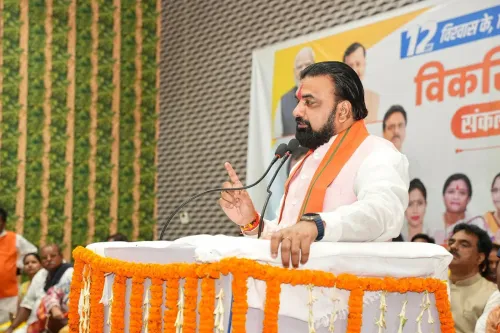
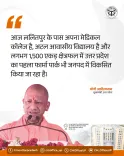
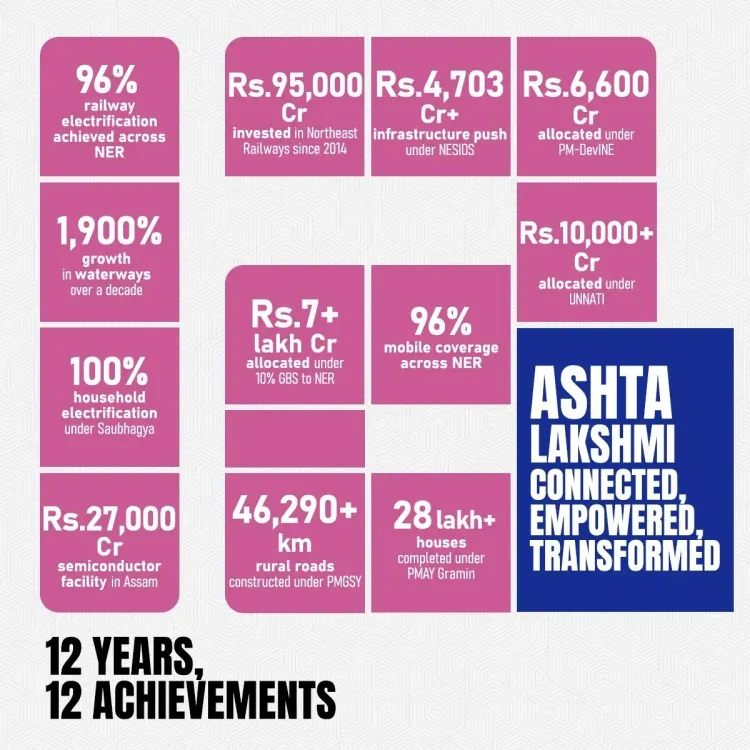
Bihar Chief Minister Samrat Choudhary on Saturday, 20 June 2026, took to X to champion the transformation of Northeast India, declaring the eight-state region 'the engine of New India' and crediting Prime Minister Narendra Modi's leadership for driving what he called unprecedented growth through investments in connectivity, infrastructure, and electrification.
Context
Choudhary's post, captioned 'Ashta Lakshmi: The Engine of New India', invokes a phrase that frames the eight northeastern states as eight forms of the goddess Lakshmi — a metaphor increasingly used in BJP political messaging to signal prosperity and national integration. The post was shared under the hashtag #12YearsOfRisingNorthEast, situating it within a broader campaign marking over a decade of the Modi government's engagement with the region since 2014.
The Chief Minister's statement directly challenges the long-held characterisation of the Northeast as peripheral to India's economic and political mainstream, asserting instead that it now sits 'at the heart of India's progress.'
Policy Backdrop
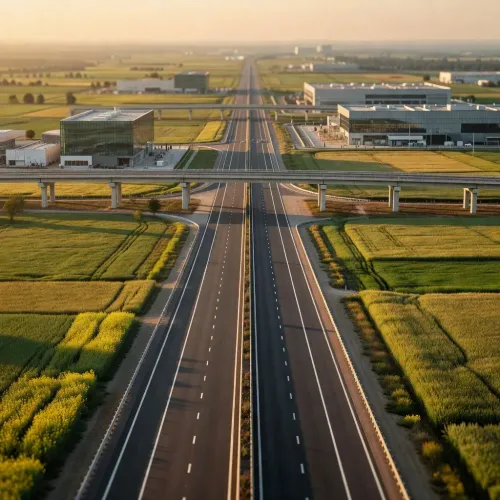
The Northeast's repositioning is anchored in the Act East Policy, announced in 2014, which succeeded the Look East Policy of 1991 and shifted emphasis from diplomatic outreach to physical connectivity — roads, railways, power grids, and digital networks — using the Northeast as India's primary gateway to ASEAN economies.
The North Eastern Council, established in 1971 as the nodal agency for regional planning, has channelled successive waves of central funding into the region. More recent flagship projects include the Trans-Arunachal Highway, new railway lines across Assam and Arunachal Pradesh, and large-scale power evacuation infrastructure — all of which feature prominently in recent Union Budget allocations.
The strategic logic extends beyond economics: improved connectivity reduces the region's dependence on the narrow Siliguri Corridor and strengthens India's presence in sensitive borderlands.
Stakeholders and Impact
Residents across the eight states — Arunachal Pradesh, Assam, Manipur, Meghalaya, Mizoram, Nagaland, Sikkim, and Tripura — stand as the primary beneficiaries of the infrastructure push, with improved road and rail access opening markets that were historically isolated by difficult terrain and limited investment.
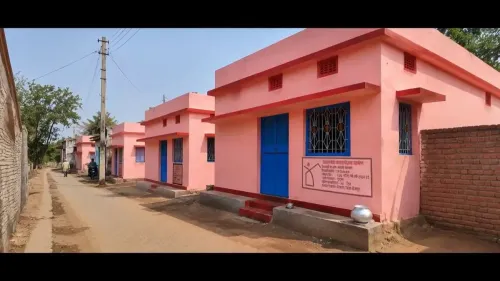
Infrastructure developers and contractors operating in the region have seen a sustained pipeline of central government projects, while electrification drives have extended power access to remote communities. The ASEAN-facing corridor also creates long-term opportunities for trade and logistics businesses positioned along the emerging eastern economic belt.
For the BJP, the Northeast carries significant political weight: the party has expanded its footprint across the region over the past decade, and messaging around development serves both a governance and an electoral purpose ahead of state assembly cycles.
What's Next
Attention will turn to completion timelines and funding releases for key projects in the 2026-27 Union Budget cycle, including rail connectivity expansions in Arunachal Pradesh and power infrastructure upgrades across the region. Whether the pace of project delivery matches the scale of political messaging will be the measure by which the 'engine' claim is ultimately tested.
As the #12YearsOfRisingNorthEast campaign gains momentum within the BJP's communication machinery, senior leaders from states beyond the Northeast — including Choudhary from Bihar — amplifying the narrative signals a concerted effort to make regional development a national-level political asset.
Point of View
Not just regional audiences. The 'Ashta Lakshmi' framing is politically deft: it layers cultural resonance onto an infrastructure argument, making connectivity spending feel like civilisational restoration. However, the gap between political messaging and on-the-ground project completion timelines in the Northeast has historically been wide, and that gap will determine whether this narrative holds through the next electoral cycle. The post also underscores how the Act East Policy has evolved from a foreign-policy instrument into a domestic political asset for the ruling party.
NationPress
20 Jun 2026
Frequently Asked Questions
Who is Samrat Choudhary and what is his political role?
Samrat Choudhary is the Chief Minister of Bihar and a senior leader of the Bharatiya Janata Party (BJP) . He has been a prominent voice for BJP's development agenda at the state and national level.
What does 'Ashta Lakshmi' mean in the context of Northeast India?
' Ashta Lakshmi ' refers to the eight northeastern states — Arunachal Pradesh, Assam, Manipur, Meghalaya, Mizoram, Nagaland, Sikkim , and Tripura — framed as eight forms of the goddess Lakshmi, symbolising prosperity. The BJP has used this phrase in political messaging to highlight the region's potential and the government's development focus.
What is the Act East Policy and how does it relate to Northeast India?
The Act East Policy , announced in 2014 , is India's framework for deepening economic and strategic ties with ASEAN nations, using the Northeast as the primary land gateway. It succeeded the Look East Policy of 1991 and places heavy emphasis on physical connectivity — roads, railways, and power infrastructure.
What infrastructure projects are under way in Northeast India?
Key projects include the Trans-Arunachal Highway , new railway lines in Assam and Arunachal Pradesh , and large-scale power evacuation infrastructure. Funding and completion timelines for these are tracked through annual Union Budget allocations, with the 2026-27 cycle being closely watched.
Why is the '#12YearsOfRisingNorthEast' hashtag significant?
The hashtag #12YearsOfRisingNorthEast marks more than a decade of the Modi government's focused engagement with the Northeast since 2014 . It is part of a coordinated BJP communication campaign to highlight development achievements in the region at a national level.