Bihar Police Radio Training Institute launched in Patna to boost communication
Synopsis
Bihar Police has opened a dedicated radio training institute in Patna — a structural step beyond the usual equipment upgrades. With 40 wireless operators already enrolled and remote-area connectivity a stated priority, BPRTI signals that the force is building in-house technical capacity rather than depending on ad hoc solutions.
Key Takeaways
Bihar Police Radio Training Institute (BPRTI) was inaugurated in Patna on 28 August .
The institute was opened by ADG Amit Lodha of the Technical Services and Communication Wing.
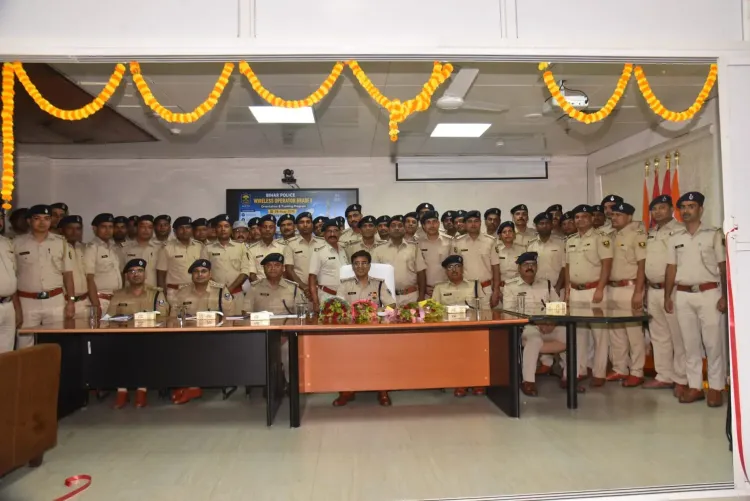
An intensive training programme for 40 personnel in the Police Wireless Operator Grade-II course was launched simultaneously.
BPRTI will focus on advanced radio technology, digital communication, and emergency-transmission techniques.
Trained operators will be deployed across Bihar's districts and police stations to strengthen the state's communication network.
The institute is part of a broader Bihar Police modernisation drive that includes CCTV expansion and body-worn cameras for traffic personnel.
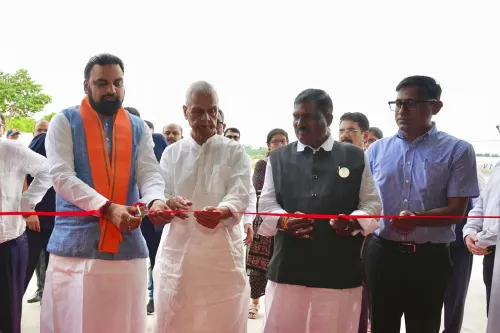
Bihar Police on 28 August inaugurated the Bihar Police Radio Training Institute (BPRTI) in Patna, marking a significant push to modernise the force's wireless and digital communication capabilities. The facility was formally opened by Amit Lodha, Additional Director General (ADG) of the Technical Services and Communication Wing, Bihar Police.
What the Institute Offers
The BPRTI is purpose-built to train police personnel in advanced radio technology, modern communication systems, and rapid-transmission techniques critical during emergencies and disaster-management operations. Simultaneously with the inauguration, an orientation and intensive training programme was launched for 40 personnel enrolled in the Police Wireless Operator Grade-II course.
What ADG Lodha Said
Addressing the gathering, ADG Amit Lodha stressed the centrality of reliable communication to effective policing. 'A strong information network is essential for crime control, surveillance and rapid response,' he said. Officials added that the institute will enable operators to maintain efficient communication during routine duties as well as sensitive and emergency situations.
Why Remote Connectivity Matters
One of the key mandates of BPRTI is ensuring secure, uninterrupted transmission of information to remote areas of Bihar, where communication gaps have historically hampered police response. Upon completing training, wireless operators will be deployed across districts and police stations statewide, strengthening the overall communication grid.
Part of a Broader Modernisation Drive
The launch of BPRTI fits into a wider technology-driven overhaul that Bihar Police has been pursuing in recent months. The force has expanded CCTV surveillance at key locations, introduced body-worn cameras for traffic personnel, and moved to make traffic management more data-led. The BPRTI is seen as the most significant institutional step yet in this ongoing modernisation push, signalling a shift from ad hoc upgrades to structured, in-house technical training capacity.
Point of View
In-house facility to train its own communication specialists rather than outsourcing or relying on central police academies. The focus on remote-area connectivity is the sharpest signal here — poor communication in Bihar's rural and flood-prone districts has long been cited as a factor in delayed police response. Whether BPRTI can scale beyond the initial batch of 40 and produce operators fast enough to cover the state's sprawling station network will determine if this is a genuine capability shift or a well-publicised pilot.
NationPress
28 Aug 2026
Frequently Asked Questions
What is the Bihar Police Radio Training Institute (BPRTI)?
BPRTI is a newly inaugurated training facility in Patna dedicated to building advanced wireless and digital communication skills within Bihar Police. It will train personnel in modern radio technology, emergency-transmission techniques, and disaster-management communication.
Who inaugurated the BPRTI in Patna?
The institute was inaugurated by Amit Lodha, Additional Director General (ADG) of the Technical Services and Communication Wing of Bihar Police, on 28 August.
How many personnel are being trained at BPRTI initially?
An initial batch of 40 personnel has been enrolled in the Police Wireless Operator Grade-II course, with training covering modern radio systems, advanced communication tools, and rapid information-transmission techniques.
Why is the BPRTI significant for Bihar?
Bihar has long faced communication challenges in remote and flood-prone areas that hamper police operations. BPRTI is designed to address this by producing trained wireless operators who will be deployed across districts and police stations to ensure secure, uninterrupted communication.
How does BPRTI fit into Bihar Police's broader modernisation plans?
BPRTI is the latest in a series of technology-driven reforms by Bihar Police that include expanded CCTV surveillance, body-worn cameras for traffic personnel, and data-led traffic management. It represents a shift toward structured, in-house technical training capacity.