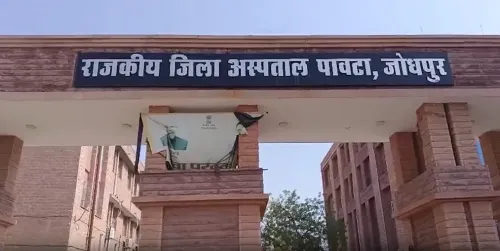
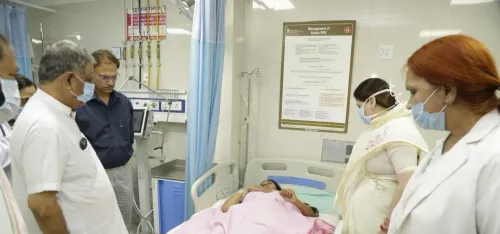
Bikaner PBM Hospital records first death as Preeti, 20, dies of organ failure after C-section
Synopsis
A 20-year-old woman from Suratgarh has become the first maternal fatality at Bikaner's PBM Hospital, dying of multiple organ failure a month after delivery — the most critical case in a cluster of six post-Caesarean kidney failure patients. With five earlier deaths in Kota and a Health Minister's tone-deaf remark already drawing fire, Rajasthan's maternal healthcare system is under severe scrutiny.
Key Takeaways
Preeti , 20 , from Suratgarh , died at PBM Hospital, Bikaner on Friday, 19 June due to multiple organ failure following post-delivery complications.
She is the first fatality in a cluster of six women aged 20–27 who developed acute kidney failure after Caesarean deliveries at the same hospital.
All six patients were admitted to the ICU and placed on dialysis ; Preeti's condition was described as the most critical.
This follows five earlier deaths of women at hospitals in Kota linked to post-delivery complications.
Rajasthan Health Minister Gajendra Singh Khimsar's remark questioning whether patients arrived 'walking or dancing' drew sharp public criticism.
Former CM Ashok Gehlot has demanded financial aid for victims and an FIR against doctors for alleged negligence, calling the crisis an 'institutional failure.'
Prince Bijay Singh Memorial (PBM) Hospital in Bikaner, Rajasthan, recorded its first maternal fatality linked to post-delivery complications on Friday, 19 June, when Preeti, a 20-year-old woman from Suratgarh, died of multiple organ failure approximately a month after giving birth. The death comes amid a wider medical crisis at the hospital, where six women reportedly suffered kidney failure following Caesarean deliveries in the maternity ward.
What Happened to Preeti
Preeti had been admitted to PBM Hospital — the largest government healthcare facility in the Bikaner division — for childbirth roughly a month before her death. According to family members, her health deteriorated steadily in the weeks that followed delivery.
Her kidneys stopped functioning during the course of treatment, triggering a cascade of complications that affected several other vital organs. Hospital sources said inadequate oxygen supply to the brain further complicated her recovery. She was placed on ventilator support and underwent intensive treatment, but doctors were ultimately unable to save her.
PBM Hospital Superintendent B.C. Ghiya confirmed that Preeti died due to multiple organ failure, with kidney failure identified as the initial trigger that set off the chain of deterioration despite prolonged medical intervention.
The Wider Crisis at PBM Hospital
Preeti's death is the first fatality in a cluster of serious cases at PBM Hospital's maternity ward. Six women, aged between 20 and 27 years, reportedly developed acute complications following Caesarean deliveries, including urinary retention, falling platelet counts, and acute kidney failure. All six were admitted to the Intensive Care Unit (ICU) and placed on dialysis. Among them, Preeti's condition had been described as the most critical.
This comes amid a broader pattern of post-delivery deaths in Rajasthan — five women had earlier died at hospitals in Kota following complications from Caesarean sections and other surgeries, raising questions about the standard of maternal care in the state's government health facilities.
Government Response and Controversy
The incidents triggered alarm within the hospital administration and the management of Sardar Patel Medical College, prompting the Rajasthan government to seek a detailed report into the circumstances behind the complications.
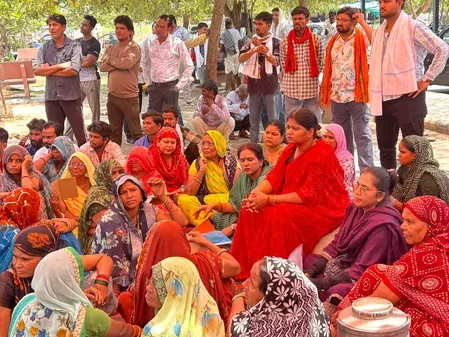
Rajasthan Health Minister Gajendra Singh Khimsar visited Bikaner to review the situation and held discussions with officials at SP Medical College. However, the Minister's visit was preceded by protests by Youth Congress workers over the hospital's handling of the affected women. The demonstration turned tense, requiring police intervention.
The controversy deepened after Minister Khimsar, while speaking to reporters, made remarks questioning whether the women had arrived at the hospital 'walking or dancing.' The statement drew widespread criticism from Opposition leaders and civil society groups, who accused the Minister of insensitivity toward the patients and their families.
Opposition Demands and Accountability
Former Chief Minister and senior Congress leader Ashok Gehlot has written to Chief Minister Bhajan Lal Sharma demanding financial assistance for the victims' families. Gehlot termed the deaths of new mothers and the failure of their kidneys an 'institutional failure' and demanded that an FIR be registered against the doctors concerned for alleged negligence.
With the first fatality now confirmed at PBM Hospital, pressure is mounting on both the hospital administration and state health authorities to determine the root cause of the complications and fix accountability. An investigation into the cluster of kidney failure cases is ongoing, and the Rajasthan government's detailed report is awaited.
Point of View
Following the same procedure, demand a clinical audit, not a ministerial visit. Health Minister Khimsar's 'walking or dancing' remark is a telling symptom of the accountability deficit: when a minister frames patient vulnerability as a credibility question, it signals that the system's first instinct is self-defence, not correction. With five prior deaths in Kota and now a fatality in Bikaner, the question is no longer whether there is a systemic problem — it is whether the state government will treat it as one before more women die.
NationPress
26 Sept 2026
Frequently Asked Questions
Who was Preeti and what happened to her at PBM Hospital Bikaner?
Preeti was a 20-year-old woman from Suratgarh who was admitted to Prince Bijay Singh Memorial (PBM) Hospital in Bikaner for childbirth approximately a month before her death. Her health deteriorated after delivery, her kidneys stopped functioning, and multiple organ failure followed; she died on Friday, 19 June, despite being placed on ventilator support and undergoing intensive treatment.
How many women suffered kidney failure at PBM Hospital Bikaner?
Six women, aged between 20 and 27 years, reportedly developed acute kidney failure following Caesarean deliveries at PBM Hospital's maternity ward. All six were admitted to the ICU and placed on dialysis. Preeti was described as the most critical among them and is the first to have died.
What did Rajasthan Health Minister Gajendra Singh Khimsar say, and why was it controversial?
Minister Khimsar, while speaking to reporters during his visit to Bikaner, made remarks questioning whether the affected women had arrived at the hospital 'walking or dancing.' The statement was widely condemned by Opposition leaders and social groups as insensitive to the suffering of the patients and their families.
What action has the Rajasthan government taken following these deaths?
The Rajasthan government has sought a detailed report from PBM Hospital and Sardar Patel Medical College into the circumstances behind the complications. Health Minister Khimsar visited Bikaner to review the situation. However, no FIR has been registered yet; former CM Ashok Gehlot has demanded one against the doctors for alleged negligence.
How does the Bikaner case connect to the earlier deaths in Kota?
Five women had previously died at hospitals in Kota, Rajasthan, following complications from Caesarean sections and other surgeries. The Bikaner fatality is now the latest in what critics, including Ashok Gehlot, are calling an 'institutional failure' in Rajasthan's government maternal healthcare system.