NHRC orders probe into maternal deaths, kidney failure after C-sections in Rajasthan
Synopsis
The NHRC has flagged a potentially grave patient safety failure at Rajasthan's PBM Hospital in Bikaner, where women who underwent C-sections reportedly developed kidney failure and remain on ventilators and daily dialysis. With notices to five senior officials — including the NMC chairman — and a two-week deadline for an Action Taken Report, the case could expose deep systemic lapses in the state's public maternity care.
Key Takeaways
The NHRC has taken cognisance of a complaint alleging maternal deaths and kidney failure following C-section deliveries at PBM Hospital, Bikaner , Rajasthan.
A Bench led by NHRC Member Priyank Kanoongo issued notices to five senior officials , including the Bikaner CMO , District Magistrate , and NMC Chairman .
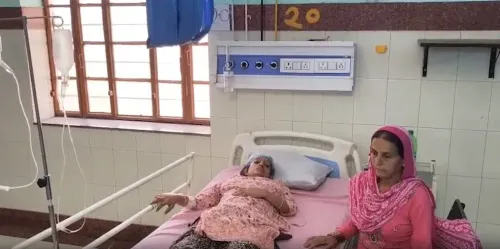
Affected women are reportedly on ventilator support and undergoing daily dialysis .
The complaint alleges medical negligence , contaminated medicines , or serious administrative lapses as possible causes.
All officials have been directed to submit an Action Taken Report within two weeks under Section 12 of the Protection of Human Rights Act, 1993 .
The NHRC found the allegations prima facie constitute violations of human rights .
The National Human Rights Commission (NHRC) has taken cognisance of a complaint alleging that several women died under suspicious circumstances and many others suffered kidney failure after undergoing Caesarean (C-section) deliveries at government hospitals in Rajasthan, with the Prince Bijay Singh Memorial (PBM) Hospital in Bikaner cited as a primary site of concern. The commission has directed multiple senior officials to submit an Action Taken Report (ATR) within two weeks.
Notices Issued to Senior Officials
A Bench presided over by NHRC Member Priyank Kanoongo on Thursday issued formal notices to Bikaner Chief Medical Officer (CMO) Pukhraj Saad, Bikaner District Magistrate Nishant Jain, Rajasthan Medical, Health and Family Welfare Department Principal Secretary Gayatri A. Rathore, Jaipur Directorate of Medical and Health Services (DMHS) Director General Ravi Prakash Sharma, and National Medical Commission (NMC) Chairman Abhijat Chandrakant Sheth.
All five have been directed to inquire into the allegations and furnish a detailed ATR within two weeks. The action has been initiated under Section 12 of the Protection of Human Rights Act, 1993, which empowers the apex human rights body to probe alleged violations of human rights.
What the Complaint Alleges
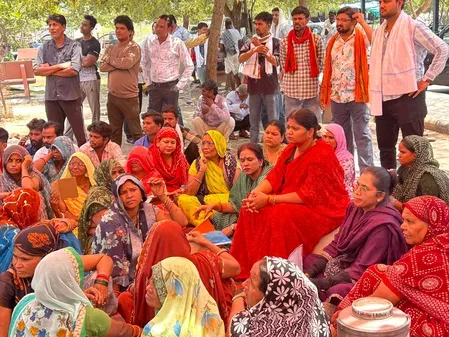
According to the complaint, several patients who underwent C-section deliveries subsequently developed kidney failure and are reportedly on ventilator support and undergoing daily dialysis. The complainant, citing media reports, alleged that the incidents may have resulted from medical negligence, contaminated medicines, or serious lapses in treatment and hospital administration.
The complainant sought an independent high-level inquiry, stringent action against officials found responsible, compensation for affected families, and directions to prevent recurrence.
NHRC's Prima Facie Finding
After examining the complaint, the NHRC observed that the allegations, prima facie, appear to involve violations of the human rights of the victims. The commission underscored the gravity of the situation by looping in the National Medical Commission — the apex medical regulatory body — alongside state-level health and administrative officials.
This is notably the second time in recent months that the NHRC has taken suo motu or complaint-based cognisance of alleged hospital lapses in Rajasthan's public health system, reflecting a pattern of systemic concern around maternal and patient safety in the state.
Background and Broader Context
PBM Hospital in Bikaner is one of Rajasthan's largest government referral hospitals, serving a vast catchment area across the western districts of the state. Complaints of overcrowding, understaffing, and medicine shortages at such facilities are not new, but allegations of post-surgical deaths and organ failure of this nature are unusually severe.
Critics argue that public health infrastructure in several Indian states remains critically underfunded, making maternal mortality and post-operative complications disproportionately higher in government hospitals compared to private facilities. The NHRC's intervention brings fresh scrutiny to Rajasthan's health administration at a time when the state government is already under pressure over public hospital conditions.
What Happens Next
The concerned authorities, including the National Medical Commission, have two weeks to submit their ATRs to the NHRC. Depending on the findings, the commission may recommend compensation, departmental action, or refer the matter to the appropriate court. The families of the affected women and those currently on dialysis are awaiting both accountability and relief.
Point of View
Not merely a local administrative lapse. What is striking is the severity of the alleged outcomes: kidney failure, ventilator dependency, and daily dialysis are not minor post-surgical complications. If the ATRs confirm negligence or contaminated medicines, this case could become a landmark test of accountability in India's public maternity care system. Rajasthan's public hospitals have faced recurring criticism over infrastructure and staffing — the real question the NHRC must press is whether this was an isolated incident or the visible tip of a much larger patient safety crisis.
NationPress
15 Oct 2026
Frequently Asked Questions
What has the NHRC ordered regarding the Rajasthan C-section deaths?
The NHRC has ordered an inquiry into allegations of maternal deaths and kidney failure following C-section deliveries at government hospitals in Rajasthan, particularly PBM Hospital in Bikaner. It has issued notices to five senior officials and directed them to submit an Action Taken Report within two weeks.
Which hospital is at the centre of the NHRC complaint?
The Prince Bijay Singh Memorial (PBM) Hospital in Bikaner, Rajasthan, is the primary hospital cited in the complaint. It is one of the state's largest government referral hospitals.
What are the allegations in the NHRC complaint?
The complaint alleges that several women died under suspicious circumstances and others developed kidney failure after C-section deliveries. The complainant attributes the incidents to possible medical negligence, contaminated medicines, or serious lapses in hospital administration.
Who has received NHRC notices in this case?
Five officials received notices: Bikaner CMO Pukhraj Saad, Bikaner District Magistrate Nishant Jain, Rajasthan Health Department Principal Secretary Gayatri A. Rathore, DMHS Director General Ravi Prakash Sharma, and NMC Chairman Abhijat Chandrakant Sheth.
What relief has the complainant sought from the NHRC?
The complainant has sought an independent high-level inquiry, stringent action against officials found responsible, financial compensation for the affected families, and directions to prevent similar incidents from recurring in the future.