Himachal Pradesh biochar plant at Neri to generate carbon credits, local jobs
Synopsis
India's first indigenous biochar plant, coming up at Neri in Himachal Pradesh's Hamirpur district, is set to convert pine needles, lantana, and bamboo into carbon credits — an estimated 28,800 over 10 years. If it delivers, it hands other forest-heavy states a replicable model for turning ecological liabilities into climate revenue.
Key Takeaways
India's first indigenous biochar plant is being set up at Neri, Hamirpur district , Himachal Pradesh.
A tripartite agreement was signed between Dr Y.S.
Parmar University , the Forest Department , and ProClime in August last year for plants at Neri and Jahu.
Biomass is procured at ₹2.50 per kg with performance-based quality incentives; sources include pine needles, lantana, and bamboo.
The project is projected to generate 28,800 carbon credits over a 10-year operational period.
The HIM Evergreen Programme will cover 50,000 hectares and bring 13.5 million tonnes of CO₂ emissions under management.
Former UNEP Executive Director Erik Solheim praised the initiative as a model for ground-level climate action.
India's first indigenous biochar plant is being established at Neri in Hamirpur district, Himachal Pradesh, with Chief Minister Sukhvinder Sukhu describing the project as a dual engine for environmental conservation and local economic development. The facility is part of a broader push to turn forest biomass waste into a climate asset.
The Tripartite Agreement Behind the Project
A tripartite agreement was signed in August last year between Dr Y.S. Parmar University of Horticulture and Forestry, Nauni, the Himachal Pradesh Forest Department, and climate firm ProClime. The pact covers the establishment of two biochar plants — one at Neri and another at Jahu, both in Hamirpur district.
How the Biochar Programme Works
Biomass — sourced from pine needles, lantana, bamboo, and other plant-based materials — is collected and purchased at ₹2.50 per kg, with performance-based incentives tied to quality maintenance. The collected biomass is then processed into biochar, a carbon-rich material that improves soil health and sequesters carbon. Over its 10-year operational period, the project is expected to generate approximately 28,800 carbon credits, providing a measurable boost to Himachal Pradesh's green economy.
Broader Climate-Smart Agriculture Push
The biochar initiative sits within the larger HIM Evergreen Integrated Climate-Smart Agriculture and Agro-forestry Programme, which aims to integrate trees into farming systems across 50,000 hectares of agricultural landscape in the state. According to officials, this programme will bring 13.5 million tonnes of carbon dioxide emissions under management, while also improving soil health, enhancing biodiversity, and increasing farm resilience. GIS, remote sensing, and digital data collection systems aligned with international carbon market standards will be deployed under the programme.
What the Chief Minister and Experts Said
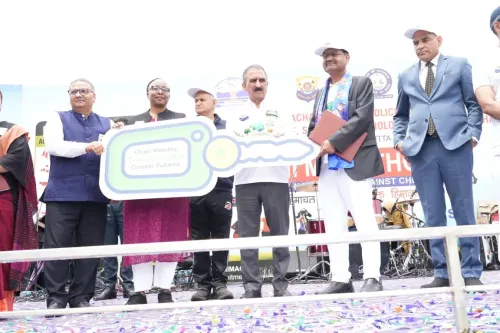
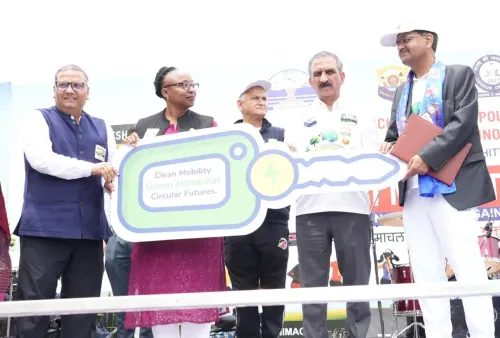
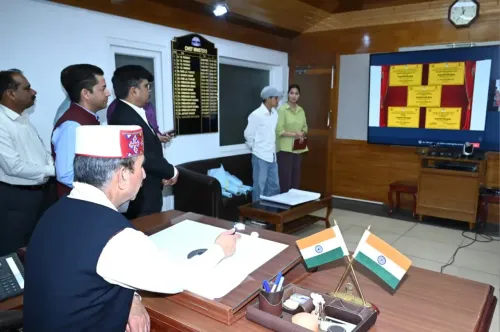
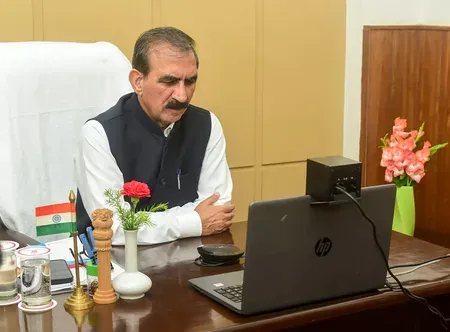
Reviewing progress on the plants, Chief Minister Sukhu said the project would generate employment, promote sustainable management of forest resources, and help the state earn carbon credits — contributing to both environmental and economic goals. Former Executive Director of the United Nations Environment Programme (UNEP), Erik Solheim, lauded the state government's efforts, saying the organisation was committed to 'combining scientific rigour and practical implementation on the ground to fight the climate crisis.'
Why This Matters for Himachal Pradesh
Himachal Pradesh has long grappled with the problem of invasive species such as lantana and the fire risk posed by accumulated pine needles on forest floors. Converting this biomass into biochar addresses both an ecological hazard and an economic opportunity for local communities. This is also reportedly the first such indigenous biochar plant in the country, giving the state a potential template for other forest-rich states to follow. With carbon markets gaining traction globally, the 28,800 carbon credits projected over a decade could translate into a meaningful revenue stream for the state.
Point of View
800 over 10 years is modest by global standards, but the model's real value lies in replicability across India's other forest-rich states. The critical unknown is whether the international carbon market standards being deployed will hold up to third-party verification — without that, credits risk being discounted or rejected by buyers. Chief Minister Sukhu's framing as a livelihood programme is politically astute, but the ₹2.50 per kg biomass procurement rate will need regular revision to keep collection economically viable for local communities as inflation bites.
NationPress
30 Jun 2026
Frequently Asked Questions
What is the biochar plant being set up in Himachal Pradesh?
It is India's first indigenous biochar plant, being established at Neri in Hamirpur district, Himachal Pradesh, under a tripartite agreement between Dr Y.S. Parmar University of Horticulture and Forestry, the state Forest Department, and ProClime. A second plant is also planned at Jahu in the same district.
What biomass will be used to produce biochar in Himachal Pradesh?
The programme uses pine needles, lantana, bamboo, and other tree and plant-based biomass resources available in Himachal Pradesh's forests. Biomass collectors are paid ₹2.50 per kg with additional performance-based incentives for quality.
How many carbon credits will the Himachal Pradesh biochar project generate?
Over its 10-year operational period, the project is expected to generate approximately 28,800 carbon credits, contributing to Himachal Pradesh's green economy and the state's climate commitments.
What is the HIM Evergreen Programme announced alongside the biochar plant?
The HIM Evergreen Integrated Climate-Smart Agriculture and Agro-forestry Programme aims to integrate trees into farming systems across 50,000 hectares in Himachal Pradesh, bringing 13.5 million tonnes of CO₂ emissions under management while improving soil health, biodiversity, and farm resilience.
Who has supported the Himachal Pradesh biochar initiative internationally?
Former Executive Director of the United Nations Environment Programme (UNEP), Erik Solheim, praised the initiative, stating the organisation was committed to combining scientific rigour with practical implementation to fight the climate crisis, and lauded the state government's steps to mitigate carbon emissions.