BJP Kisan Morcha hails Modi govt for better rubber, coconut, cardamom prices in Kerala
Synopsis
The BJP's farmers' wing in Kerala has formally credited the Modi government with delivering better prices for rubber, coconut, and cardamom — the state's three most politically sensitive plantation crops. The resolution, passed at a Thiruvananthapuram meeting, signals the party's strategy to challenge the Left's dominance among Kerala's cultivators by foregrounding Central intervention on farm income.
Key Takeaways
BJP Bharatiya Janata Kisan Morcha passed a resolution on 22 October 2026 crediting the Modi government for better crop prices in Kerala .
The resolution focused on improved prices for rubber , coconut , and cardamom — key plantation crops supporting large numbers of Kerala cultivators.
The meeting was held at Mararji Bhavan , Thiruvananthapuram , chaired by Kisan Morcha state president Shaji Raghavan .
The Morcha argued that remunerative prices are essential to tackle the agricultural crisis and rising input costs.
Kisan Morcha national vice-president Jayasurya delivered the concluding address.
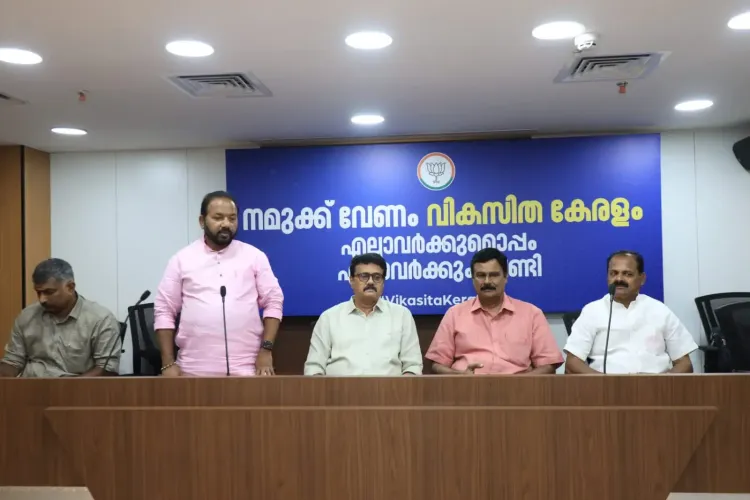
The Bharatiya Janata Kisan Morcha (BJKM), the farmers' wing of the Bharatiya Janata Party (BJP), on Thursday, 22 October 2026, credited the Narendra Modi government with securing improved prices for rubber, coconut, and cardamom — three crops that form the backbone of Kerala's agricultural economy. The state committee passed a resolution appreciating what it described as farmer-friendly interventions by the Centre, at a meeting held at Mararji Bhavan in Thiruvananthapuram.
Key Concerns for Kerala Farmers
Plantation and cash crop prices have long been a pressure point for Kerala's farming community, with hundreds of thousands of cultivators depending on rubber, coconut, and cardamom for their livelihoods. Rising input costs — including fertilisers, labour, and irrigation — have made the returns on produce a critical factor in determining whether cultivation remains economically viable.
The Kisan Morcha argued that remunerative prices are essential to arrest the deepening crisis in the agricultural sector and to prevent further farm distress. Better returns, it said, would allow cultivators to meet production expenses, stabilise household finances, and maintain an adequate standard of living.
What the Meeting Resolved
The state committee meeting, chaired by Kisan Morcha state president Shaji Raghavan, adopted a position formally appreciating the Central government's role in delivering better market returns for farmers. BJP state general secretary S. Suresh inaugurated the meeting, while Kisan Morcha state general secretary A.V. Ranjith presented the report. The concluding address was delivered by Kisan Morcha national vice-president Jayasurya.
State general secretary A.V. Ramachandran welcomed the gathering, and state vice-president Biju Changath proposed the vote of thanks.
Political Context
The resolution is also a political signal. Kerala is a state where the BJP has historically struggled to make electoral inroads, and agriculture — particularly plantation crops — remains deeply intertwined with household livelihoods across rural and semi-urban constituencies. By foregrounding the Centre's role in crop pricing, the party is attempting to position itself as a credible advocate for Kerala's farmers, a constituency largely dominated by the Communist Party of India (Marxist)-led Left Democratic Front.
This comes amid broader national conversations around minimum support prices (MSP) and farm income guarantees, making the Kisan Morcha's endorsement of Centre-driven price improvements particularly noteworthy in the current political climate.
What Happens Next
With crop price stability remaining a persistent demand from Kerala's farming organisations, the Kisan Morcha's stance is likely to feed into the BJP's outreach strategy ahead of future state-level contests. Whether the Centre's interventions translate into sustained price support — or remain a seasonal uptick — will be closely watched by cultivators and opposition parties alike.
Point of View
And the BJP's decision to formally credit the Centre for improved rubber, coconut, and cardamom prices is a calibrated attempt to chip away at that base. Yet the Morcha's claims deserve scrutiny: crop price improvements in Kerala are also driven by global commodity cycles and state-level procurement mechanisms, not Centre policy alone. Unless the BJP can point to specific, verifiable Central interventions — whether MSP revisions, import duty adjustments, or export facilitation — the resolution risks reading as a political assertion rather than a substantiated claim. In a state where farm distress has historically fuelled Left mobilisation, credibility on agricultural policy will matter more than endorsements.
NationPress
22 Oct 2026
Frequently Asked Questions
What did the BJP Kisan Morcha resolve at its Kerala meeting on 22 October 2026?
The Bharatiya Janata Kisan Morcha's Kerala state committee passed a resolution crediting the Modi government with securing better prices for rubber, coconut, and cardamom. The meeting, held in Thiruvananthapuram, formally appreciated the Centre's role in supporting farm incomes.
Why are rubber, coconut, and cardamom prices important for Kerala farmers?
These three crops are among the most widely cultivated plantation and cash crops in Kerala, supporting the livelihoods of large numbers of farming households. Rising input costs have made remunerative prices crucial to keeping cultivation economically viable.
Who led the BJP Kisan Morcha state committee meeting in Thiruvananthapuram?
The meeting was chaired by Kisan Morcha state president Shaji Raghavan. BJP state general secretary S. Suresh inaugurated the event, and Kisan Morcha national vice-president Jayasurya delivered the concluding address.
What is the political significance of this resolution in Kerala?
Kerala is a state where the BJP has limited electoral presence and agriculture is closely aligned with Left-led movements. By attributing crop price improvements to the Centre, the BJP is seeking to build credibility among Kerala's farming community ahead of future state elections.
What has the Kisan Morcha said about farm income and cultivation costs?
The Morcha stated that fair and remunerative prices are essential to improving farm incomes, meeting rising cultivation costs, and restoring farmer confidence. It argued that better returns would help cultivators sustain their standard of living and continue farming despite mounting expenses.