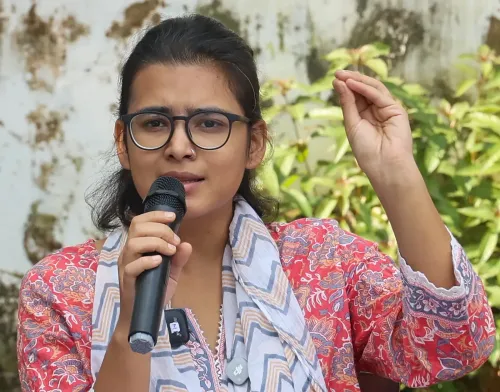
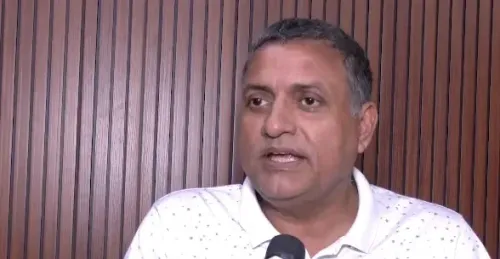
BJP MP Dubey alleges AISA's Neha Bora influenced by Maoist ideology
Synopsis
BJP MP Nishikant Dubey has accused AISA president Neha Bora of being a Maoist leader influenced by China's Red Army, alleged her organisation passed a resolution calling for armed overthrow of the government, and broadened his attack to target Congress, Opposition activists and the electoral roll revision process — all in a single press interaction on 6 November.
Key Takeaways
BJP MP Nishikant Dubey alleged on 6 November that AISA president Neha Bora is influenced by Maoist ideology and China's Red Army.
He claimed AISA members passed a resolution under Section 167 opposing the Constitution and calling for a change of government through armed force — allegations not independently verified.
Dubey described Prashant Bhushan , Brinda Karat , and Yogendra Yadav as 'professional agitators' who routinely join Opposition protests.
He invoked the November 7, 1966 Anti-Cow Slaughter Riot and M.S.
Golwalkar's inclusion in a Congress-era inquiry to challenge Congress's stance on the RSS.
On electoral rolls, Dubey claimed approximately four crore alleged illegal entrants from Bangladesh are being identified for removal under the Special Intensive Revision (SIR) .
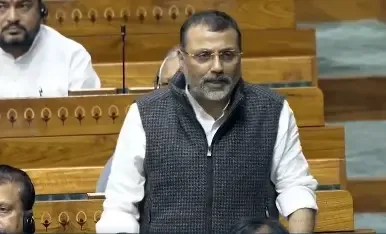
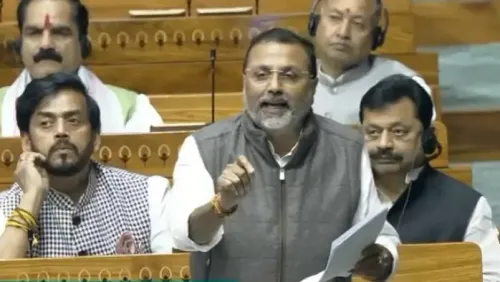
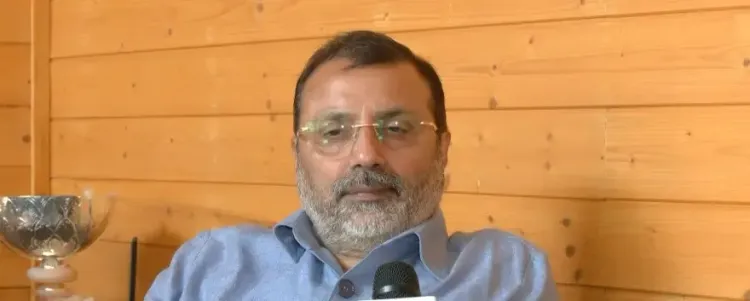
Bharatiya Janata Party (BJP) Member of Parliament Nishikant Dubey on Friday, 6 November launched a sharp attack on All India Students' Association (AISA) president Neha Bora, alleging she is influenced by Maoist ideology and that AISA opposes the Constitution and democracy. The remarks, made in New Delhi, represent one of the most direct BJP broadsides against the student organisation's leadership in recent months.
Key Allegations Against AISA and Neha Bora
Dubey alleged that members of AISA passed a resolution under Section 167 purportedly expressing opposition to constitutional institutions and calling for a change of government through armed force. He claimed Bora is ideologically aligned with China's Red Army. 'These are all people belonging to the organisation that Neha Bora is associated with. They passed a resolution under Section 167 stating that they are against the Constitution and democracy and want to bring about a change of government in this country through armed force. She is influenced by China's Red Army and is a Maoist leader,' Dubey alleged. These are allegations by the BJP MP and have not been independently verified.
Dubey Targets Opposition Activists and Leaders
The BJP MP also trained his guns on a broader set of Opposition-linked figures, describing them as professional agitators. He named advocate Prashant Bhushan, Communist Party of India (Marxist) leader Brinda Karat, and political activist Yogendra Yadav, alleging they routinely participate in protests regardless of the specific issue. 'Whenever there is a protest, these people will be visible. Protests against the nuclear deal, during the Narmada movement, all these people were present. If and when the nuclear plant is built, these will be the people you will see protesting. Some of these people have a knack for protesting,' he said.
Congress, RSS History and Electoral Roll Revision
Dubey escalated his attack on the Indian National Congress (Congress), accusing it of selectively interpreting historical events for political gain. He invoked the November 7, 1966 Anti-Cow Slaughter Riot, alleging thousands of sadhus were killed outside Parliament and that Congress had not adequately acknowledged the episode. He also pointed to former RSS chief M.S. Golwalkar's inclusion in an inquiry committee constituted under then Prime Minister Indira Gandhi as evidence of what he described as Congress's contradictory stance on the RSS. 'Congress hurls abuses at RSS today, but at that time Indira Gandhi appointed then RSS Sarsanghchalak Golwalkar ji as one of the committee members who investigated the matter,' Dubey said, challenging Leader of Opposition Rahul Gandhi to explain the appointment.
On the Special Intensive Revision (SIR) of electoral rolls, Dubey defended the deletion of names, saying it targeted deceased voters, duplicate entries and alleged foreign nationals. He claimed that approximately four crore people who allegedly entered India from Bangladesh were being identified for removal. Critics of the SIR process, however, have raised concerns about genuine voters being inadvertently removed.
Kashmir, Tripura and Historical Grievances
Dubey further alleged that longstanding disputes — including those over Kashmir and India's border with China — have their roots in decisions taken by Congress-led governments. Referring to remarks by Tipra Motha leader Pradyot Bikram Manikya Deb Barma, he also raised the issue of the former princely state of Tripura, alleging that decisions taken around the time of Independence resulted in Hindu-majority territories being ceded to Pakistan without adequately consulting the royal family. These claims reflect the BJP MP's broader political narrative and are contested by the Congress.
Point of View
With mixed political returns. What is notable here is the simultaneous targeting of Bhushan, Karat and Yadav — a signal that the party is seeking to widen the narrative beyond the student organisation. The electoral roll controversy, meanwhile, is a live and contested political battleground; Dubey's figure of four crore alleged Bangladeshi nationals in the rolls is an unverified claim that deserves scrutiny before it hardened into political fact.
NationPress
6 Nov 2026
Frequently Asked Questions
What has BJP MP Nishikant Dubey alleged against Neha Bora?
Dubey alleged that AISA president Neha Bora is influenced by Maoist ideology and China's Red Army, and that her organisation passed a resolution under Section 167 calling for the overthrow of the government through armed force. These are allegations made by the BJP MP and have not been independently verified.
What is the All India Students' Association (AISA)?
AISA is a left-leaning student organisation active on university campuses across India, affiliated with the Communist Party of India (Marxist-Leninist). It has frequently been associated with student protests on issues of education policy, civil liberties, and democratic rights.
Why did Dubey bring up M.S. Golwalkar and Indira Gandhi?
Dubey cited the Congress government's appointment of then RSS chief M.S. Golwalkar to an inquiry committee investigating the November 7, 1966 Anti-Cow Slaughter Riot as evidence of what he described as Congress's contradictory attitude toward the RSS. He challenged Rahul Gandhi to explain the appointment if Congress considers the RSS unacceptable.
What is the Special Intensive Revision (SIR) of electoral rolls that Dubey referenced?
The SIR is an exercise by election authorities to clean up voter rolls by removing deceased voters, duplicate entries, and, according to Dubey, alleged foreign nationals. Dubey claimed around four crore people who allegedly entered from Bangladesh are being identified for removal, though this figure is unverified and the process has drawn Opposition criticism over the potential deletion of genuine voters.
Who else did Dubey target in his remarks?
Beyond Neha Bora, Dubey named advocate Prashant Bhushan, CPI(M) leader Brinda Karat, and political activist Yogendra Yadav, alleging they are habitual protesters who join demonstrations regardless of the specific political issue involved.