Dilip Ghosh Applauds New Governor of Bengal, Warns of Possible President's Rule
Synopsis
Dilip Ghosh, a prominent BJP leader, has welcomed the new Governor of West Bengal, expressing optimism for improved law and order. He also cautioned that worsening conditions could lead to President's Rule, highlighting the state's governance issues.
Key Takeaways
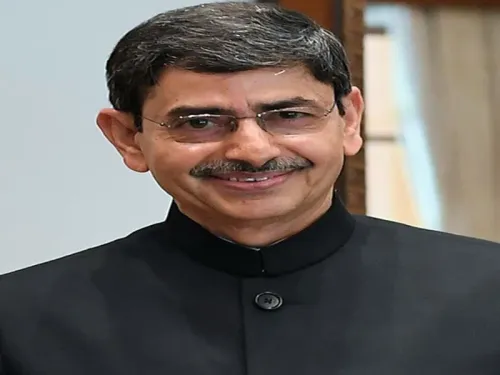
Dilip Ghosh welcomes the new Governor of West Bengal, R.N.
Improvement in law and order is anticipated under new leadership.
Concerns raised about potential President’s Rule if the situation deteriorates.
Criticism of public infrastructure and healthcare services in Bengal.
Mamata Banerjee's reaction highlights political tensions.
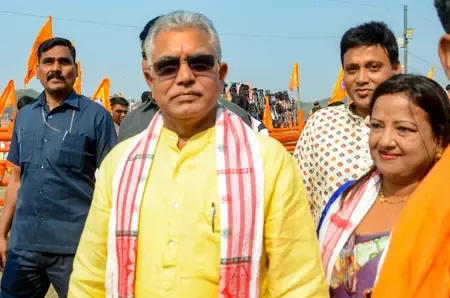
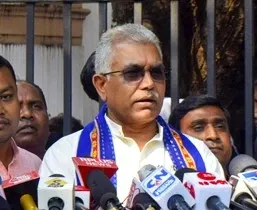
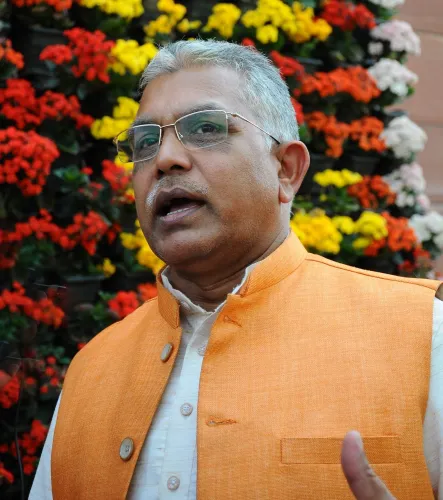
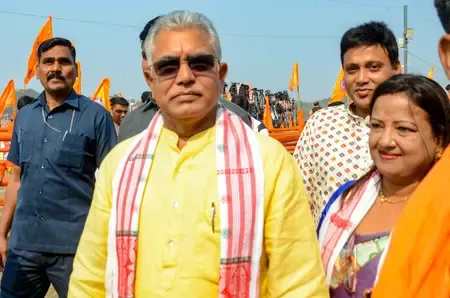
New Delhi, March 6 (NationPress) Senior BJP figure Dilip Ghosh expressed his support for the newly appointed Governor of West Bengal on Friday, hoping for an improvement in the state's law and order situation with the new leadership.
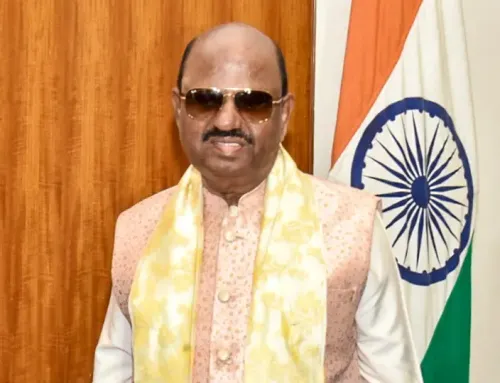
This statement follows the resignation of Governor C.V. Ananda Bose, who has been succeeded by R.N. Ravi, the Governor of Tamil Nadu.
In his response to the change in governance at Raj Bhavan, Ghosh remarked that the party is optimistic about the new Governor's potential to mitigate the deteriorating law and order circumstances in the state.
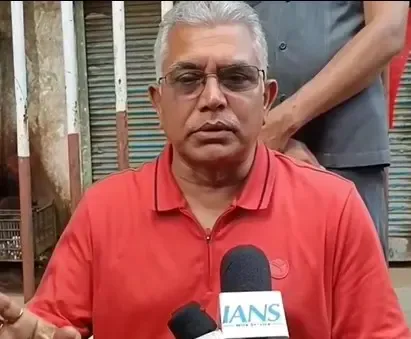
“With the new Governor assuming office, we extend our welcome. We are pleased to see an IPS officer take on this role. The law and order framework in Bengal is critically weak, and we anticipate enhancements under his leadership,” Ghosh conveyed to IANS.
This transition follows Ananda Bose's resignation, which was marked by his frequent conflicts with Chief Minister Mamata Banerjee.
In the wake of this change, R.N. Ravi has been designated as the new Governor of West Bengal.
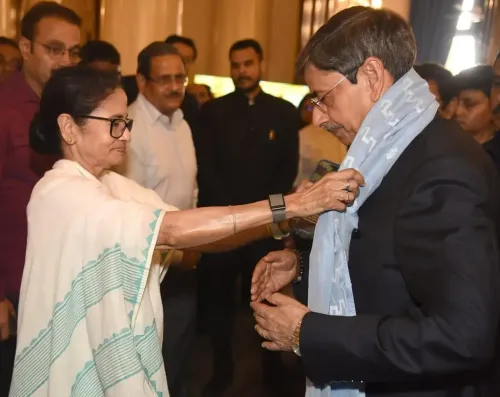
This development has stirred various political reactions within the state. Mamata Banerjee asserted that she was not consulted prior to this appointment and labeled the Centre's action as a “unilateral” decision that compromises democratic principles.
On discussing the political shifts, Ghosh mentioned that the alteration in Governor should not be hastily interpreted as a precursor to the imposition of President’s Rule, although he indicated that the state’s situation could escalate to such a scenario if conditions deteriorate.
“If President’s Rule is to be enforced in West Bengal, Mamata Banerjee will be unable to prevent it. However, a change in the Governor does not automatically equate to the imposition of President’s Rule. Nonetheless, due to their current approach, such a situation could arise. The disruption and delay in the SIR process, along with the lack of cooperation from their staff, has resulted in violence,” he stated.
Ghosh also criticized the state’s public infrastructure and healthcare services, claiming that poor governance has severely impacted the lives of ordinary citizens.
“In Bengal, individuals are suffering and dying due to inadequate medical treatment. Only a limited number of patients are sent elsewhere for care. The state of the roads is alarming—if a sick individual is transported to the hospital, they might not survive the journey. Overall chaos and mismanagement here have led to immense suffering and fatalities among the populace,” Ghosh asserted.
Point of View
The recent shift in West Bengal's governance underscores the ongoing political tensions between the state and the central government. The appointment of a new Governor may hold potential for reform, yet it also raises questions about the state's leadership and the prospects of stability moving forward.
NationPress
10 Oct 2026
Frequently Asked Questions
Who is the new Governor of West Bengal?
The new Governor of West Bengal is R.N. Ravi, who previously served as the Governor of Tamil Nadu.
What did Dilip Ghosh say about the new Governor?
Dilip Ghosh welcomed the new Governor, expressing hope for improvements in the state's law and order situation under his leadership.
What are the implications of a potential President's Rule in West Bengal?
Dilip Ghosh suggested that if conditions in West Bengal worsen, it could lead to President's Rule, although he emphasized that a Governor change does not automatically mean such an outcome.
What issues did Ghosh highlight regarding public services?
Ghosh criticized the state’s healthcare and infrastructure, claiming that poor governance has resulted in suffering and fatalities among the general populace.
How did Mamata Banerjee respond to the Governor's appointment?
Mamata Banerjee stated that she was not consulted prior to the appointment and described the Centre's decision as unilateral, undermining democratic norms.