Karnataka BJP's C.T. Ravi: Modi became PM by people's mandate, not Congress mercy
Synopsis
A rare public admission by Congress veteran Veerappa Moily — that his own party stalled an investigation that could have sent Narendra Modi to jail — triggered an immediate BJP counter from Karnataka's C.T. Ravi, who framed Modi's rise as constitutionally mandated and electorally validated. Moily's words have handed the BJP a sharp political weapon and exposed Congress's internal fault lines.
Key Takeaways
Ravi on 19 November 2026 rebutted Congress leader Veerappa Moily 's claim that Congress saved PM Modi from jail.
Ravi asserted that Modi became Prime Minister through the people's mandate and the Constitution, not through Congress's mercy.
Moily had claimed, at the launch of Sonia Gandhi 's memoir 'Belonging' , that the UPA government stalled investigations that could have led to Modi's arrest.
Moily said Amit Shah was the first to go to jail in the Sohrabuddin Sheikh fake encounter case, and Modi 'would have been next.' Ravi questioned Sonia Gandhi's book for not addressing the 1984 anti-Sikh violence , the Bhopal gas tragedy , and the Bofors controversy, among other issues.
The BJP pointed to its consecutive Gujarat Assembly election wins and the Congress's failure to become the principal Opposition after 2014 as evidence of public confidence in Modi.
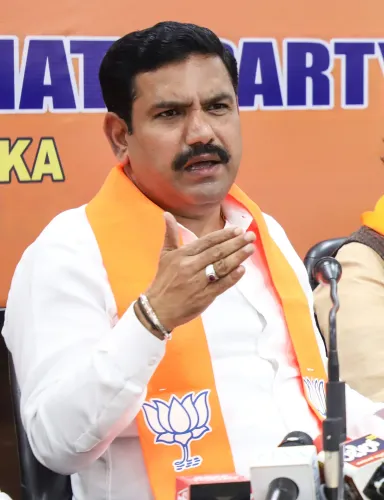
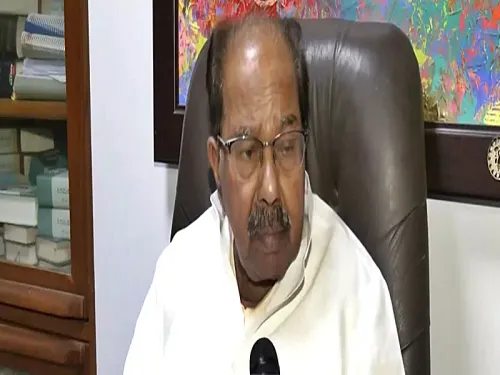
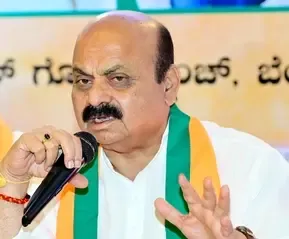
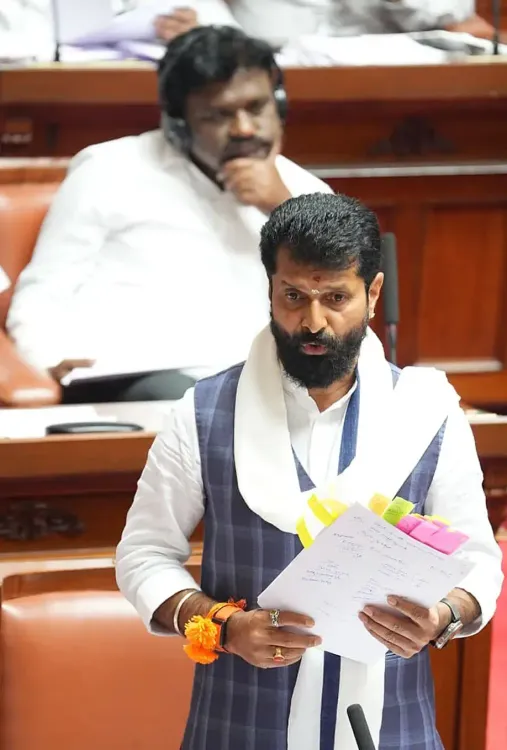
Bharatiya Janata Party (BJP) Member of the Legislative Council (MLC) and former National General Secretary C.T. Ravi on Thursday, 19 November 2026, sharply rebutted senior Indian National Congress leader and former Union Minister Veerappa Moily, asserting that Prime Minister Narendra Modi rose to power through the people's mandate and the Constitution — not through the Congress party's forbearance. The remarks came in direct response to Moily's claim that Congress leaders had intervened to prevent Modi from going to jail during the United Progressive Alliance (UPA) government, when Moily served as Union Law Minister.
Ravi's Counter-Attack
Responding to Moily's statement, Ravi said no political party or individual stands above the Constitution, and that the constitutional framework — not any Congress leader — had shielded Modi from what he described as politically motivated targeting.
'Whether it is the Congress party, Veerappa Moily or any Union Minister, everyone is subject to the Constitution and nobody is above it. Politically, they may target someone, but Narendra Modi was protected by the Constitution. Today, he has become the Prime Minister of the country through the mandate of the people and the Constitution, not because of the Congress party,' Ravi said.
He further pointed to the BJP's consecutive victories in Gujarat Assembly elections under Modi's leadership as evidence of public endorsement, arguing that the Congress 'could not win Gujarat despite spreading lies.' He also noted that after the 2014 Lok Sabha elections, Congress was reduced to a position where it could not even qualify as the principal Opposition party in the Lok Sabha.
Allegations Over Political Targeting After Godhra
Ravi alleged that following the Godhra incident, the Congress had attempted to trap both Prime Minister Modi and Union Home Minister Amit Shah through judicial commissions and investigations. He claimed these efforts ultimately failed and attributed Modi's subsequent electoral success to the public's trust in his leadership rather than any political leniency by his opponents.
Ravi's Broadside at Sonia Gandhi's Book
Ravi also turned his attention to the recent release of senior Congress leader Sonia Gandhi's memoir 'Belonging', welcoming its publication but alleging that she had left several key questions unanswered. He questioned why Gandhi, described as the daughter-in-law of late Prime Minister Indira Gandhi and widow of former Prime Minister Rajiv Gandhi, had not acquired Indian citizenship for 15 years, saying the book had not addressed this issue.
Ravi also questioned Gandhi's reported expression of anguish over the demolition of the disputed structure in Ayodhya, asking whether she had expressed similar concern over the 1984 anti-Sikh violence, the displacement of Kashmiri Pandits, and the burning of 'kar sevaks' in the Godhra incident. He further alleged that members of the Gandhi family had helped those accused in the Bhopal gas tragedy evade the law, and questioned the family's alleged proximity to Bofors accused Ottavio Quattrocchi.
What Moily Originally Said
The controversy was triggered when Moily, speaking at the launch of Sonia Gandhi's book at the Karnataka Pradesh Congress Committee (KPCC) office in Bengaluru, recalled his tenure as Union Law Minister between 2009 and 2011. He said that Amit Shah — then Gujarat's Home Minister — had been under investigation in the Sohrabuddin Sheikh fake encounter case, had been externally transferred from Gujarat, and had been the first to go to jail in that matter.
'He was the first to go to jail. Next would have been Modi and he, too, would have been externed,' Moily reportedly said. He added, 'The enquiry and investigation against Modi was stalled by our own government... It wasn't because of [the then-Prime Minister] Manmohan Singh. It was because of some other leaders. We're suffering because of that today.'
Moily further claimed that the Congress could have prevented Modi from coming to power had it not been for party insiders who, in his words, wanted to preserve the 'status quo.' He also said that Sonia Gandhi had sought 'revolutionary changes' in the party and had constituted a committee under him to chart its future course.
What Happens Next
The exchange underscores deepening political fault lines ahead of ongoing state-level electoral cycles and signals that the BJP intends to keep the Congress on the defensive over its own internal admissions. With Moily's remarks drawing attention to intra-party divisions within the Congress — and the BJP amplifying them — both parties appear set for a prolonged war of words over the legacy of the UPA era.
Point of View
And the BJP's rapid, structured response suggests it intends to mine them for maximum electoral mileage. The more significant story, however, is what Moily's statement reveals about internal Congress fault lines — his phrasing 'we are suffering because of that today' is a rare, explicit acknowledgement that internal power dynamics, not just electoral arithmetic, shaped the party's decline. Ravi's counter-offensive, while politically predictable, strategically sidesteps the substance of Moily's allegation by pivoting to electoral mandates and historical grievances. The BJP's framing — Constitution over Congress mercy — is designed to neutralise the admission while reinforcing the narrative of Modi as a democratically validated leader who transcended political persecution.
NationPress
19 Nov 2026
Frequently Asked Questions
What did Veerappa Moily say about Narendra Modi and jail?
Veerappa Moily, speaking at the launch of Sonia Gandhi's book 'Belonging' in Bengaluru, claimed that some Congress leaders within his own party had stalled the investigation against Modi during the UPA government, saying 'next would have been Modi' after Amit Shah went to jail in the Sohrabuddin Sheikh case. He added that the party was 'suffering because of that today.'
How did BJP's C.T. Ravi respond to Moily's remarks?
BJP MLC C.T. Ravi said that PM Modi became Prime Minister through the people's mandate and the Constitution, not through any mercy of the Congress party. He alleged that Congress had attempted to politically target both Modi and Amit Shah after the Godhra incident but failed, and that BJP's repeated electoral victories in Gujarat reflected public trust in Modi's leadership.
What is Sonia Gandhi's book 'Belonging' about and why is it in controversy?
Sonia Gandhi's memoir 'Belonging' was launched at the KPCC office in Bengaluru. It has drawn political controversy, with BJP's C.T. Ravi alleging that the book left key questions unanswered — including why Gandhi did not acquire Indian citizenship for 15 years, and why it did not address issues such as the 1984 anti-Sikh violence, displacement of Kashmiri Pandits, or the Bhopal gas tragedy.
What was Amit Shah's connection to the Sohrabuddin Sheikh case?
According to Moily's statement, Amit Shah — then Gujarat's Home Minister — was under investigation in the Sohrabuddin Sheikh fake encounter case during the UPA government, was externally transferred from Gujarat, and was the first to be jailed in that matter. Shah is now the Union Home Minister.
What is the political significance of Moily's admission?
Moily's remarks are significant because they represent a rare public admission by a senior Congress leader that internal party dynamics — not electoral or judicial outcomes — may have shielded political opponents. The BJP has used the statement to argue that Modi's rise was legitimate and constitutionally grounded, while the remarks have also exposed intra-Congress divisions ahead of upcoming state-level political cycles.