BRICS 2026: PM Modi says grouping is an 'ecosystem of solutions' at New Delhi Summit
Synopsis
India’s BRICS presidency ended with PM Modi reframing the bloc not as a talking shop but as an 'ecosystem of solutions' — and demanding time-bound, last-mile accountability for every commitment in the New Delhi Declaration. With 11 members and 10 partner countries now in the fold, the summit’s real test will come under China’s chairmanship, when promises are either kept or quietly shelved.
Key Takeaways
PM Modi closed the 18th BRICS Summit on 13 September 2026 at Bharat Mandapam, New Delhi , describing BRICS as an ‘ecosystem of solutions’.
Leaders unanimously adopted the New Delhi Declaration on the summit’s first day, setting a shared cooperation agenda.
BRICS now has 11 member states and 10 partner countries , reflecting its post-2023 expansion.
Modi called for all outcomes to translate into time-bound actions with ‘last-mile impact’, signalling a push beyond declaratory diplomacy.
China will host the next BRICS summit as the incoming chair.
Key leaders present included Putin, Xi Jinping, Prabowo Subianto, Ramaphosa , and WHO chief Antonio Guterres .
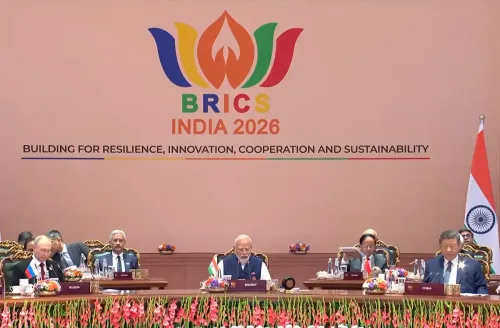
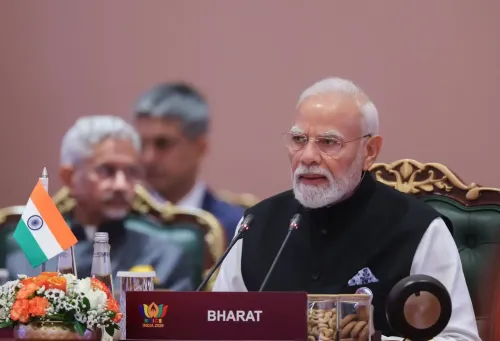
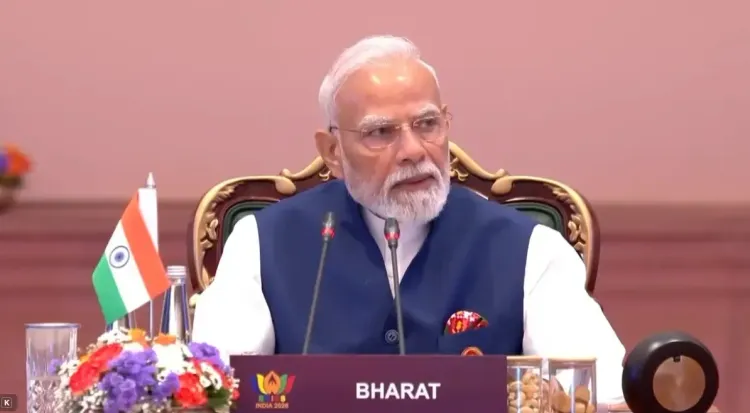
Prime Minister Narendra Modi on Sunday, 13 September 2026, declared that the 18th BRICS Summit in New Delhi had reinforced the bloc's identity as an 'ecosystem of solutions', calling on member and partner nations to translate commitments into time-bound, measurable action. The summit, held over two days at Bharat Mandapam, culminated in the unanimous adoption of the New Delhi Declaration.
Modi's Concluding Remarks
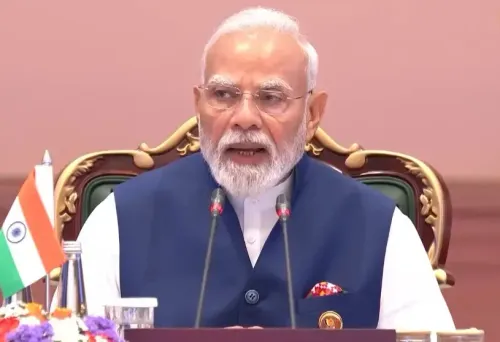
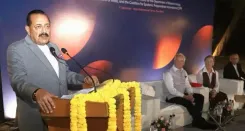
Delivering his closing address at the summit session on 'Resilience, Innovation, Cooperation and Sustainability', Prime Minister Modi underscored the need to move beyond documentation. “BRICS is not merely a grouping of nations, but an ecosystem of solutions. We hope that the New Delhi Declaration adopted at this summit will provide a clear direction for our shared vision and future cooperation. We must translate all outcomes into time-bound actions and last-mile impact,” he said.
Modi credited the active participation of BRICS leaders for adding “prevalence and depth” to the grouping’s cooperative framework. He said the breadth of global representation at the summit reflected BRICS’s growing relevance, openness, and inclusiveness on the world stage.
New Delhi Declaration Adopted
On the first day of the summit, leaders of BRICS member countries unanimously adopted the New Delhi Declaration, setting a shared agenda for the bloc’s next phase. The declaration is expected to guide cooperation across areas including trade, technology, health, and climate resilience. The visiting heads of state also attended a gala dinner hosted by PM Modi at Bharat Mandapam on Saturday evening.
Leaders and Representation
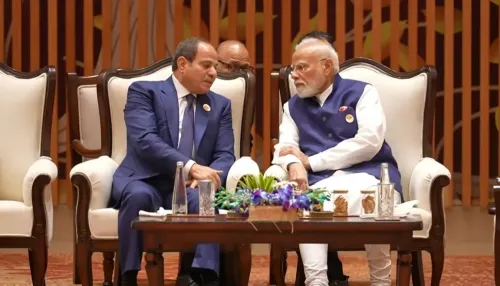
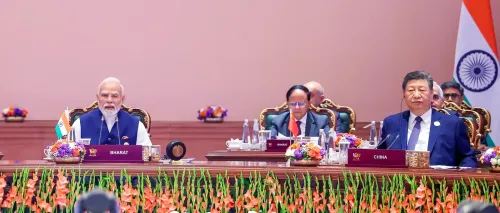
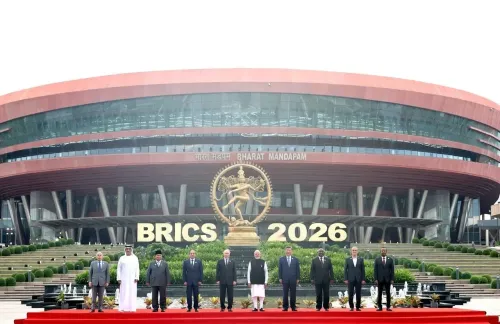
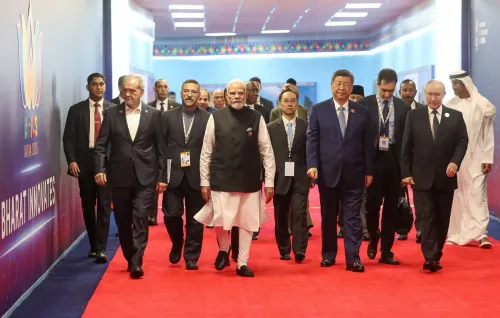
The summit brought together a sweeping array of global leaders for a group photograph on Sunday morning. Russian President Vladimir Putin, Chinese President Xi Jinping, Indonesian President Prabowo Subianto, South African President Cyril Ramaphosa, Malaysian Prime Minister Anwar Ibrahim, Ethiopian Prime Minister Abiy Ahmed Ali, Iranian President Masoud Pezeshkian, and World Health Organisation (WHO) Secretary-General Antonio Guterres were among those who posed for the family photo at Bharat Mandapam.
BRICS currently comprises 11 member states: Brazil, China, Egypt, Ethiopia, India, Indonesia, Iran, Russia, Saudi Arabia, South Africa, and the United Arab Emirates. An additional 10 partner countries — Belarus, Bolivia, Cuba, Kazakhstan, Malaysia, Nigeria, Thailand, Uganda, Uzbekistan, and Vietnam — also participate in the grouping’s framework.
BRICS Enters Its Third Decade
Modi noted that BRICS is “poised to enter its third decade”, signalling that the world now demands concrete results rather than aspirational commitments. “I am confident that through our collective efforts, we will certainly live up to these expectations,” he said, extending best wishes to China as the next host of BRICS.
This is the first time India has held the BRICS chair since the grouping’s significant expansion in 2023–2024, making the New Delhi summit a milestone for India’s multilateral ambitions. The summit’s emphasis on ‘last-mile impact’ signals a deliberate shift in tone from earlier BRICS gatherings, which were often criticised for producing verbose declarations without enforcement mechanisms.
What Comes Next
With the New Delhi Declaration now in place, attention turns to whether working groups under each BRICS pillar will set verifiable deadlines and accountability benchmarks. China takes over as BRICS chair next and will host the 19th BRICS Summit, where progress on the New Delhi commitments will face its first external audit. India’s presidency will be judged by how many of those time-bound actions reach implementation before the baton is formally passed.
Point of View
Often fractious bloc as a functional multilateral institution at a time when the global rules-based order is under stress. The real tension is internal: BRICS now spans democracies and authoritarian states, US partners and US rivals, making consensus on anything substantive structurally difficult. The New Delhi Declaration’s value will depend entirely on whether India’s presidency built in accountability mechanisms, something past declarations conspicuously lacked. With China next at the helm, the question is whether the time-bound-action language survives contact with a host that has its own agenda for the grouping’s direction.
NationPress
13 Sept 2026
Frequently Asked Questions
What happened at the 18th BRICS Summit in New Delhi?
The 18th BRICS Summit was held on 12–13 September 2026 at Bharat Mandapam, New Delhi , with India as BRICS chair. Leaders from member and partner countries adopted the New Delhi Declaration and attended sessions focused on resilience, innovation, cooperation, and sustainability.
What is the New Delhi Declaration?
The New Delhi Declaration is a consensus document unanimously adopted by BRICS member countries on the first day of the summit. It is intended to provide a shared direction for cooperation across trade, technology, health, and climate, with Prime Minister Modi calling for its outcomes to be translated into time-bound actions with measurable impact.
Which countries are part of BRICS in 2026?
BRICS has 11 member states : Brazil, China, Egypt, Ethiopia, India, Indonesia, Iran, Russia, Saudi Arabia, South Africa, and the United Arab Emirates. It also has 10 partner countries : Belarus, Bolivia, Cuba, Kazakhstan, Malaysia, Nigeria, Thailand, Uganda, Uzbekistan, and Vietnam.
Who will host the next BRICS summit?
China will host the next BRICS summit as the incoming chair, following India’s 2026 presidency. PM Modi extended his best wishes to China in his concluding remarks at the New Delhi Summit.
Why is the 2026 BRICS Summit significant for India?
It is India’s first time chairing BRICS since the grouping’s major expansion in 2023–2024, when membership grew from the original five to eleven nations. Hosting the summit at Bharat Mandapam with leaders including Putin, Xi, and heads of international organisations like the WHO signals India’s intent to use the multilateral platform to cement its position as a leading voice of the Global South.