BRICS Summit in New Delhi will make India a global force, says Maulana Yasoob Abbas
Synopsis
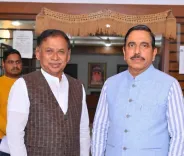
At the BRICS Summit in New Delhi, All India Shia Personal Law Board General Secretary Maulana Yasoob Abbas declared that India is poised to emerge as a new global force — and pointed to the Modi-Pezeshkian bilateral as proof. His remarks, combined with Kashmiri cleric Aga Syed Hassan Mosavi's account of the India-Iran dialogue, reveal how India's religious leadership is reading the geopolitical moment.
Key Takeaways
Maulana Yasoob Abbas of the All India Shia Personal Law Board said the BRICS Summit in New Delhi will help India emerge as a new global force.
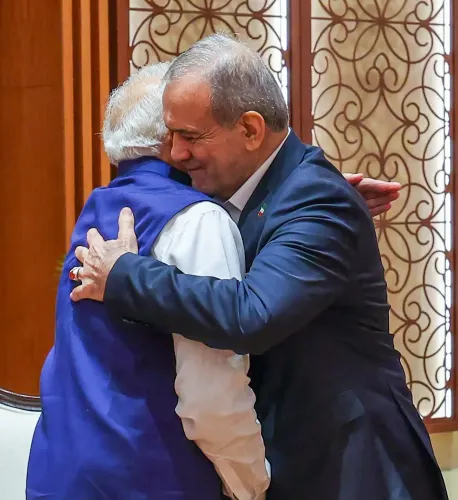
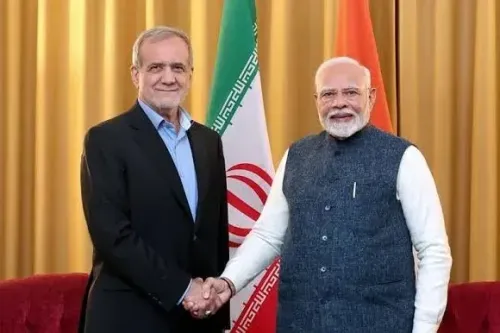
Abbas called the meeting between PM Narendra Modi and Iranian President Masoud Pezeshkian a significant diplomatic signal for India-Iran ties.
Kashmiri cleric Aga Syed Hassan Mosavi said Indian scholars, intellectuals, and community leaders held discussions with the Iranian President during his visit.
Abbas raised concern over the demolition of an 18th-century mosque in Saharanpur , urging Rahul Gandhi and the Congress to speak out on the issue.
He cautioned against political exploitation of religious sites, saying: 'Politics should not be done over centres of faith.'
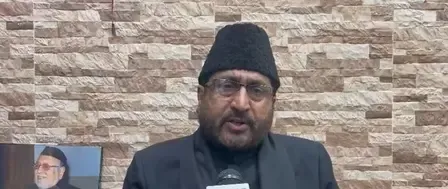
All India Shia Personal Law Board General Secretary Maulana Yasoob Abbas on 12 September 2026 said the BRICS Summit being held in New Delhi would help India emerge as a new global force by drawing multiple nations closer together. Speaking from Lucknow, Abbas also highlighted the significance of the bilateral meeting between Prime Minister Narendra Modi and Iranian President Masoud Pezeshkian on the sidelines of the summit.
India-Iran Ties and the BRICS Moment
Maulana Abbas said the optics of the Modi-Pezeshkian meeting carried a pointed diplomatic signal. 'The picture of Iranian President Masoud Pezeshkian and Prime Minister Modi meeting will send the message that the BRICS will not end, but the domination and bullying of America and Israel will end. India will emerge as a new force by bringing several countries together,' he said.
Abbas expressed hope that India and Iran would continue to deepen their bilateral ties, noting that Iranians held a deep affection for Indians. He said he had been travelling to Iran since childhood, visiting cities including Tehran, Mashhad, Isfahan, Nishapur, and Kermanshah, and had crossed the Khosravi and Qasr-e Shirin border areas on multiple occasions. 'The special thing is that no Indian has ever felt any difficulty there,' he said.
Voices from the India-Iran Dialogue
Shia cleric from Kashmir, Aga Syed Hassan Mosavi, said that scholars, intellectuals, members of the business community, and prominent personalities from different faiths in India had participated in discussions with the Iranian President during his visit. Mosavi said participants had unanimously condemned what they described as injustice and brutality by the United States against Iran, and expressed grief over children killed in the conflict and the death of Iran's Supreme Leader. He also expressed hope that the India-Iran relationship would continue to grow stronger.
Saharanpur Mosque Demolition Draws Concern
Separately, Maulana Abbas raised concern over the demolition of a mosque in Saharanpur, calling the incident unfortunate. He said the mosque, located alongside the district collectorate wall, was believed to date back to the 18th century. A well had also reportedly been found inside the structure — a feature, he noted, that was common in mosques built before modern water facilities such as handpumps became available.
Abbas urged the Indian National Congress and Congress leader Rahul Gandhi to speak openly on the Saharanpur issue. However, he added a note of caution against politicisation of religious sites. 'Politics should not be done over centres of faith. But those doing politics are looking for vote banks even in such matters,' he said, calling for restraint from all sides.
What This Signals for India's Multilateral Role
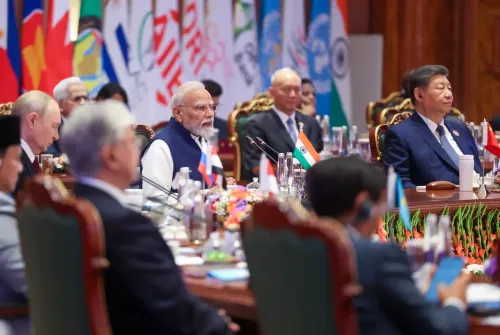
The BRICS Summit in New Delhi comes at a moment when the grouping has expanded its membership and is increasingly being framed by participants as a counterweight to Western-dominated multilateral institutions. Abbas's remarks reflect a broader sentiment among sections of Indian civil society and religious leadership who see India's engagement with Iran and the wider BRICS bloc as strategically significant. This is the first summit since Iran formally joined BRICS, adding another dimension to the India-Iran dynamic that Modi's meeting with Pezeshkian sought to underscore.
Point of View
But for what they reveal about how India's minority religious leadership is interpreting the country's diplomatic pivot toward Iran and the Global South. His framing — India as a unifying force against Western 'domination' — tracks closely with the official BRICS narrative, raising a question about where civil society commentary ends and political alignment begins. His Saharanpur intervention is equally telling: by calling on the Congress and Rahul Gandhi to speak out while simultaneously warning against vote-bank politics, he is threading a needle that puts both the ruling establishment and the opposition on notice.
NationPress
28 Oct 2026
Frequently Asked Questions
What did Maulana Yasoob Abbas say about the BRICS Summit?
Maulana Yasoob Abbas, General Secretary of the All India Shia Personal Law Board, said the BRICS Summit in New Delhi would help India emerge as a new global force by bringing several countries together. He specifically cited the Modi-Pezeshkian bilateral meeting as a signal of India's growing diplomatic weight.
What was the significance of the Modi-Pezeshkian meeting at the BRICS Summit?
According to Abbas, the meeting between PM Narendra Modi and Iranian President Masoud Pezeshkian sent a message that BRICS as a grouping would endure and that India was positioned to lead it as a unifying force. It also reflected the deepening of India-Iran ties following Iran's formal entry into the BRICS bloc.
What is the Saharanpur mosque controversy?
A mosque in Saharanpur, reportedly dating back to the 18th century and located alongside the district collectorate wall, was demolished, drawing concern from Maulana Abbas. A well was also found inside the structure. Abbas urged the Congress and Rahul Gandhi to speak openly on the matter while cautioning against political exploitation of religious sites.
Who is Aga Syed Hassan Mosavi and what did he say?
Aga Syed Hassan Mosavi is a Shia cleric from Kashmir who said that scholars, intellectuals, businesspeople, and community leaders from various faiths in India had participated in discussions with Iranian President Pezeshkian. He expressed hope for continued strengthening of India-Iran ties.
What is the broader context of the BRICS Summit in New Delhi?
The summit is taking place at a time when the BRICS grouping has expanded its membership, with Iran among recent additions. Participants, including Indian religious and civil society leaders, have framed the gathering as an opportunity for India to assert a leadership role in a multipolar global order.