Cabinet approves 3% DA, DR hike for central govt staff

Synopsis
The Union Cabinet has approved a 3% increase in Dearness Allowance for central government employees and Dearness Relief for pensioners. Announced by Textiles Minister Giriraj Singh on October 28, 2026, the revision follows the AICPI-linked formula established under the 7th Pay Commission.
Key Takeaways
The Union Cabinet approved a 3% increase in Dearness Allowance (DA) for central government employees on October 28, 2026 .
Dearness Relief (DR) for pensioners has also been raised by 3% , providing equivalent inflation-linked support to retirees.
The revision is computed using the All India Consumer Price Index for Industrial Workers (AICPI-IW) under the formula set by the 7th Central Pay Commission in 2016 .
An official notification from the Ministry of Finance will confirm the effective date and arrears calculation methodology.
DA and DR are revised twice yearly as a standard, non-discretionary mechanism to protect central employees' purchasing power against inflation.
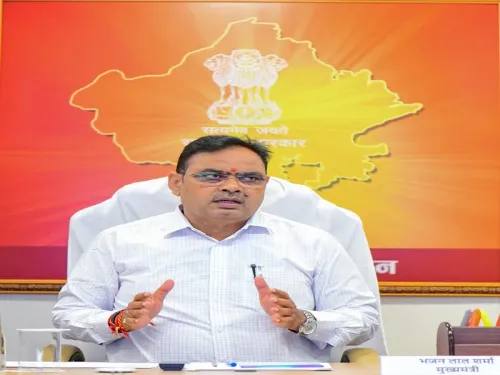
Millions of central government employees and pensioners woke up to tangible relief on Wednesday, October 28, 2026, as the Union Cabinet approved a 3 per cent hike in Dearness Allowance (DA) for serving employees and Dearness Relief (DR) for retirees — a move that directly shores up household budgets against inflation. Union Textiles Minister Giriraj Singh announced the decision on X, calling it a measure that would provide 'economic support' (aarthik sambal) to both employees and pensioners.
What the 3% revision means for crores of beneficiaries
Dearness Allowance is not a bonus — it is a structured inflation shield, recalculated twice every year using the All India Consumer Price Index for Industrial Workers (AICPI-IW). The formula was locked in under the 7th Central Pay Commission recommendations, implemented from 2016, precisely to remove political discretion from the process and tie relief directly to price-level data.
The 3 per cent increment announced today applies uniformly across all central government employees and pensioners. For a salaried employee, DA is expressed as a percentage of basic pay; for a retiree, the equivalent Dearness Relief is calculated on basic pension. A 3-point rise therefore compounds more meaningfully for senior-scale employees and long-serving retirees who draw higher base figures.
Cabinet's role and the Department of Expenditure pipeline
The approval flows through a well-worn institutional channel: the Department of Expenditure under the Ministry of Finance computes the revised rate using AICPI data, tables a proposal, and the Union Cabinet — India's highest executive decision-making body — grants formal clearance. An official gazette notification from the Finance Ministry will follow, specifying the effective date and the methodology for calculating any arrears owed to employees from the start of the revision cycle.
This biannual rhythm has been maintained across administrations as a non-discretionary commitment to the central workforce — there is no year in which the revision is simply skipped, even if the quantum varies with inflation trends.
What comes next in the revision cycle
The next DA/DR revision will be triggered after the release of subsequent AICPI-IW figures, which typically feed into an announcement in the first half of the following year. Employees and pensioners should watch for the Finance Ministry's formal order, which will confirm the exact effective date — usually retroactive to either January 1 or July 1 of the revision period — and spell out the arrears payout schedule.
For now, the Cabinet's green light means the process is set in motion — and the pay slips and pension credits of central government households across India are about to reflect it.
Point of View
But the political optics of announcing it in the pre-winter cycle carry weight for a ruling party keen to signal fiscal responsiveness. The 7th Pay Commission framework, now a decade old, continues to hold because it depoliticises the quantum — but pressure for an 8th Commission is quietly building, and each routine DA cycle nudges that conversation forward.
NationPress
28 Oct 2026
Frequently Asked Questions
What is the new Dearness Allowance rate for central government employees after the October 2026 hike?
The Union Cabinet approved a 3% increase in Dearness Allowance on October 28, 2026. The new cumulative DA rate will be confirmed in the official Ministry of Finance notification, which will also specify the effective date.
Who benefits from the DA and DR hike approved by the Cabinet?
All central government employees benefit from the Dearness Allowance increase, while central government pensioners and family pensioners benefit from the equivalent Dearness Relief hike.
How is Dearness Allowance calculated for central government employees?
DA is calculated as a percentage of an employee's basic pay using the All India Consumer Price Index for Industrial Workers (AICPI-IW) data, under the formula established by the 7th Central Pay Commission from 2016.
When will the revised DA and DR be credited to employees and pensioners?
The Ministry of Finance will issue an official gazette notification specifying the exact effective date — typically retroactive to January 1 or July 1 of the revision period — and the arrears payout schedule.
How often is Dearness Allowance revised for central government staff?
DA and DR are revised twice a year, once for the January cycle and once for the July cycle, based on rolling AICPI-IW data and approved by the Union Cabinet on the advice of the Department of Expenditure.