Cabinet Clears BHAVYA-Rasayan Scheme for 3 Chemical Parks
Synopsis
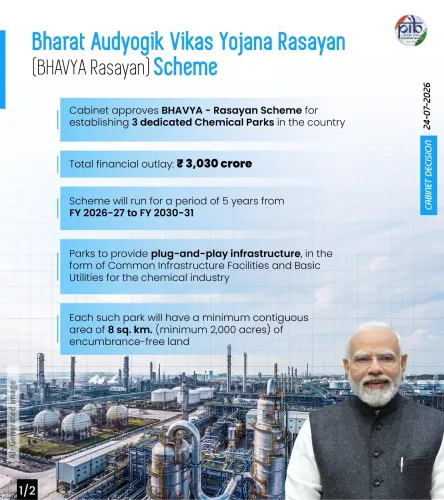
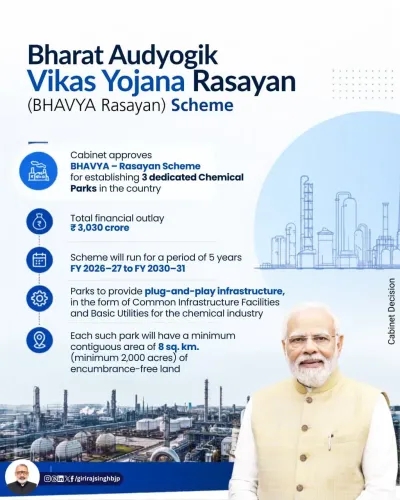
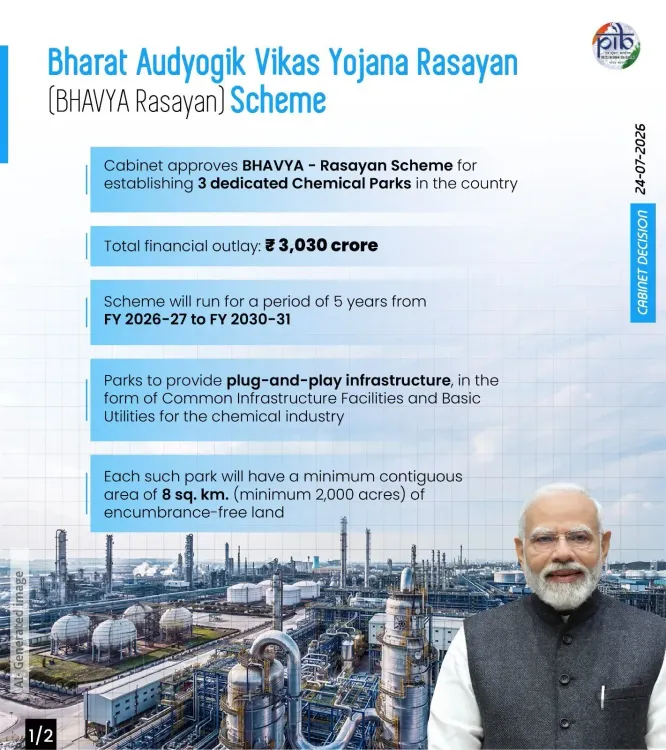
The Union Cabinet has approved the BHAVYA-Rasayan scheme to establish three dedicated Chemical Parks in India, committing ₹3,030 crore over five financial years from FY 2026–27 to FY 2030–31, as announced by Minister Kiren Rijiju.
Key Takeaways
The Union Cabinet approved the BHAVYA-Rasayan (Bharat Audyogik Vikas Yojana Rasayan) scheme on 25 July 2026 .
The scheme will fund the establishment of three dedicated Chemical Parks across India.
Total financial outlay is ₹3,030 crore over five years.
Implementation runs from FY 2026–27 to FY 2030–31 .
The scheme builds on India's earlier PCPIR policy (2007) and aligns with Aatmanirbhar Bharat goals.
Site selection and Centre-state coordination remain the immediate next steps.
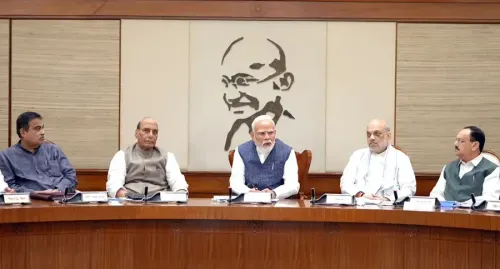
Union Parliamentary Affairs Minister Kiren Rijiju announced on Friday, 25 July 2026 that the Union Cabinet, under the leadership of Prime Minister Narendra Modi, has approved the Bharat Audyogik Vikas Yojana Rasayan (BHAVYA-Rasayan) scheme to establish three dedicated Chemical Parks across India, with a total financial outlay of ₹3,030 crore to be implemented between FY 2026–27 and FY 2030–31.
Context
Rijiju shared the Cabinet decision on X, stating: 'Under the leadership of Hon'ble PM Shri Narendra Modi ji, the Union Cabinet has approved the Bharat Audyogik Vikas Yojana Rasayan or BHAVYA-Rasayan Scheme for establishing three dedicated Chemical Parks in the country.' The announcement was part of a broader set of #CabinetDecisions cleared in the same sitting. The scheme marks a significant step in India's push to build dedicated, integrated infrastructure for the chemicals and petrochemicals sector.
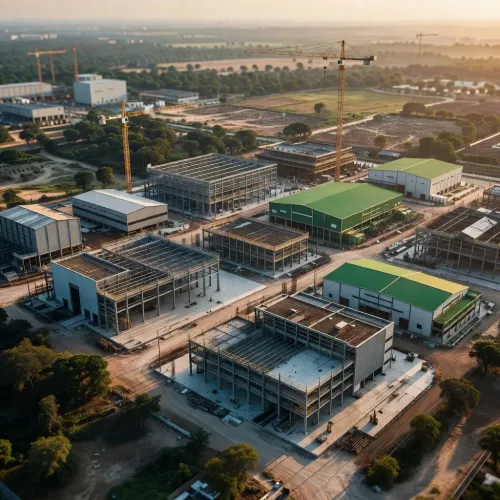
The approval signals the government's intent to move beyond ad hoc industrial zones and create purpose-built Chemical Parks with planned utilities, logistics, and regulatory support — a model that has gained traction globally for attracting large-scale manufacturing investment.
Policy Backdrop
India's policy interest in dedicated chemical clusters dates to the Petroleum, Chemicals and Petrochemicals Investment Regions (PCPIR) policy notified in 2007, which sought to promote integrated investment regions for the sector. States such as Gujarat have since developed chemical and petrochemical clusters, particularly along the coast, leveraging port connectivity and existing industrial ecosystems.
The BHAVYA-Rasayan scheme builds on this lineage, aligning with the broader 'Make in India' and Aatmanirbhar Bharat frameworks that successive Union Budgets have reinforced. By committing ₹3,030 crore over a five-year horizon, the Centre is signalling sustained, multi-year capital commitment rather than one-time grants — a structural shift in how industrial policy is being executed.
The chemical sector is a significant contributor to India's manufacturing GDP and export basket, and dedicated parks are expected to reduce logistics costs, improve environmental compliance clustering, and attract foreign direct investment into specialty and bulk chemicals.
Stakeholders and Impact
The primary beneficiaries of the scheme are chemical manufacturers — ranging from large integrated players to small and medium enterprises — who stand to gain from shared infrastructure, reduced land-acquisition friction, and common effluent treatment facilities within the parks. State governments that host the parks will be key implementation partners, responsible for land allocation, utility provisioning, and single-window clearances.
Workers in the chemicals and allied industries, as well as ancillary logistics and construction sectors, are expected to see employment generation as the parks are developed and operationalised. The scheme's five-year implementation window — from FY 2026–27 to FY 2030–31 — provides states sufficient runway to prepare land banks and infrastructure before the parks become fully functional.
What's Next
The immediate priority will be the selection of sites for the three Chemical Parks, a process that will require formal coordination between the Union government and participating state governments. Site-selection criteria are likely to weigh port proximity, existing industrial corridors, water availability, and state-level incentive frameworks.
Formal inter-ministerial and Centre-state coordination mechanisms will need to be established to govern land acquisition, environmental clearances, and phased capital disbursement. How quickly the government moves on site identification and notifies implementing agencies will determine whether the scheme stays on its FY 2026–27 start timeline.
Point of View
Infrastructure-led chemical clusters — a model the government has been signalling for several years. Placing a ₹3,030 crore commitment across five fiscal years insulates the scheme from annual budget volatility and gives state partners a credible planning horizon. For the BJP-led Centre, the announcement reinforces the 'Make in India' narrative ahead of the next electoral cycle, particularly in states with existing chemical manufacturing bases. The real test will be whether site selection avoids the delays that have historically stalled similar cluster projects, including under the PCPIR framework.
NationPress
24 Jul 2026
Frequently Asked Questions
What is the BHAVYA-Rasayan scheme?
BHAVYA-Rasayan, short for Bharat Audyogik Vikas Yojana Rasayan, is a Union Cabinet-approved scheme to establish three dedicated Chemical Parks in India with a total outlay of ₹3,030 crore, to be implemented from FY 2026–27 to FY 2030–31.
How much money has the government allocated for BHAVYA-Rasayan?
The Union Cabinet has approved a total financial outlay of ₹3,030 crore for the BHAVYA-Rasayan scheme, spread across five financial years from FY 2026–27 to FY 2030–31.
How many Chemical Parks will be built under BHAVYA-Rasayan?
Three dedicated Chemical Parks will be established across India under the BHAVYA-Rasayan scheme.
Who announced the BHAVYA-Rasayan scheme approval?
Union Parliamentary Affairs Minister Kiren Rijiju announced the Cabinet approval of the BHAVYA-Rasayan scheme on X on 25 July 2026, attributing the decision to the leadership of Prime Minister Narendra Modi.
Where will the three Chemical Parks under BHAVYA-Rasayan be located?
The specific locations for the three Chemical Parks have not yet been announced; site selection involving coordination with state governments is the immediate next step following Cabinet approval.