Cabinet Clears BHAVYA Rasayan Scheme Worth ₹3,030 Cr for Chemical Parks
Synopsis
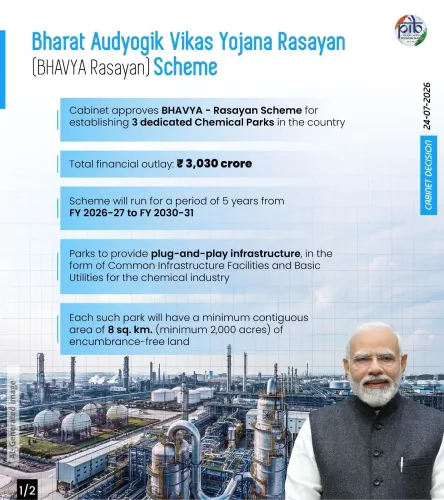
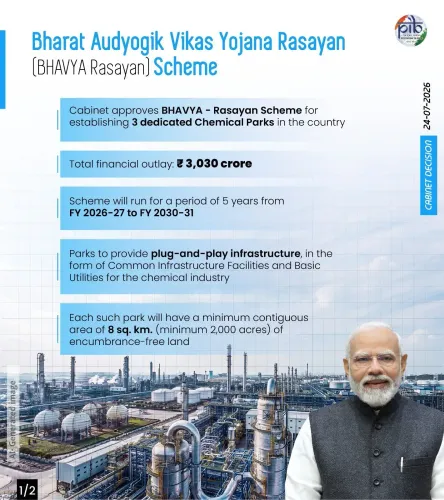
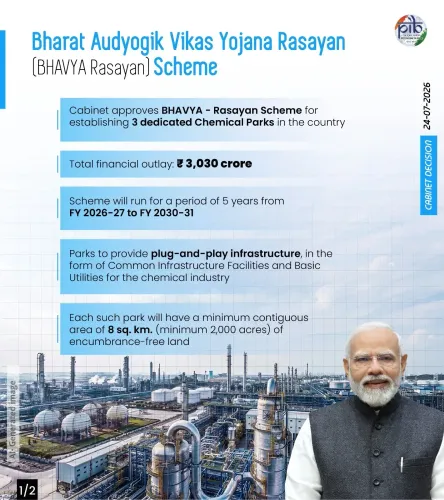
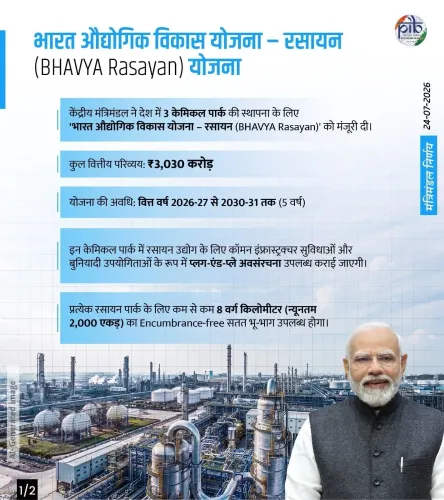
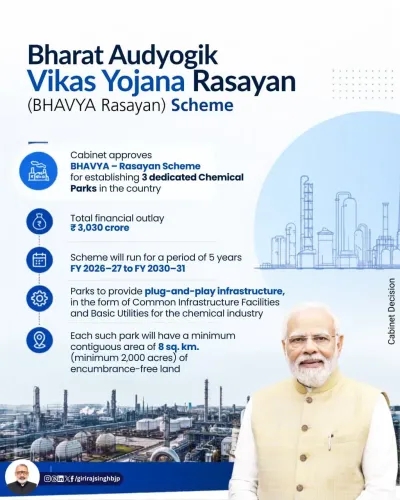
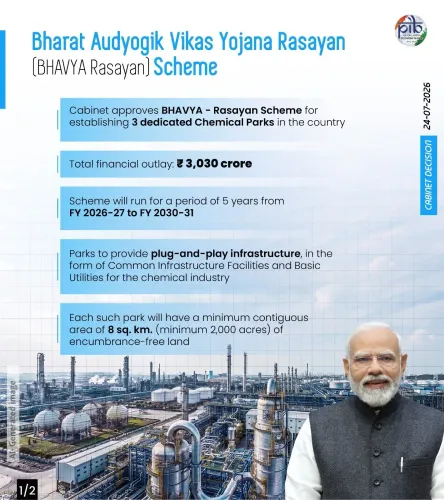
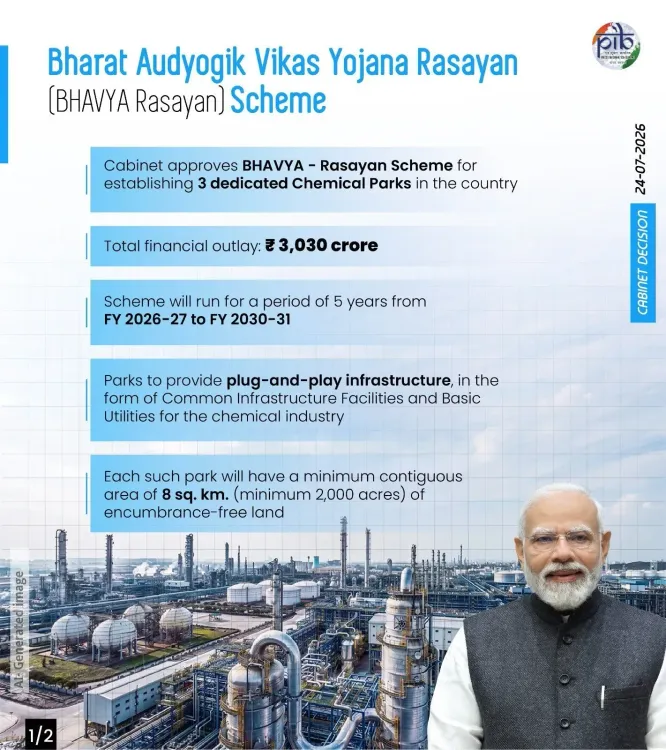
The Union Cabinet has approved the BHAVYA Rasayan Scheme with a ₹3,030 crore outlay to establish three dedicated chemical parks across India. The scheme aims to build shared industrial and environmental infrastructure, attract investment, generate employment, and strengthen domestic chemical manufacturing under the Make in India framework.
Key Takeaways
The Union Cabinet, chaired by Prime Minister Narendra Modi , approved the BHAVYA Rasayan Scheme on 25 July 2026 .
The scheme carries a total outlay of ₹3,030 crore for the development of three dedicated chemical parks across India.
Parks will feature shared environmental and utility infrastructure to reduce compliance costs and ecological impact for individual units.
The scheme is designed to attract new investments, create employment, and strengthen domestic manufacturing in the chemical sector.
The approval builds on earlier policy frameworks including the PCPIR policy (2007) and the Make in India initiative (2014) .
Locations of the three parks, detailed guidelines, and state-level implementation plans are yet to be announced.
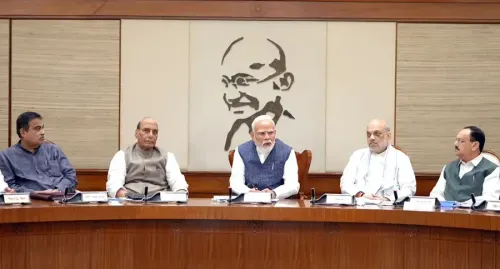
The Union Cabinet, chaired by Prime Minister Narendra Modi, approved the BHAVYA Rasayan Scheme on Friday, 25 July 2026, committing an outlay of ₹3,030 crore to develop three dedicated chemical parks across India. Union Education Minister Dharmendra Pradhan announced the decision on X, highlighting the scheme's goals of boosting domestic manufacturing, attracting investment, and supporting sustainable industrial growth.
Context
The Cabinet's decision marks a significant push to build dedicated industrial infrastructure for India's chemical sector. The BHAVYA Rasayan Scheme envisages three greenfield chemical parks equipped with shared environmental and utility infrastructure — a model designed to lower compliance costs for individual units and reduce the ecological footprint of the sector as a whole. Pradhan noted in his post that the scheme will 'help build quality industrial infrastructure for the chemical sector, encourage new investments, create employment opportunities and strengthen domestic manufacturing.'
The scheme's emphasis on shared effluent treatment, common utilities, and environmental compliance infrastructure addresses a long-standing bottleneck for small and medium chemical manufacturers, who often struggle to independently meet regulatory standards.
Policy Backdrop
The approval builds on a policy lineage that stretches back to the Petroleum, Chemicals and Petrochemicals Investment Region (PCPIR) policy of 2007, which first introduced the concept of integrated industrial regions with shared infrastructure for the chemicals and petrochemicals sector. The Make in India initiative, launched in 2014, further elevated chemicals as a priority manufacturing segment, seeking to raise the sector's share in GDP and reduce import dependence.
Successive governments have recognised that dedicated industrial clusters — with plug-and-play infrastructure — are among the most effective tools for attracting foreign direct investment and reducing logistics costs. The BHAVYA Rasayan Scheme follows this established playbook, adding a sharper focus on environmental sustainability that aligns with India's broader net-zero commitments.
Stakeholders and Impact
The primary beneficiaries of the scheme are chemical manufacturers, industrial investors, and the chemical sector workforce. By pooling environmental and utility infrastructure across park tenants, the scheme is expected to make compliance more affordable for smaller firms while also making the parks more attractive to large domestic and foreign investors looking for ready-made industrial ecosystems.
The creation of three dedicated parks is also expected to generate direct and indirect employment across construction, operations, logistics, and ancillary services — though specific job-creation targets have not yet been disclosed publicly. The scheme's built-in environmental infrastructure component signals an attempt to preempt the kind of pollution controversies that have historically dogged chemical industrial clusters in India.
What's Next
Attention will now turn to the selection of locations for the three chemical parks, the release of detailed operational guidelines, and any memoranda of understanding signed with state governments for land and connectivity support. State governments with established chemical corridors — including Gujarat, Maharashtra, and Andhra Pradesh — are likely to be early contenders for hosting the parks, given their existing industrial ecosystems and port access.
Parliamentary scrutiny of fund utilisation timelines and project milestones is expected during the next budget session. The pace of site identification and private-sector response will be the earliest indicators of whether the scheme translates from Cabinet approval into ground-level industrial activity.
Point of View
Rather than the Chemicals or Commerce Ministry, underscores how Cabinet decisions are now amplified across the entire senior BJP leadership on social media as a coordinated communication exercise. The scheme's real test will be the speed of site selection and whether state governments, competing for investment, can deliver land and connectivity on the timelines the outlay demands.
NationPress
24 Jul 2026
Frequently Asked Questions
What is the BHAVYA Rasayan Scheme?
The BHAVYA Rasayan Scheme is a newly approved central government initiative with an outlay of ₹3,030 crore to develop three dedicated chemical parks across India, complete with shared environmental and utility infrastructure to support the chemical manufacturing sector.
How much money has the government allocated for the BHAVYA Rasayan Scheme?
The Union Cabinet has approved an outlay of ₹3,030 crore for the BHAVYA Rasayan Scheme.
How many chemical parks will be built under the BHAVYA Rasayan Scheme?
Three dedicated chemical parks will be developed across India under the scheme. The specific locations have not yet been publicly announced.
What is the purpose of shared environmental infrastructure in the chemical parks?
Shared environmental and utility infrastructure — such as common effluent treatment facilities — reduces the compliance burden and cost for individual chemical units within the park, while also helping to minimise the overall ecological impact of the cluster.
How does the BHAVYA Rasayan Scheme relate to Make in India?
The scheme advances the Make in India goal of boosting domestic manufacturing by creating plug-and-play industrial infrastructure for the chemical sector, attracting investment, and reducing dependence on imported chemicals.