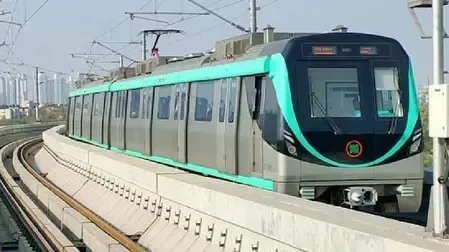
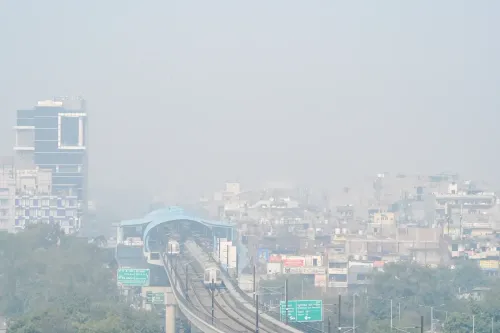
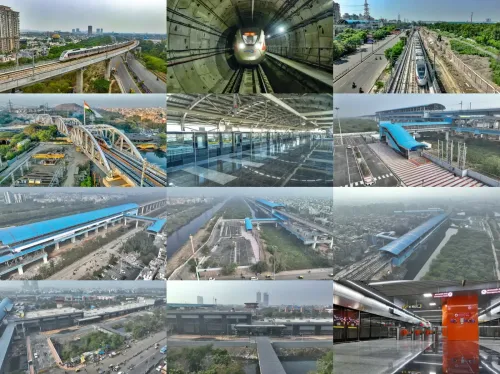
Cabinet Clears Noida Metro Aqua Line Extension to Greater Noida
Synopsis
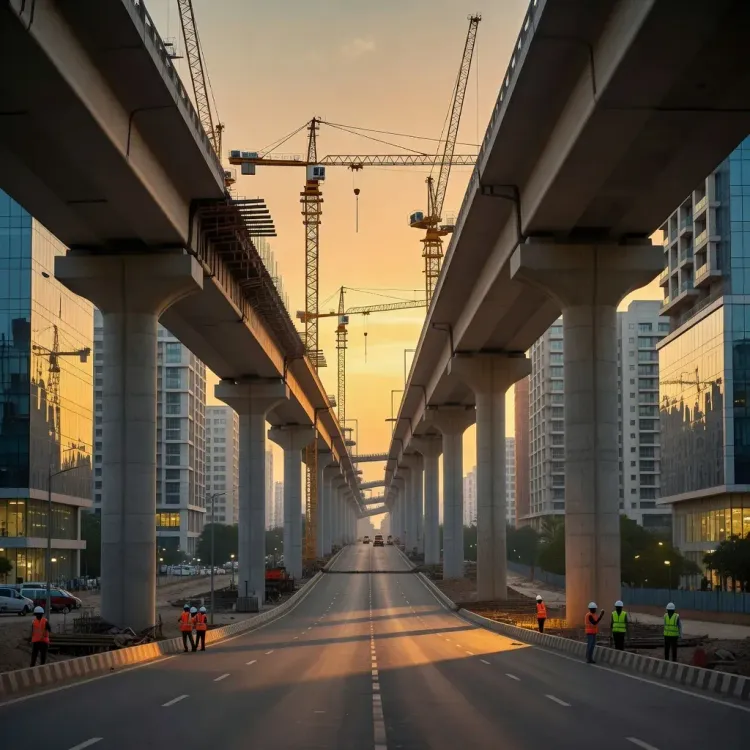
The Union Cabinet has approved an 8.449 km elevated extension of the Noida Metro Aqua Line from Noida Sector-51 to Greater Noida Sector-4, adding 5 stations to boost connectivity, employment access, and economic activity across the twin cities.
Key Takeaways
The Union Cabinet , chaired by PM Narendra Modi , approved the Noida Metro Aqua Line extension on 11 November 2026 .
The extension covers 8.449 km with 5 new elevated stations between Noida Sector-51 and Greater Noida Sector-4 .
The corridor will serve key residential, commercial, and institutional zones currently underserved by metro connectivity.
The project aligns with the Metro Rail Policy 2017 and a broader NCR metro expansion drive running since 2014 .
The original Aqua Line was approved in 2013 and inaugurated in January 2019 — a timeline that sets expectations for this extension's construction schedule.
Minister Manohar Lal Khattar framed the decision around 'Ease of Living', jobs access, and investment potential along the new corridor.
Five new elevated stations. 8.449 kilometres of fresh track. And a Cabinet decision that could reshape the daily commute for hundreds of thousands of people straddling Noida and Greater Noida. Union Minister of Housing and Urban Affairs Manohar Lal Khattar announced on Wednesday, 11 November 2026 that the Union Cabinet, chaired by Prime Minister Narendra Modi, has approved the extension of the Noida Metro Aqua Line from Noida Sector-51 to Greater Noida Sector-4.
What the Extension Actually Covers
The approved corridor stretches 8.449 km and adds 5 elevated stations to the existing Aqua Line network. The alignment is designed to thread through key residential pockets, commercial zones, and institutional clusters that have so far sat just beyond metro reach. The Ministry framed the project around three tangible gains: better access to jobs and educational institutions, a stimulus to business and investment, and an improvement in the 'Ease of Living' for everyday commuters.
Greater Noida is home to a dense belt of engineering colleges, universities, and industrial estates — zones that generate massive daily traffic but have historically depended on road transport. Plugging them into the metro grid is not a small thing.
The Aqua Line's Journey From 2013 to Now
The original Noida–Greater Noida Aqua Line had its own long gestation: Cabinet approval came in 2013, and the corridor was inaugurated in January 2019. That six-year gap is a useful benchmark as planners and commuters now clock when shovels will actually hit the ground on this extension. Construction timelines, land acquisition status, and the operational integration with the existing Aqua Line are the pressure points to watch.
The decision also sits inside a broader national pattern. Since the Metro Rail Policy 2017 standardised norms for central funding and public-private participation, successive Cabinet decisions have pushed metro coverage deeper into National Capital Region satellite cities — from multiple phases of the Delhi Metro to corridors in Gurugram and Ghaziabad. The Noida extension is the latest link in that chain.
Noida–Greater Noida Corridor's Economic Stakes
The twin cities occupy a critical node in Uttar Pradesh's urban economy. Noida's IT and services clusters pull white-collar workers from across the NCR; Greater Noida's industrial and educational belt adds another layer of daily mobility demand. Road congestion on the connecting expressway is a persistent complaint. A metro link that removes that bottleneck can unlock property values, reduce commute times, and — as the Cabinet note flags — open new avenues for investment along the corridor.
Minister Khattar's post tied the approval directly to the government's 'Ease of Living' framework, the urban-policy language that benchmarks infrastructure decisions against citizens' quality of life rather than just capital expenditure. For the NCR's expanding population, that framing is less rhetoric than arithmetic: fewer hours on a bus, more hours at a desk or at home.
The question now is speed. The original Aqua Line took years from approval to ribbon-cutting. Whether this extension — approved in a more mature metro-construction ecosystem — can compress that timeline will determine how quickly the half-million people in its catchment actually board a train.
Point of View
Which goes to state elections periodically, metro approvals in the Noida-Greater Noida belt carry both economic logic and visible political dividend. The 'Ease of Living' framing is deliberate: it repositions infrastructure spend as a quality-of-life entitlement rather than a fiscal line item, making it harder for critics to frame metro investment as elite urban subsidy. The real test, as always, will be execution — whether the construction ecosystem built around Delhi Metro Phase IV can deliver this corridor faster than the original Aqua Line's six-year approval-to-inauguration arc.
NationPress
11 Nov 2026
Frequently Asked Questions
What is the Noida Metro Aqua Line extension approved by the Cabinet?
The Union Cabinet approved an 8.449 km elevated extension of the Noida Metro Aqua Line from Noida Sector-51 to Greater Noida Sector-4 , adding 5 new elevated stations to the existing network.
When was the Noida Metro Aqua Line extension approved?
The Union Cabinet chaired by Prime Minister Narendra Modi approved the extension on 11 November 2026 .
Which stations will the new Aqua Line extension cover?
The extension runs from Noida Sector-51 to Greater Noida Sector-4 with 5 elevated stations along the 8.449 km corridor. Exact individual station names have not been detailed in the Cabinet announcement.
What is the original Noida Metro Aqua Line and when did it open?
The original Noida–Greater Noida Aqua Line received Cabinet approval in 2013 and was inaugurated in January 2019 , connecting key parts of Noida and Greater Noida by rail for the first time.
How will the Aqua Line extension benefit residents of Greater Noida?
The extension is designed to improve access to employment hubs, educational institutions, and commercial zones in Greater Noida , reduce road congestion, and attract business investment along the new corridor — directly improving daily commute quality for residents.