INS Netaji Subhas holds Yoga course for Agniveers as Cabinet extends tenure by 2 years
Synopsis
Hours after the first Agniveer batch wrapped up a certified Yoga Course at INS Netaji Subhas in Kolkata, the Union Cabinet approved a two-year 'Second Tour of Duty' under Agnipath — fundamentally reshaping the fate of 18,300 personnel due for release within months. The move also opens a path to regular service for those who qualify, partially addressing the scheme's most-criticised limitation.
Key Takeaways
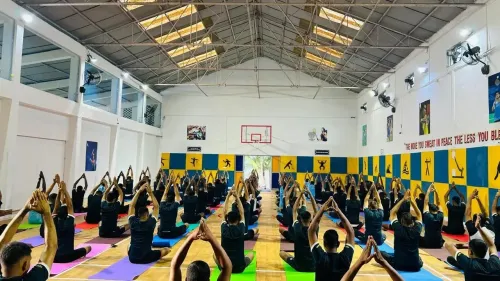
The first batch of non-retained Agniveers completed an 8-week certified Yoga Course at INS Netaji Subhas , Kolkata, on 4 November 2026 .
The Union Cabinet , chaired by PM Narendra Modi , approved a 2-year 'Second Tour of Duty' for Agniveers under the Agnipath scheme the same day.
Over 18,300 Agniveers were scheduled to exit the armed forces within the next three months — representing 75% of the first induction batch.
Willing Agniveers who meet selection criteria can now enrol as regular soldiers after a combined 4 or 6 years of service.
The Army currently has around 2,70,000 Agniveers ; the IAF around 27,000 ; the Navy roughly 21,000 .
The Agnipath scheme was introduced in 2022 to build a younger, fitter force via four-year short-service contracts.
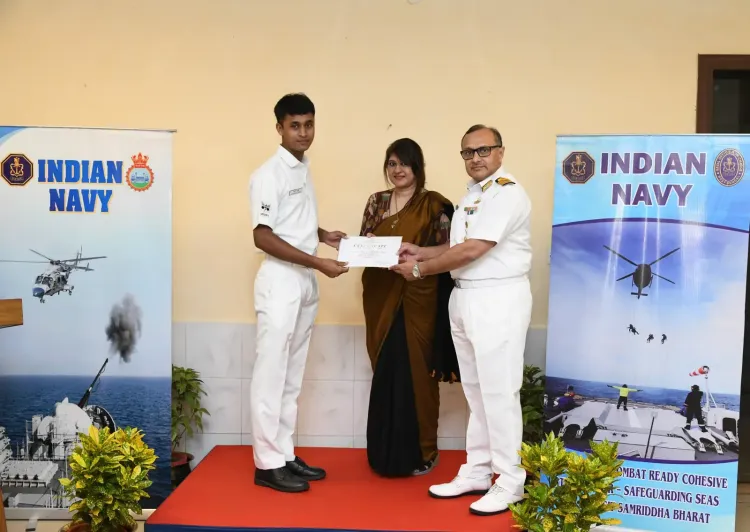
The first batch of Agniveers not retained after completing their four-year service term concluded an 8-week certified Yoga Course at INS Netaji Subhas, the Indian Navy's base in Kolkata, on 4 November 2026 — just hours before the Union Cabinet approved a landmark two-year extension to the Agnipath scheme. The timing has drawn significant attention, as over 18,300 Agniveers were due to exit the armed forces within the next three months.
What the Yoga Programme Covered
Conducted in line with the Navy's structured transition programme, the course focused on physical fitness, mental well-being, discipline, and resilience. Certificates were awarded to participants upon successful completion, according to a Navy statement. The yoga training was part of a broader pre-release pipeline that also includes medical evaluations for outgoing personnel across the Army, Navy, and Indian Air Force (IAF).
Cabinet's Two-Year Extension: What Changed
Defence Minister Rajnath Singh announced the Cabinet decision in a post on X, stating: 'Taking a significant decision today, the Union Cabinet chaired by PM Shri Narendra Modi has approved a two-year Second Tour of Duty for Agniveers under Agnipath.' He added that the extension would also provide 'enrollment of all willing Agniveers as regular soldiers after the tenure of 4/6 years, who meet the selection criteria.'
Singh described the move as 'a continuation of long-term structural reforms of our defence forces, aimed at creating a younger, fitter, technologically equipped and future-ready military.' He said it was 'not merely a recruitment policy' but a strategy to prepare India's military for 'the changing character of warfare.'
Scale of the First Batch and Current Strength
The first cohort comprised roughly 19,000 Agniveers in the Army, 2,850 in the IAF, and 2,550 in the Navy, according to official data. Of the approximately 24,400 recruits inducted in that initial round, the 18,300 scheduled for release this year represent the 75% not retained under the existing 25% permanent retention rule. Currently, the Army holds around 2,70,000 Agniveers, the IAF around 27,000, and the Navy roughly 21,000.
Notably, all three services have expressed satisfaction with the performance of Agniveers across roles, and officials believe a large number of those eligible will opt for the extended tenure — though the decision will rest entirely with individuals.
Background: Why Agnipath Was Introduced
The Agnipath scheme was launched in 2022 as a structural departure from the military's decades-old recruitment model. The core objective was to maintain a younger and fitter fighting force by inducting short-service personnel on four-year contracts. The move sparked protests at the time, with critics questioning long-term career prospects for recruits not retained. Officials had previously indicated the scheme could be tweaked to retain more personnel with specialised skills — a signal that the latest Cabinet decision appears to fulfil.
What Comes Next
With the Cabinet's approval of the Second Tour of Duty, Agniveers who complete six years of combined service and meet selection criteria will now be eligible for enrolment as regular soldiers. The transition pipeline — including welfare programmes like the yoga certification at INS Netaji Subhas — reflects an effort to equip departing personnel with civilian-applicable skills. How many of the 18,300 due for release ultimately opt to extend remains to be seen, but the policy shift materially changes the scheme's long-term trajectory.
Point of View
Just hours before the Cabinet decision, underscores how close the government came to releasing 18,300 personnel without a revised framework in place. Whether the 'Second Tour of Duty' becomes a genuine pipeline into regular service or a deferral of the same exit problem depends entirely on how rigorously selection criteria are defined and applied — details the Cabinet announcement has yet to make public.
NationPress
5 Nov 2026
Frequently Asked Questions
What is the 'Second Tour of Duty' approved for Agniveers?
It is a two-year service extension approved by the Union Cabinet on 4 November 2026, allowing Agniveers to serve for a total of six years under the Agnipath scheme. Agniveers who complete the extended tenure and meet selection criteria will also be eligible for enrolment as regular soldiers.
What happened at INS Netaji Subhas in Kolkata on 4 November?
The first batch of Agniveers not retained after four years completed an 8-week certified Yoga Course at INS Netaji Subhas, the Indian Navy's base in Kolkata. Certificates were awarded on successful completion as part of a broader pre-release transition programme that also includes medical evaluations.
How many Agniveers were due to exit the armed forces?
Over 18,300 Agniveers were scheduled to leave the armed forces within three months of November 2026, representing roughly 75% of the approximately 24,400 recruits inducted in the first round. The Cabinet's extension decision directly affects this cohort.
What is the Agnipath scheme and when was it introduced?
Agnipath is a short-service military recruitment model introduced in 2022 that enlists soldiers, sailors, and air warriors on four-year contracts, with only 25% retained for a further 15 years of regular service. It was designed to maintain a younger, fitter force but attracted controversy over long-term career security for the remaining 75%.
Will all Agniveers automatically get the two-year extension?
No — the decision to extend service will rest entirely with the individual Agniveer. Officials believe a large number will opt for the additional two years, but participation is voluntary. Regular soldier enrolment after 4 or 6 years is also subject to meeting specified selection criteria.