Agnipath extension: Agniveers get 2 more years; families, aspirants cheer
Synopsis
The first Agnipath batch was weeks away from mandatory exit — now 75% of Agniveers get two more years, plus a fresh shot at regular service. The Cabinet's quiet but sweeping revision answers the scheme's loudest criticism, though questions on pay remain unanswered.
Key Takeaways
The Union Cabinet on 4 November 2026 approved a two-year extension for Agniveers under the Agnipath scheme.
75 per cent of Agniveers — previously due to exit after four years — will now get a second engagement of two years .
The remaining 25 per cent continue to be eligible for regular armed forces induction on merit after four years.
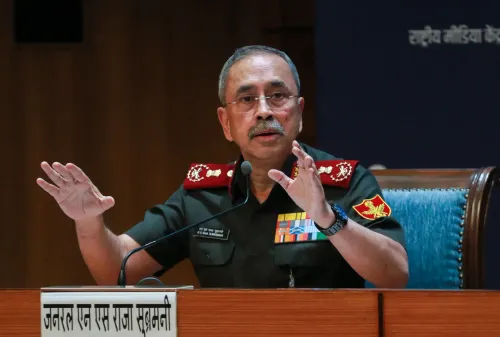
Chief of Defence Staff General NS Raja Subramani formally announced the decision on 4 November 2026 .
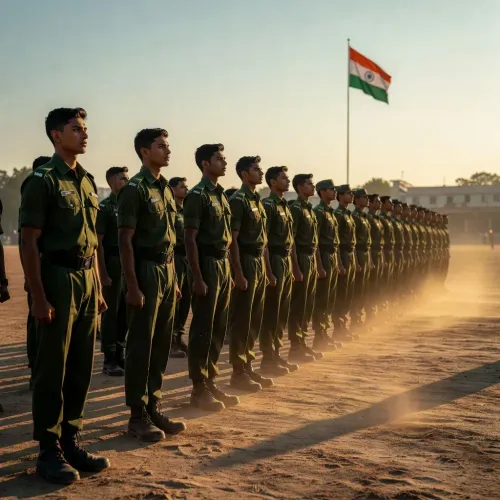
The first Agnipath batch is approaching its initial four-year tenure completion in November–December 2026 .
Aspirant Poppy Singh and others urged the government to also revise Agniveer salaries , calling remuneration a key unresolved concern.
The Union Cabinet's decision to extend the service tenure of Agniveers by an additional two years has drawn widespread appreciation from defence aspirants, coaching academy operators, and families of serving Agniveers across Bharatpur, Didwana, and Gulmarg. The move, announced on 4 November 2026, reshapes the exit trajectory for thousands of young personnel completing their initial four-year stint under the Agnipath scheme.
What the Revised Arrangement Entails
Under the updated framework approved by the Cabinet, 75 per cent of Agniveers — who were previously scheduled to leave after their initial four-year tenure — will now be offered a second engagement period of two years. The remaining 25 per cent will continue to be evaluated for induction into the regular armed forces after four years, based on merit. Crucially, Agniveers who complete the additional two-year engagement will also become eligible to apply for regular service, subject to prescribed objective selection criteria.
CDS Announces the Decision
Chief of Defence Staff General NS Raja Subramani formally announced the Cabinet's decision on 4 November 2026, calling it an important development for both the armed forces and for Agniveers themselves. The timing is significant: the first batch of recruits enrolled under the Agnipath scheme is approaching the end of its initial four-year tenure in November–December 2026, making the revised arrangement directly relevant to thousands of personnel imminently facing demobilisation.
Ground Reactions: Aspirants and Academies
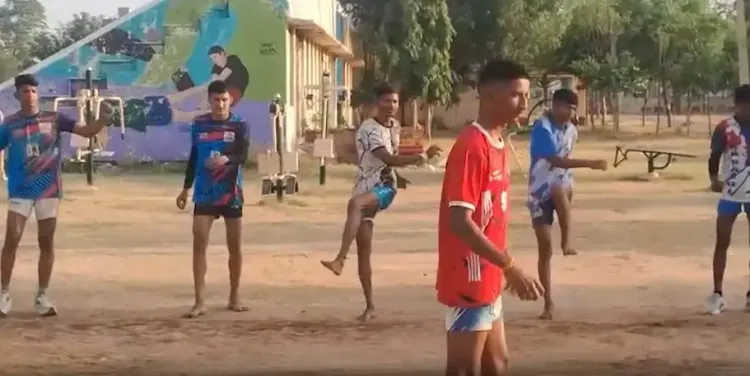
In Bharatpur, young defence aspirants described the extension as a morale boost. Deepak Khatoti, director of Ishwar Defence Academy, called the move encouraging and said it would motivate more youngsters to pursue military recruitment. Aspirant Shiv Singh said the extra two years would allow young people to serve the country longer, while fellow aspirant Brahma said the decision would build professional confidence and experience.
However, not all reactions were unconditional. Aspirant Poppy Singh welcomed the extension but flagged salary as an unresolved concern, particularly for candidates from middle-class households. He urged the government to revise Agniveer remuneration alongside the tenure extension.
Families in Gulmarg and Didwana Respond
In Didwana, Rajasthan, defence academy operator Dungar Ram Jakhar said the decision would keep candidates associated with the armed forces for a longer period. Parents including Ompal Singh and Jitendra Punia also discussed the implications for young recruits. In Gulmarg, Jammu and Kashmir, residents Syed Abbas and Syed Maroof said the additional two years would give their children another chance to serve the country and contribute to national security, describing the extension as a matter of pride and hope.
What This Means Going Forward
The revision addresses one of the most persistent criticisms of the Agnipath scheme — that a four-year window was too brief for recruits to build a meaningful career in uniform or accumulate sufficient skills. By creating a structured second engagement and a clear pathway to regular service, the Cabinet has signalled a willingness to recalibrate the scheme based on operational and social feedback. Whether salary concerns raised by aspirants like Poppy Singh will also be addressed remains to be seen.
Point of View
Which structurally transforms Agnipath from a fixed-term contract into something closer to a probationary intake. What the revision still does not address is the salary grievance raised even by supporters of the scheme; until remuneration is competitive with comparable civilian opportunities, the recruitment pipeline will remain dependent on aspiration rather than incentive.
NationPress
4 Nov 2026
Frequently Asked Questions
What is the Agnipath two-year extension announced in November 2026?
The Union Cabinet on 4 November 2026 approved a revised arrangement under which 75 per cent of Agniveers will be offered a second engagement of two years after completing their initial four-year tenure. Those who complete the extended period will also become eligible to apply for regular armed forces service, subject to selection criteria.
Who announced the revised Agnipath arrangement?
Chief of Defence Staff General NS Raja Subramani formally announced the Cabinet's decision on 4 November 2026, describing it as an important development for both the armed forces and for Agniveers.
How does the two-year extension affect the first Agnipath batch?
The first batch of Agniveers is approaching the end of its initial four-year tenure in November–December 2026. The revised arrangement directly benefits thousands of these personnel who were otherwise scheduled to leave the armed forces imminently.
What happens to the 25 per cent of Agniveers not given the extension?
The remaining 25 per cent of Agniveers continue under the original arrangement — they are evaluated for induction into the regular armed forces after four years, based on merit. This portion of the scheme is unchanged by the Cabinet decision.
Are there any concerns raised about the Agnipath extension?
Yes. While the extended tenure has been broadly welcomed, some aspirants including Poppy Singh have flagged salary as an unresolved issue. They argue that remuneration needs to be improved — especially for candidates from middle-class backgrounds — alongside the increase in service length.