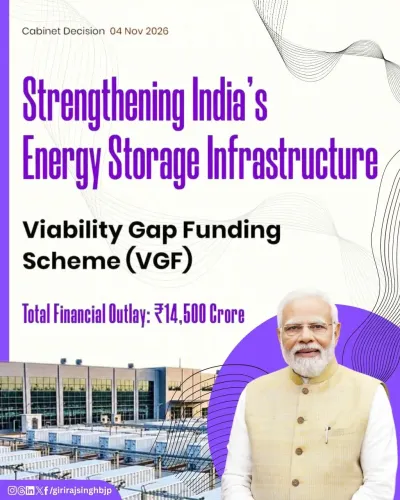
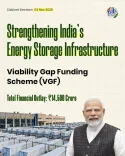
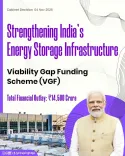
Cabinet clears ₹14,500 crore VGF scheme for 92 GWh grid-scale energy storage
Synopsis
The Union Cabinet has committed ₹14,500 crore to close India's most critical clean-energy gap — grid-scale storage. With a 411 GWh target by 2031-32 and a 40% domestic content mandate on batteries, this is not just a renewables push; it is a direct bet on building an Indian battery industry from the demand side.
Key Takeaways
The Union Cabinet approved a ₹14,500 crore VGF Scheme for grid-scale energy storage on 4 November 2026 .
The scheme targets 92 GWh of new storage capacity — equivalent to 170% of India's current grid-scale storage.
Breakdown: 60 GWh Hydro PSP, 30 GWh BESS, 2 GWh alternative technologies; total investment estimated at ₹97,600 crore .
India's grid-scale storage target is 411 GWh by 2031-32 ; this scheme directly addresses the gap.
BESS projects must meet a minimum 40% Domestic Content Requirement (DCR) to qualify for VGF support.
Capacity will be allocated via tariff-based competitive bidding open to public and private sector entities.
The Union Cabinet, chaired by Prime Minister Narendra Modi, on Wednesday, 4 November 2026, approved the Viability Gap Funding (VGF) Scheme for grid-scale energy storage systems, committing ₹14,500 crore in financial support over FY 2026-27 to FY 2030-31. The scheme targets the development of 92 GWh of new energy storage capacity across India, representing 170 per cent of the country's current grid-scale storage capacity.
What the Scheme Covers
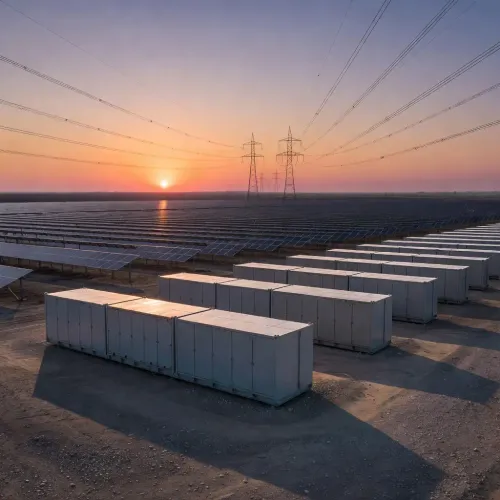
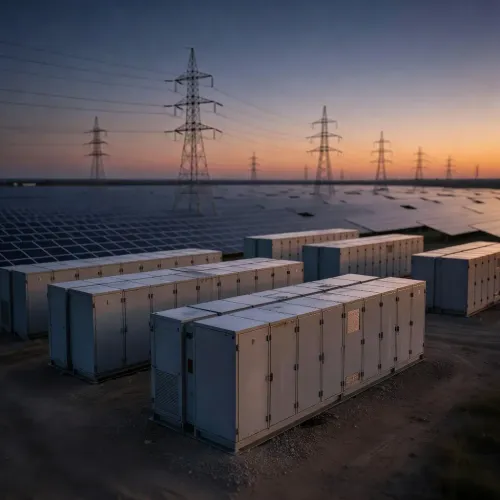
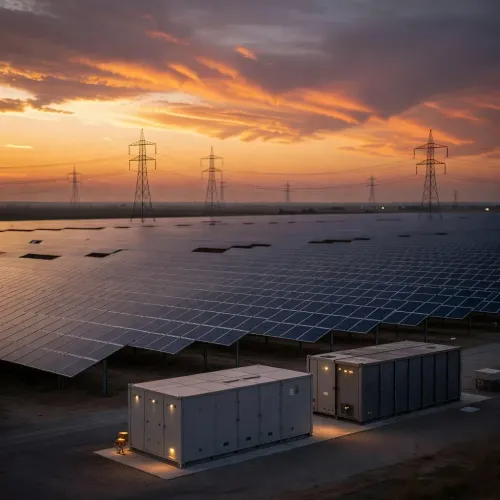
The approved framework envisages 60 GWh of Hydro Pumped Storage Plant (PSP) capacity, 30 GWh of Battery Energy Storage System (BESS) capacity, and 2 GWh through alternative energy storage technologies. Total estimated investment across these components stands at ₹97,600 crore, with the VGF support designed to bridge financial viability gaps and accelerate deployment.
Energy storage capacity will be allocated through a tariff-based competitive bidding process. Both public and private sector electricity distribution companies will be eligible for VGF support for BESS and Hydro PSP projects, while alternative technology projects will be open to both public and private sector entities.
Domestic Manufacturing Push
A central pillar of the scheme is reducing India's dependence on imported battery components. BESS projects under the scheme will be subject to a minimum Domestic Content Requirement (DCR) of 40 per cent, according to an official statement. This requirement is intended to stimulate indigenous manufacturing, generate opportunities for Indian industry, and complement existing supply-side incentives for battery production — consistent with the broader Atmanirbhar Bharat framework.
India's Energy Storage Gap and Why It Matters
India's grid-scale energy storage infrastructure currently lags far behind the capacity required to support its renewable energy ambitions. The government has set a target of 411 GWh of grid-scale energy storage capacity by 2031-32; the new scheme directly addresses the shortfall needed to reach that goal. Without large-scale storage, the variability of solar and wind generation creates balancing challenges that force continued reliance on conventional, often fossil fuel-based, generation.
This comes amid India's accelerating push to integrate renewables into its national grid, with installed renewable capacity expanding rapidly but storage infrastructure trailing behind. Notably, grid-scale BESS deployment in India has historically been constrained by high project costs — a gap the VGF mechanism is specifically designed to close.
Grid Stability and Long-Term Energy Security
Beyond bridging the renewable variability problem, the scheme is expected to strengthen overall grid stability and support round-the-clock power supply — a persistent challenge in many parts of the country. Officials stated that by accelerating grid-scale storage deployment, India will be better positioned to reduce dependence on conventional generation for balancing purposes, enhancing long-term energy security and advancing the vision of Viksit Bharat.
Point of View
500 crore in viability gap funding is an acknowledgement that the market alone will not solve this — project economics simply do not close without fiscal support at current tariff levels. The 40% domestic content requirement is the scheme's most consequential clause: it forces battery localisation through the demand side, something supply-side PLI incentives have not fully achieved. The harder question is execution speed — India's track record on competitive bidding timelines and project commissioning for large infrastructure is mixed, and a 2031-32 deadline for 411 GWh leaves little room for the delays that have plagued earlier renewable tenders.
NationPress
4 Nov 2026
Frequently Asked Questions
What is the VGF Scheme for grid-scale energy storage approved by the Cabinet?
The Viability Gap Funding (VGF) Scheme is a government initiative approved on 4 November 2026, providing ₹14,500 crore in financial support to develop 92 GWh of grid-scale energy storage capacity between FY 2026-27 and FY 2030-31. It covers hydro pumped storage, battery energy storage, and alternative storage technologies.
Why does India need grid-scale energy storage?
India needs large-scale storage to manage the variability of solar and wind power generation, which cannot supply electricity round-the-clock without a buffer. Without sufficient storage, grid operators must rely on conventional fossil-fuel-based plants for balancing, limiting the effective integration of renewables.
What is India's grid-scale energy storage target by 2031-32?
India's target is 411 GWh of grid-scale energy storage capacity by 2031-32, according to official statements. The newly approved scheme addresses 92 GWh of that requirement, representing 170% of the country's current installed grid-scale storage capacity.
What is the Domestic Content Requirement under the BESS scheme?
Battery Energy Storage System (BESS) projects seeking VGF support must source at least 40% of their components domestically. This requirement is designed to build an Indian battery manufacturing ecosystem and reduce dependence on imported components.
Who is eligible for VGF support under the scheme?
Public and private sector electricity distribution companies are eligible for VGF support for BESS and Hydro Pumped Storage Plant projects. Projects based on alternative energy storage technologies can be implemented by both public and private sector entities.