Calcutta HC dismisses PIL against Bengal anti-social act, cites absent Presidential nod

Synopsis
The Calcutta High Court shut down a PIL against West Bengal's sweeping new anti-social activities law — not on merit, but on timing. The court ruled that since Presidential assent is still pending, any challenge is premature. That means the real legal battle over a law that allows year-long preventive detention without conviction is yet to begin.
Key Takeaways
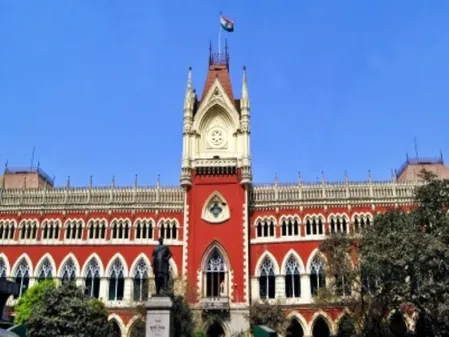
A Calcutta High Court division bench dismissed a PIL against the West Bengal Public Safety & Control of Anti-Social Activities Act, 2026 on 6 August 2026 .
The bench, led by Acting Chief Justice Tapabrata Chakraborty , ruled that no 'advance hearing' was possible as the Act awaits final assent from President Droupadi Murmu .
The PIL challenged a provision enabling preventive detention of up to one year for individuals deemed a public safety risk.
The Act also allows District Magistrates and senior police officers to issue externment orders removing persons from a district for up to one year.
Chief Minister Suvendu Adhikari has maintained the law targets only proven anti-social elements, not ordinary citizens.
Petitioners may refile once the Act is formally notified and implemented after Presidential approval.
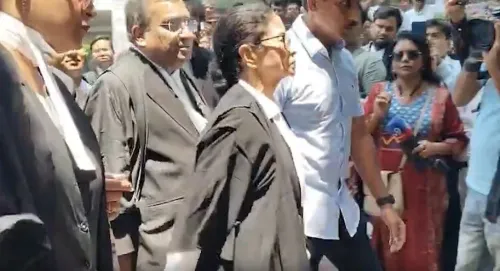
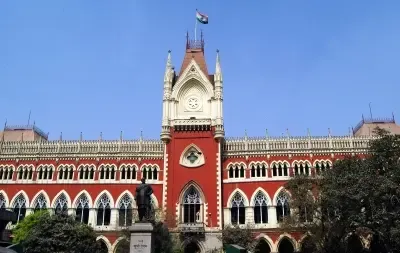
A division bench of the Calcutta High Court on Thursday, 6 August 2026, dismissed a public interest litigation (PIL) challenging the West Bengal Public Safety & Control of Anti-Social Activities Act, 2026, ruling that no hearing on the law's implications was possible since it had yet to receive final assent from the office of President Droupadi Murmu. The bench made clear that petitioners could return to court only after the Act is formally notified and implemented.
What the Court Said
The division bench, comprising Acting Chief Justice Tapabrata Chakraborty and Justice Partha Sarathi Chatterjee, held that entertaining an 'anticipatory' or 'advance' hearing on a law not yet in force would be legally untenable. Advocate General Surajit Nath Mitra had opened the hearing by informing the bench that Presidential approval was still pending, making any challenge to the Act's effectiveness premature.
The bench observed that once the state government issues a notification implementing the Act — following Presidential concurrence — or once any action is taken under it, the petitioners would be free to approach the court afresh.
What the PIL Challenged
The petitioner's primary grievance centred on a provision allowing police to place any individual deemed a threat to public safety under preventive detention for up to one year. The PIL flagged serious apprehensions about the potential misuse of this sweeping detention power, a concern echoed by opposition parties and sections of civil society since the Bill was passed in the West Bengal Legislative Assembly on 29 June 2026.
The law also empowers a District Magistrate or police officers of the rank of Superintendent or above to issue an 'externment order', compelling a person identified as a known criminal or troublemaker to vacate a specified area or an entire district for up to one year.
The Political Backdrop
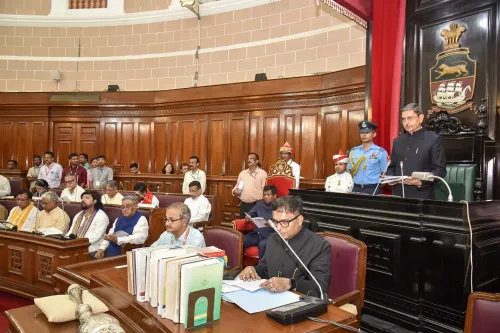
The Act became law after Governor R.N. Ravi gave his assent following its passage in the Assembly. Despite vocal opposition from political parties and civil liberties groups, the ruling Bharatiya Janata Party (BJP) has defended the legislation. Party leaders argued that preventive detention would only be invoked after due process, including an opportunity for the detained individual to present their case before a constituted advisory board.
Chief Minister Suvendu Adhikari has publicly stated that law-abiding citizens have nothing to fear, asserting that the Act is directed exclusively at 'proven anti-social elements, history-sheeters, rowdy elements, and individuals with proven charges of corruption.'
What Happens Next
The PIL's dismissal does not foreclose future legal challenges — it merely delays them. Critics argue the detention and externment provisions carry a high risk of misuse against political opponents or ordinary citizens, and legal challenges are widely expected once the Act receives Presidential assent and is operationalised. The court's position effectively shifts the battleground from anticipatory challenge to post-implementation scrutiny.
Point of View
And the advisory board mechanism the BJP cites as a safeguard has historically been a thin check on executive overreach. The real test will come when the Act is operationalised: who gets detained, under whose orders, and whether the courts move fast enough to matter. West Bengal's political climate, already charged, makes the misuse risk more than hypothetical.
NationPress
20 Sept 2026
Frequently Asked Questions
Why did the Calcutta High Court dismiss the PIL against the West Bengal anti-social act?
The court dismissed the PIL because the West Bengal Public Safety & Control of Anti-Social Activities Act, 2026 has not yet received final assent from President Droupadi Murmu, making any legal challenge premature. The bench held that an 'anticipatory' hearing on a law not yet in force was not permissible under law.
What does the West Bengal anti-social activities act allow?
The Act permits police to place individuals deemed a public safety risk under preventive detention for up to one year without a criminal conviction. It also empowers District Magistrates and senior police officers to issue externment orders, forcing a person to leave a specified area or district for up to one year.
When was the West Bengal anti-social activities act passed?
The West Bengal Public Safety & Control of Anti-Social Activities Act, 2026 was tabled and passed in the West Bengal Legislative Assembly on 29 June 2026. Governor R.N. Ravi subsequently gave his assent, but Presidential approval is still awaited.
Can petitioners challenge the law again in future?
Yes. The Calcutta High Court explicitly stated that once the Act is formally notified and implemented following Presidential assent, or once any action is taken under it, the petitioners are free to approach the court afresh with a fresh petition.
What safeguards does the BJP say exist against misuse of the detention provision?
The ruling Bharatiya Janata Party has argued that preventive detention under the Act can only be invoked after due process, including giving the detained individual an opportunity to present their case before an advisory board constituted to assess the reasonableness of the detention.