Can Welfare Alone Secure DMK's Electoral Success?
Synopsis
In a striking critique, Congress leader Praveen Chakravarty argues that the DMK’s welfare initiatives, while commendable, cannot single-handedly guarantee electoral success. He points out historical evidence suggesting that welfare measures don't necessarily translate into votes, highlighting the complexities of political alliances ahead of the upcoming Assembly elections.
Key Takeaways
Welfare measures alone cannot guarantee electoral success.
Historical evidence shows mixed results for governments relying solely on welfare.
Political alliances are under strain ahead of elections.
Governance strategy is crucial alongside welfare initiatives.
Calls for greater representation within coalition governments highlight internal tensions.
Chennai, Feb 15 (NationPress) Senior Congress leader Praveen Chakravarty made a sharp critique of the ruling DMK’s prominent women’s assistance program, proclaiming that while the initiative is admirable, it would be naive to think that welfare policies alone can secure electoral success.
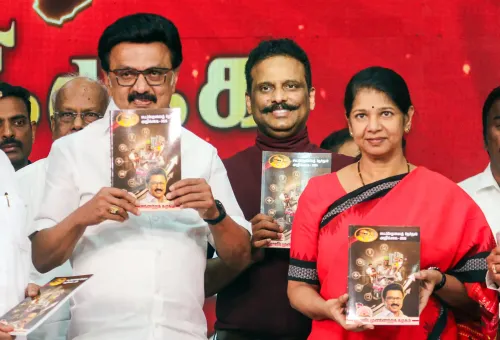
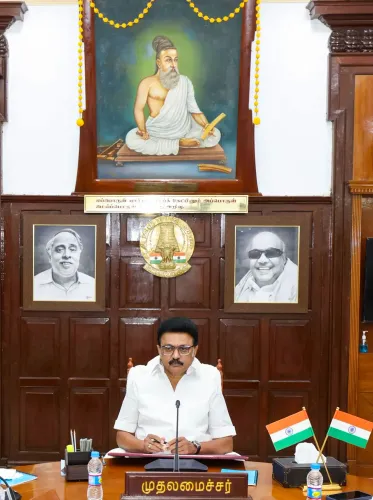
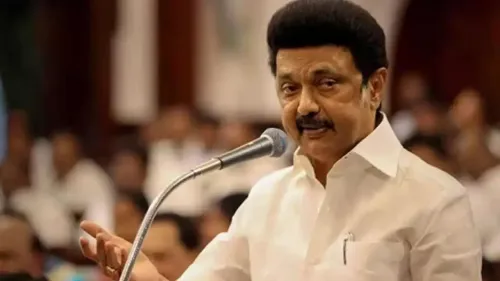
Chakravarty, who heads the Professionals’ Congress and Data Analytics division, expressed these views in a social media update shortly after Chief Minister M.K. Stalin revealed the transfer of Rs 5,000 each to 1.31 crore women beneficiaries as part of the Kalaignar Magalir Urimai Thogai scheme.
“The Magalir Urimai Thogai initiative is a commendable welfare effort; it is commendable that it has been put into action. However, it is foolhardy to assume that this alone will bring about electoral triumph,” Chakravarty remarked.
He highlighted that in the past three years, only four out of nine administrations in major states that introduced similar direct benefit schemes have managed to remain in power, indicating that welfare programs do not automatically lead to electoral victories.
Chakravarty provided evidence to back his point, noting that five governments that implemented comparable initiatives were voted out despite offering direct financial aid to women and economically disadvantaged groups.
He also pointed to the Congress’ losses in Rajasthan and Chhattisgarh in 2023, despite rolling out programs like “Mehangai Rahat” and “Griha Lakshmi Yojana”, which aimed to provide economic relief and social security to beneficiaries.
Additionally, he referenced the Bharat Rashtra Samithi (BRS) government's defeat in Telangana, where welfare strategies played a significant role in its campaign narrative and were expected to solidify electoral support.
His comments arise amid escalating political tensions between the DMK and its long-standing partner, the Congress, particularly concerning power-sharing in Tamil Nadu and the Congress party’s plea for a larger role in governance.
A faction of Congress leaders has been vocally requesting cabinet positions in the DMK-led government, a request that the DMK leadership has consistently denied, indicating underlying friction within the coalition.
On Saturday, Chief Minister Stalin asserted that the decision to credit Rs 5,000 to each beneficiary had “surprised the populace and stunned the adversaries” who allegedly sought to disrupt the scheme before the Assembly elections.
The Tamil Nadu government clarified that the total amount comprised three months’ aid of Rs 3,000 (Rs 1,000 per month) plus an additional Rs 2,000 to help women manage summer expenses and household costs.
Stalin also accused political rivals of conspiring to halt the scheme, vowing that he would not allow it to be interrupted under any circumstances and reaffirming his government’s dedication to welfare initiatives.
Chakravarty’s statements were interpreted as a reaction to recent remarks by senior DMK leader R.S. Bharathi, who indicated that the disbursement of funds would quiet discussions of power-sharing and political negotiations within the alliance.
As the Assembly elections draw near, this exchange underscores the rising strains within the DMK–Congress alliance regarding both welfare policies and political strategies, despite both parties remaining officially united.
Point of View
Praveen Chakravarty's comments reflect a growing sentiment that welfare schemes, while vital, must be complemented by broader governance strategies to ensure electoral success. His analysis underscores the need for political parties to reassess their reliance on welfare policies and to engage with voters on a deeper level. The evolving dynamics within the DMK-Congress alliance further illustrate the complexities at play as elections approach.
NationPress
6 Sept 2026
Frequently Asked Questions
What did Praveen Chakravarty say about DMK's welfare scheme?
He stated that while the welfare initiative is commendable, it is naive to believe it can single-handedly ensure electoral victory.
How many governments retained power after implementing similar schemes?
Only four out of nine governments in major states managed to retain power after introducing similar direct benefit schemes.
What historical examples did Chakravarty cite?
He referenced the Congress' defeats in Rajasthan and Chhattisgarh in 2023, despite implementing beneficial welfare programs.
What are the implications of Chakravarty's remarks?
His comments suggest a need for political parties to balance welfare measures with effective governance to achieve electoral success.
What tensions exist between the DMK and Congress?
There are growing political tensions regarding power-sharing arrangements, with Congress leaders demanding greater representation in the DMK-led government.