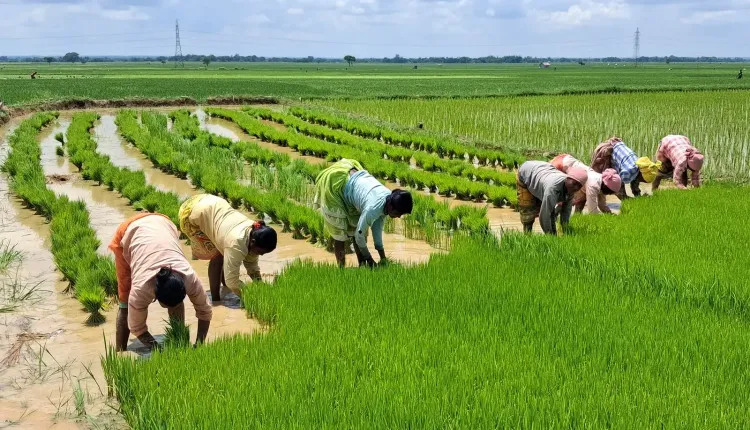
Women farmers drive 60-80% of India's farm work — and policy is finally catching up
Synopsis
Indian women do 60–80% of all farm work but hold almost no seats at the policy table. The Bharatiya Kisan Sangh's first-ever national women farmers' conclave — timed to the UN's International Year of the Woman Farmer 2026 — is the clearest sign yet that 'recognition' is no longer enough, and the demand has shifted to enforceable institutional representation.
Key Takeaways
The Bharatiya Kisan Sangh (BKS) held its first-ever national conclave of women farmers on 29 September 2026 in New Delhi .
Women perform 60–80% of India's agricultural activities but are largely absent from farm policy bodies, according to BKS.
The UN has designated 2026 as the International Year of the Woman Farmer (IYWF 2026) , calling for structural reform on land rights, credit, and decision-making.
Women operate over 20.4 million agricultural holdings — about 14% of all operational holdings in India, per the Agriculture Census .
Over 10.05 crore women have been mobilised into 90 lakh SHGs under DAY-NRLM; more than 1.48 crore have become Lakhpati Didis .
BKS is demanding mandatory women's representation in agricultural marketing boards, FPOs, cooperative societies, and district agricultural committees.
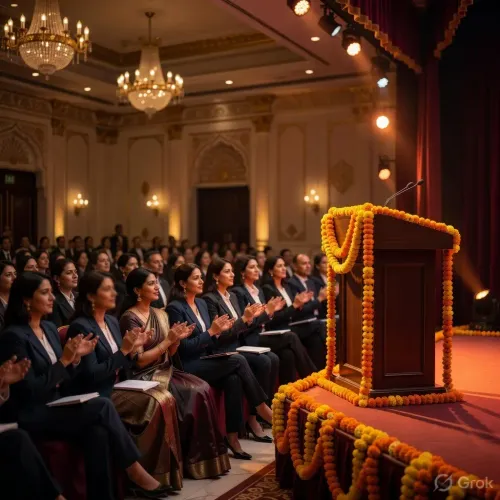
Women farmers in India perform between 60 and 80 per cent of all agricultural activities — from sowing and harvesting to animal husbandry — yet remain largely absent from the policy tables that govern their livelihoods. That gap is now drawing concerted institutional attention, as the Bharatiya Kisan Sangh (BKS) held its first-ever national conclave of women farmers on Wednesday, 29 September 2026 in New Delhi, demanding greater representation in agricultural policymaking and formal recognition of women's contributions to farming, livestock, and fisheries.
Why This Moment Matters
The BKS conclave is not happening in isolation. The United Nations has declared 2026 the International Year of the Woman Farmer (IYWF 2026), a global mandate for governments to move beyond symbolic recognition and towards structural reform. The Food and Agriculture Organisation (FAO) has underlined the urgency: women constituted roughly 40 per cent of the global agrifood workforce as of 2021, yet continue to face significant disadvantages in productivity, wages, and access to land, credit, and technology.
In India, the disconnect is similarly stark. According to the official Agriculture Census, women operate more than 20.4 million agricultural holdings, representing approximately 14 per cent of all operational holdings in the country. Despite this scale, agricultural policy discussions, market committees, farmers' organisations, and cooperative leadership structures reportedly remain dominated by men.
This comes amid broader national conversations about gender representation, accelerated by the passage of the women's reservation legislation. Indian cinema had long foreshadowed the centrality of women to the land — from the multi-starrer Mother India (1957) to the crowd-funded Manthan (1976) — yet the real-life recognition of women's farm labour lagged for decades behind its cultural portrayal.
Government Programmes Targeting Women Farmers
The Centre has built a substantial programmatic foundation for rural women over the past decade. The Deendayal Antyodaya Yojana – National Rural Livelihoods Mission (DAY-NRLM) has mobilised over 10.05 crore women into more than 90 lakh Self-Help Groups (SHGs), according to the Ministry of Rural Development. These groups have improved access to savings, credit, and entrepreneurship for women across rural India.
Closely linked is the Lakhpati Didi initiative, which targets SHG members earning at least ₹1 lakh annually in a sustainable manner. The government has reported that more than 1.48 crore women have already become Lakhpati Didis. The programme promotes farm diversification, livestock, food processing, and value addition — directly relevant to the women farmer economy.
The initiative is supported by Krishi Sakhis, community resource persons who transfer agricultural knowledge and promote climate-resilient farming practices at the grassroots level. Other targeted schemes include Agri-Clinics and Agri-Business Centres (ACABC), which train women in agriculture and offer higher subsidies for women-led businesses; the Mission for Integrated Development of Horticulture (MIDH), which provides elevated subsidies on tools and equipment for women; and the National Mission on Oilseeds and Oil Palm (NMOOP), which offers preferential subsidies for women in oilseed cultivation.
Women farmers have also gained expanded access to Kisan Credit Cards, SHG bank linkages, producer organisations, and formal bank credit since 2013–14. Direct benefit transfers have brought many rural women into the formal financial system wherever land records permit them to be recognised as beneficiaries.
Where the Gaps Remain
Notably, the scale of government programming has not yet translated into proportionate institutional presence. Critics and farmer organisations argue that women's representation on agricultural marketing boards, cooperative societies, water-user associations, Farmer Producer Organisations (FPOs), district agricultural committees, and policy consultations remains token at best. The BKS conclave specifically called for mandatory representation in these bodies — a structural demand that goes beyond welfare schemes.
The UN's IYWF 2026 framework targets precisely these persistent structural inequalities: land rights, access to finance, technology, education, and decision-making. FAO data suggest that closing the gender gap in agriculture could raise output on women-operated farms significantly, with multiplier effects on food security and rural poverty reduction.
What Needs to Happen Next
Programmes like DAY-NRLM and Lakhpati Didi have demonstrated that economic mobilisation of rural women at scale is achievable. The harder challenge — ensuring that mobilisation converts into institutional voice — remains work in progress. The Women Farmers' Forum, established to promote contributions to the agricultural value chain, is one vehicle, but analysts note that advisory forums carry limited weight without mandatory representation mandates backed by legislation.
The BKS conclave on 29 September 2026 signals that farmer organisations themselves are now pushing for this next step. With the UN's IYWF 2026 framework providing international momentum and domestic policy attention on gender rising, the conditions for a structural shift in women's agricultural representation are arguably more favourable than at any prior point — though translating political will into enforceable institutional change remains the defining challenge ahead.
Point of View
1.48 crore Lakhpati Didis, Krishi Sakhis, Kisan Credit Cards — yet the BKS conclave's central demand, mandatory institutional representation, exposes the gap between welfare delivery and structural power. Schemes that transfer money or skills without transferring decision-making authority will, by design, leave the governance architecture intact and male-dominated. The UN's IYWF 2026 framework is a useful international lever, but the harder ask is domestic: amending the rules of agricultural marketing boards, FPOs, and cooperative societies to require women's seats, not just women's participation. Without that, another decade of well-funded programmes may again fail to shift who actually makes farm policy.
NationPress
29 Sept 2026
Frequently Asked Questions
What is the BKS national conclave of women farmers about?
The Bharatiya Kisan Sangh (BKS) held its first-ever national conclave of women farmers on 29 September 2026 in New Delhi to demand greater representation of women in agricultural policymaking and formal recognition of their contributions to farming, livestock, and fisheries. The conclave coincides with the UN's declaration of 2026 as the International Year of the Woman Farmer.
What share of India's agricultural work do women perform?
According to BKS, women undertake between 60 and 80 per cent of agricultural activities in India, including sowing, planting, harvesting, weed control, and animal husbandry. Despite this, they remain significantly underrepresented in farm policy bodies and cooperative leadership structures.
What is the International Year of the Woman Farmer 2026?
The United Nations has designated 2026 as the International Year of the Woman Farmer (IYWF 2026) to address persistent gender gaps in land rights, finance, technology, education, and agricultural decision-making. The FAO has noted that women constituted about 40 per cent of the global agrifood workforce in 2021 but continue to face structural disadvantages.
What government schemes support women farmers in India?
Key schemes include the Deendayal Antyodaya Yojana – National Rural Livelihoods Mission (DAY-NRLM), which has mobilised over 10.05 crore women into 90 lakh SHGs, and the Lakhpati Didi initiative, which has helped more than 1.48 crore women earn at least ₹1 lakh annually. Other programmes include ACABC, MIDH, NMOOP, Krishi Sakhis, and expanded access to Kisan Credit Cards.
What institutional changes are women farmer groups demanding?
Farmer organisations, including BKS, are calling for mandatory representation of women in agricultural marketing boards, cooperative societies, water-user associations, Farmer Producer Organisations (FPOs), district agricultural committees, and national policy consultations — moving beyond welfare schemes to enforceable structural inclusion.