World Blood Donor Day 2025: Centre orders govt offices to run blood donation drives
Synopsis
India needs 14.6 million units of blood a year but has only 8.9 million registered donors — a gap that reportedly costs nearly 12,000 lives daily. The Centre's directive to mobilise every government office for World Blood Donor Day on 14 June is an acknowledgement of the crisis, but critics and experts warn that one-day drives alone cannot fix a structural deficit rooted in myths, fear, and patchy camp infrastructure.
Key Takeaways
The Union government has directed all Ministries and attached offices to observe World Blood Donor Day on 14 June 2025 .
The Ministry of Health and Family Welfare issued the order on 22 May , calling for donation camps, awareness drives, and media outreach.
India requires an estimated 14.6 million units of blood annually, but has only 8.9 million registered donors — a shortfall of roughly one million units per year.
An estimated 12,000 patients die every day across India due to lack of timely access to safe blood.
The WHO recommends that at least 1% of a country's population donate blood; India's current donor base falls well short of that benchmark.
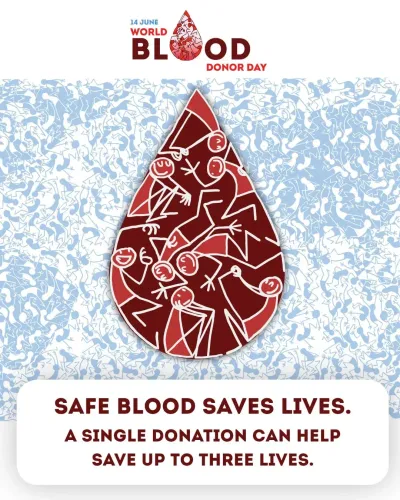
One unit of blood, split into components, can save up to three lives .
The Union government has directed all its Ministries, departments, subordinate and attached offices, and autonomous bodies to observe World Blood Donor Day on 14 June, with the explicit goal of boosting voluntary blood donation across India. The directive, issued by the Ministry of Health and Family Welfare in an order dated 22 May, calls for 'suitable programmes' including awareness activities, voluntary blood donation camps, and community outreach efforts.
This Year's Theme and the Government's Call to Action
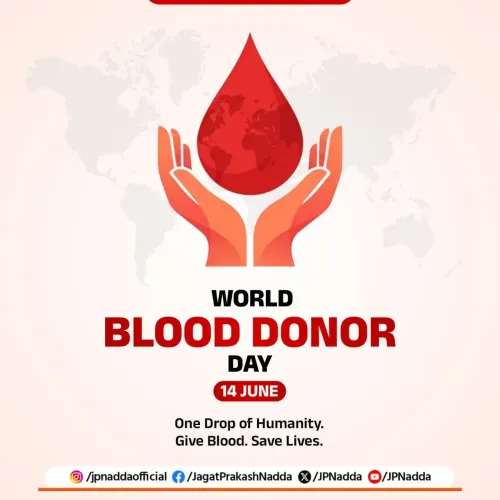
The theme for World Blood Donor Day 2025 is: 'One Drop of Humanity, Give Blood, Save Lives'. Ministries have been urged to amplify the campaign message across social, print, and electronic media to drive community engagement. The move reflects a recognition at the highest levels of government that India's blood supply gap cannot be closed without sustained institutional mobilisation.
How Severe Is India's Blood Shortage
According to government data cited by the National Blood Transfusion Council in a 2018 study — based on a projected population of 1.31 billion in 2017 — India requires 14.6 million units of blood annually. With India's estimated population now at 1.46 billion in 2025, experts note that the actual requirement has risen proportionally since then.
Despite voluntary donations and contributions from family members and relatives of patients, a critical shortage persists. It is estimated that nearly 12,000 patients die every day across the country due to lack of timely access to safe blood — across scenarios ranging from accident trauma to complications in cancer care and childbirth.
Why the Gap Persists
The World Health Organisation (WHO) recommends that at least 1% of a country's population donate blood to meet minimum needs — translating to a target of at least 14 million donors in India. However, the number of registered blood donors in the country currently stands at only 8.9 million, leaving a shortfall of roughly one million units per year.
Experts attribute the gap to a combination of low awareness, persistent myths around blood donation, fear of the procedure, and infrequent donation camps — particularly in smaller towns and rural areas. This is not a new problem; successive governments have flagged the shortage, yet the donor base has not grown fast enough to close the deficit.
The Life-Saving Case for Donating Blood
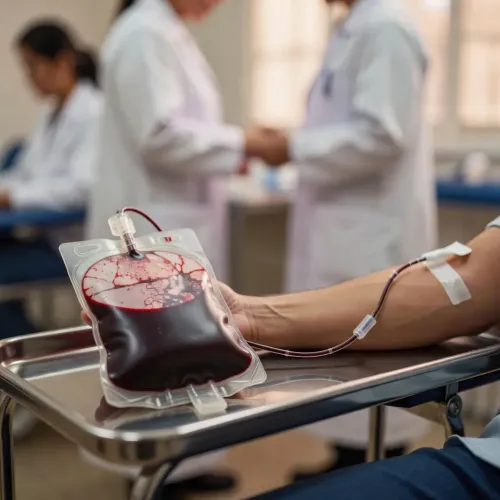
Experts emphasise that a single unit of blood, when separated into its components — red cells, plasma, and platelets — can save the lives of up to three people. The beneficiaries can range from a cancer patient requiring platelets, to a road accident victim needing red cells, to a newborn requiring plasma. This component therapy model makes every donation significantly more impactful than commonly understood.
What the Government Expects Next
The Centre hopes that the coordinated observance of World Blood Donor Day across government offices will generate a measurable uptick in voluntary donations and public awareness. Whether a single-day institutional push can meaningfully shift deeply entrenched social attitudes toward blood donation, however, remains to be seen. Sustained year-round camp infrastructure and digital donor registration drives are likely needed to make a lasting dent in the deficit.
Point of View
And a memo asking government offices to hold camps on 14 June will not, by itself, change that. What is missing is a funded, permanent donor registry with digital enrolment, mandatory component therapy adoption at district hospitals, and a national myth-busting campaign that runs beyond a single awareness day. Until those foundations are in place, the 12,000 daily deaths attributed to blood shortages will remain a damning, largely unaddressed statistic.
NationPress
24 Sept 2026
Frequently Asked Questions
Why has the Centre directed government offices to observe World Blood Donor Day 2025?
The Union government issued the directive to boost voluntary blood donation and bridge India's critical blood supply gap. With an estimated shortfall of nearly one million units per year and around 12,000 deaths daily linked to lack of timely blood access, the Centre has asked all Ministries and attached offices to organise donation camps, awareness activities, and media outreach on 14 June 2025.
How much blood does India need annually and how short is it?
According to a 2018 National Blood Transfusion Council study, India requires 14.6 million units of blood annually — a figure based on a 2017 population estimate of 1.31 billion. With the population now at approximately 1.46 billion, experts say the actual need is higher. India currently has only 8.9 million registered donors, leaving a shortfall of roughly one million units per year.
What is the theme of World Blood Donor Day 2025?
The theme for World Blood Donor Day 2025 is 'One Drop of Humanity, Give Blood, Save Lives'. The day is observed globally on 14 June each year to raise awareness about the need for safe blood and blood products, and to thank voluntary, unpaid blood donors.
How many lives can one unit of donated blood save?
According to experts, a single unit of blood — when separated into red cells, plasma, and platelets — can save the lives of up to three people. Recipients can include cancer patients, road accident victims, and newborns, depending on which component they require.
What does the WHO recommend about blood donation rates?
The World Health Organisation recommends that at least 1% of a country's population donate blood to meet that country's minimum needs. For India, that translates to a target of at least 14 million donors — significantly higher than the current registered base of 8.9 million.