Kishan Reddy: Centre to give 3-month ration quota at once
Synopsis
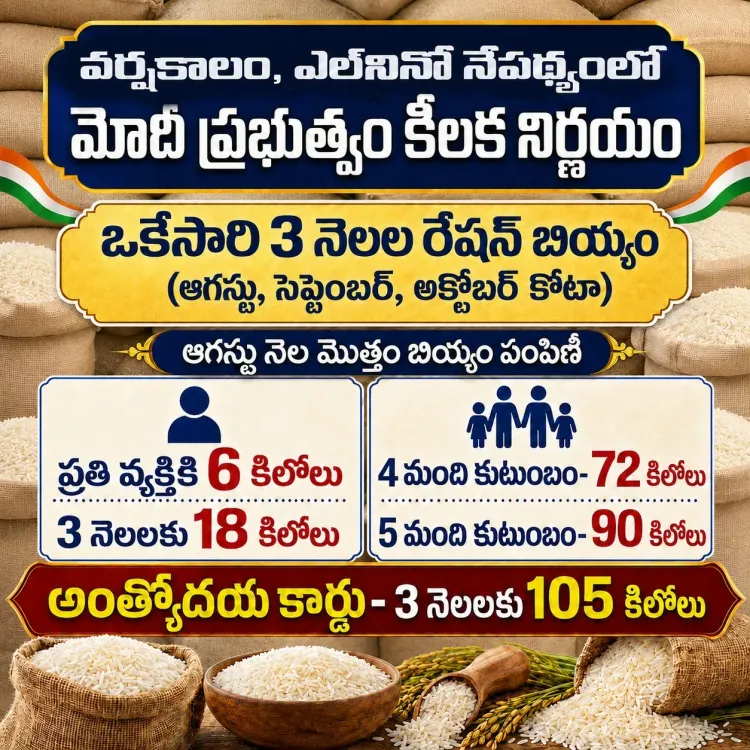
The central government has decided to release three months of ration rice — August, September, and October — in one go, citing monsoon disruptions and El Niño. Regular beneficiaries get 18 kg and Antyodaya families get 105 kg upfront. Union Minister G. Kishan Reddy announced the decision on 21 July 2026.
Key Takeaways
The Modi government will distribute August, September, and October ration quotas simultaneously to prevent monsoon and El Niño-related supply disruptions.
Each regular ration-card beneficiary will receive 18 kg of rice (6 kg per month × 3 months) in one advance release.
Antyodaya Anna Yojana cardholders will receive 105 kg per family (35 kg per month × 3 months) in one go.
Other essential commodities allocated for those three months will also be distributed alongside rice.
Beneficiaries can collect their rice from fair-price shops throughout August under the new arrangement.
The decision builds on the precedent set by the PM Garib Kalyan Anna Yojana of using advance bulk releases to buffer vulnerable households against supply shocks.
Union Coal and Mines Minister G. Kishan Reddy announced on Tuesday, 21 July 2026 that the central government, led by Prime Minister Narendra Modi, has taken a key decision to distribute three months of ration rice simultaneously — covering August, September, and October — to prevent any disruption in public distribution during the monsoon season and amid El Niño weather conditions.
Context
Posting in Telugu, the minister stated: 'వర్షకాలం, ఎల్నినో పరిస్థితుల నేపథ్యంలో రేషన్ బియ్యం సరఫరాలో ప్రజలకు ఎలాంటి ఇబ్బంది లేకుండా ఉండేందుకు' ('To ensure no hardship to people in the supply of ration rice against the backdrop of the rainy season and El Niño conditions'), the central government has made a critical decision. The advance distribution means beneficiaries can collect their rice from fair-price shops throughout the month of August itself.
The announcement is directed at ration-card holders across the country, with the minister framing it as a proactive step by the Modi government to insulate vulnerable households from supply-chain disruptions that monsoon logistics and climate variability can cause.
Policy Backdrop
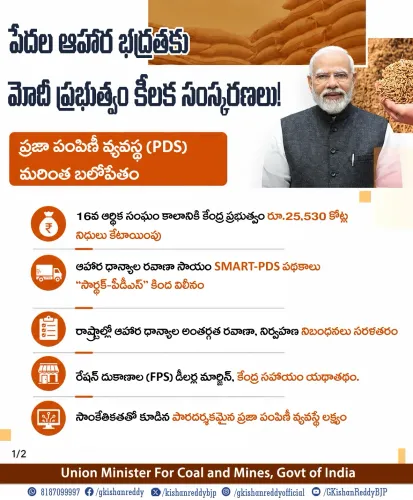
The decision operates within the framework of the National Food Security Act (NFSA), 2013, which legally entitles up to 75 per cent of the rural population and 50 per cent of the urban population to subsidised foodgrains through the Public Distribution System (PDS). Under the regular entitlement, each beneficiary receives 6 kg of rice per month; under the new order, all three months' quota — totalling 18 kg per beneficiary — will be released at once.
Antyodaya Anna Yojana cardholders, who represent the poorest households under the PDS, receive a higher entitlement of 35 kg per month. For them, the three-month advance release amounts to 105 kg per family. The post also clarifies that other essential commodities allocated for those months will likewise be made available alongside rice. The pattern of advance or bulk releases during monsoon and harvest uncertainties has precedent: the PM Garib Kalyan Anna Yojana, launched in 2020 during the COVID-19 pandemic, similarly used bulk grain releases to buffer vulnerable populations against supply shocks.
Stakeholders and Impact
The primary beneficiaries are ration-card holders — both regular NFSA cardholders and Antyodaya families — who depend on fair-price shops for subsidised foodgrains. For Antyodaya households, the 105-kg advance allocation represents a significant one-time uplift in food security during a climatically uncertain period. Fair-price shop dealers will need to manage larger-than-usual stock movements and ensure adequate storage at the local level.
State governments play a critical role in the logistics: they are responsible for lifting their allocated quotas from Food Corporation of India (FCI) godowns and ensuring last-mile delivery. The success of the three-month advance release will depend on how swiftly state food departments coordinate the physical movement of grain during the monsoon months.
What's Next
State food departments are expected to issue operational orders to district-level officials and fair-price shop networks to begin the advance distribution immediately. The government's buffer-stock position and offtake data are likely to be scrutinised in parliamentary discussions during the monsoon session. How efficiently the three-month quota reaches beneficiaries in flood-prone or remote regions will serve as a key test of the policy's intent — and could shape future decisions on pre-emptive PDS releases in the face of climate-driven supply risks.
Point of View
While reinforcing the BJP's welfare-delivery narrative ahead of any state electoral cycles. By anchoring the announcement to El Niño and the rainy season, the government frames a logistical convenience as a climate-responsive welfare measure, which is a messaging choice as much as a policy one. The use of a minister from Telangana to communicate the decision in Telugu signals a deliberate outreach to a state where the BJP is working to expand its footprint. Longer term, the normalisation of advance bulk releases — rather than structural improvements to PDS logistics — raises questions about whether the system is being patched rather than upgraded.
NationPress
20 Oct 2026
Frequently Asked Questions
What is the 3-month advance ration rice decision announced in July 2026?
The central government has decided to distribute the ration rice quota for August, September, and October 2026 all at once, so beneficiaries can collect three months' worth of rice from fair-price shops in August itself, without waiting month by month.
How much rice will each ration card holder get under the advance distribution?
Each regular ration-card beneficiary will receive 18 kg of rice in one go — calculated at 6 kg per month for three months. Antyodaya Anna Yojana cardholders will receive 105 kg per family, at 35 kg per month for three months.
Why is the government releasing three months of ration at once?
The government cited the monsoon season and El Niño weather conditions as reasons that could disrupt the normal monthly supply of ration rice. The advance release is intended to ensure no beneficiary faces a shortage due to logistical challenges during the rainy season.
Who are Antyodaya Anna Yojana cardholders and what do they get?
Antyodaya Anna Yojana cardholders are families identified as the poorest of the poor under the Public Distribution System. Under this advance release, they will receive 105 kg of rice per family — covering three months at 35 kg per month — along with other essential commodities allocated for those months.
Will other ration commodities also be distributed along with rice?
Yes. The announcement clarifies that other essential commodities allocated for August, September, and October will also be made available to beneficiaries alongside the advance rice distribution.