Delhi-NCR vehicle replacement scheme: Centre signs first MOU with Switch Mobility
Synopsis
The Centre's push to clean up Delhi-NCR's commercial vehicle fleet has moved from policy to contract: Switch Mobility, an Ashok Leyland subsidiary, is now the first OEM signed on to replace ageing BS-IV trucks and buses with BS-VI or electric alternatives — backed by an 8% price cut, 5% interest subvention, and a decade-long motor vehicle tax concession from state governments.
Key Takeaways
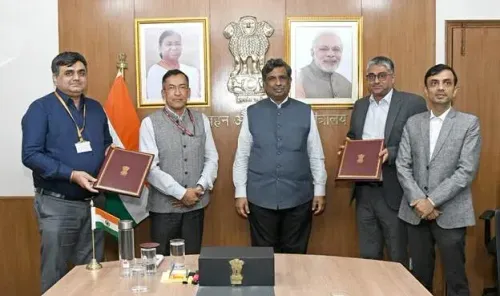
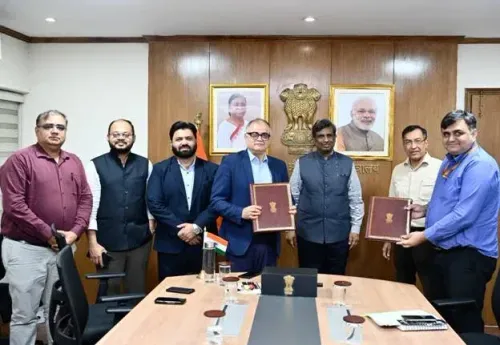
The Ministry of Road Transport and Highways signed its first MoU under the vehicle replacement scheme on 15 June with Switch Mobility , a subsidiary of Ashok Leyland .
Switch Mobility is the first OEM to partner with the government, offering an 8 per cent discount on eligible trucks and buses.
The Central Government will provide a 5 per cent interest subvention and fixed monthly fuel vouchers for five years .
Participating states will offer up to 100 per cent concession on motor vehicle tax for ten years and waive registration fees.
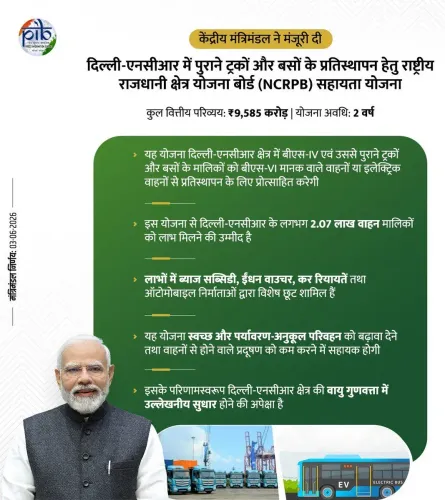
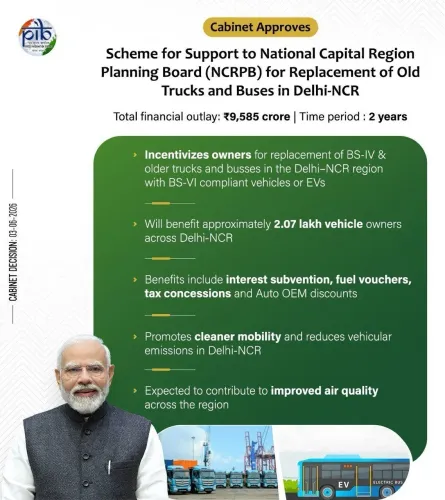
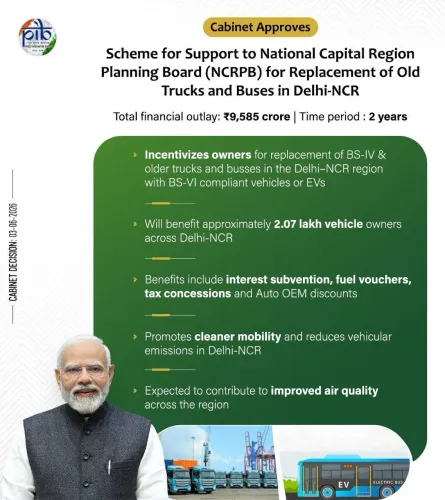
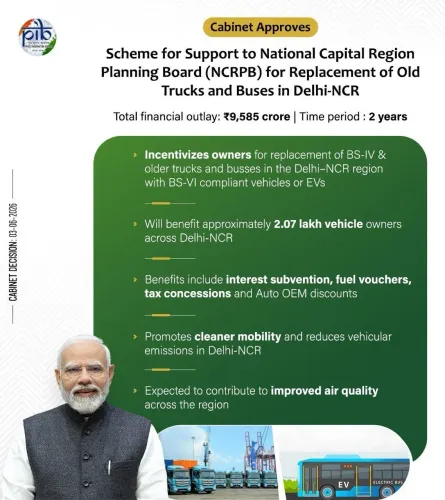
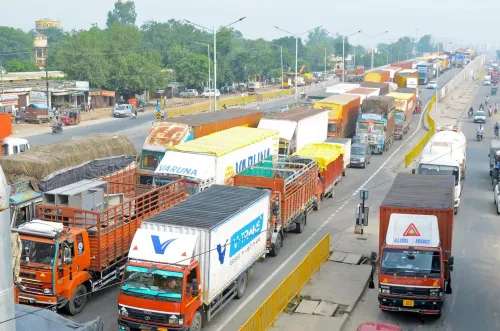
The scheme targets BS-IV or older commercial vehicles registered in Delhi-NCR , encouraging replacement with BS-VI or electric vehicles.
More OEMs are expected to join the scheme in the coming days, widening its reach.
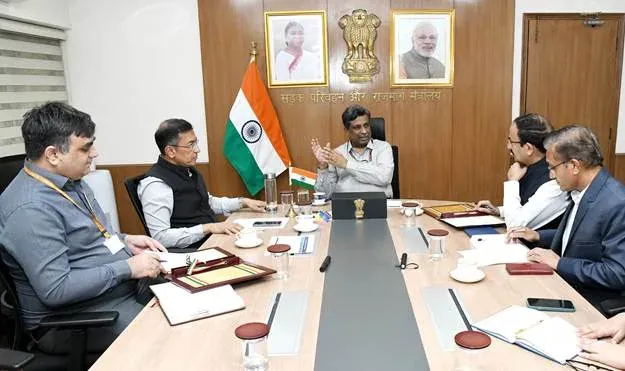
The Ministry of Road Transport and Highways signed its first Memorandum of Understanding (MoU) under the Centre's vehicle replacement scheme on Monday, 15 June, partnering with Switch Mobility, a subsidiary of Ashok Leyland, to replace ageing trucks and buses in the Delhi-NCR region with cleaner alternatives at subsidised prices. The signing marks the formal launch of an initiative designed to curb vehicular pollution by retiring Bharat Stage-IV (BS-IV) or older commercial vehicles from the capital's roads.
What the MoU entails
Under the agreement, Switch Mobility becomes the first Original Equipment Manufacturer (OEM) to formally join the scheme. The company will offer an 8 per cent discount on the ex-showroom price of eligible trucks and buses purchased under the programme. For electric vehicles, the discount will be capped at the rate applicable to an equivalent Internal Combustion Engine (ICE) vehicle of the same Gross Vehicle Weight (GVW) category, according to an official statement.
Incentives stacked across Centre and states
Beyond the OEM discount, the Central Government will provide a 5 per cent interest subvention and fixed monthly fuel vouchers for a period of five years. Participating state governments will additionally offer up to 100 per cent concession on motor vehicle tax for ten years, along with a waiver of registration fees for eligible beneficiaries. The combined package is structured to meaningfully lower the total cost of ownership for fleet operators making the switch.
Who qualifies and what they must upgrade to
The scheme targets owners of trucks and buses registered in Delhi-NCR that comply with BS-IV or earlier emission norms. Eligible owners can replace their vehicles with those meeting Bharat Stage-VI (BS-VI) or stricter standards, or opt for fully electric alternatives. The dual-pathway approach — cleaner ICE or zero-emission — gives fleet operators flexibility while pushing the overall emission profile of the region's commercial transport downward.
What comes next
The Ministry stated that more automobile OEMs are expected to join the scheme in the coming days, broadening participation and accelerating the adoption of cleaner transport technologies across the region. The Delhi-NCR airshed, long ranked among the world's most polluted urban zones, has been a focal point for successive government interventions on vehicular emissions; this scheme adds a direct financial incentive layer that earlier mandates lacked.
Point of View
But the scheme's real test lies in uptake. Delhi-NCR fleet operators — many running thin margins — have historically resisted replacement mandates without sufficiently deep financial cushions; an 8% OEM discount plus interest subvention may help, but the cap on EV discounts to ICE-equivalent levels could blunt the push toward zero-emission vehicles precisely where it matters most. The ten-year motor vehicle tax concession from states is the most structurally significant incentive here, yet its value depends entirely on which state governments actually opt in. With more OEMs yet to sign, the scheme's coverage remains narrow for now.
NationPress
23 Sept 2026
Frequently Asked Questions
What is the Delhi-NCR vehicle replacement scheme?
It is a Central Government initiative to replace old trucks and buses in the Delhi-NCR region — those meeting BS-IV or earlier emission norms — with newer BS-VI compliant or electric vehicles, using a package of OEM discounts, interest subvention, fuel vouchers, and state-level tax concessions to incentivise fleet owners.
Who is Switch Mobility and why is it significant?
Switch Mobility is an electric vehicle subsidiary of Ashok Leyland. It is the first OEM to sign an MoU under the scheme, making it the anchor partner for the government's commercial vehicle clean-up drive in Delhi-NCR.
What financial benefits does the scheme offer?
Eligible buyers receive an 8 per cent discount on ex-showroom prices from participating OEMs, a 5 per cent interest subvention from the Centre, and fixed monthly fuel vouchers for five years. State governments can additionally offer up to 100 per cent motor vehicle tax concession for ten years and a registration fee waiver.
Which vehicles qualify for the replacement scheme?
Trucks and buses registered in Delhi-NCR that comply with BS-IV or earlier emission standards are eligible. They must be replaced with vehicles meeting BS-VI or stricter norms, or with electric vehicles.
When will more OEMs join the scheme?
The Ministry of Road Transport and Highways has indicated that additional automobile OEMs are expected to partner with the scheme in the coming days, though no specific timeline or names have been announced yet.